Tai Chi vs Qigong: What's the Difference?

Laura Mitchell
Wellness content creator with a background in holistic health and movement for healthy aging.
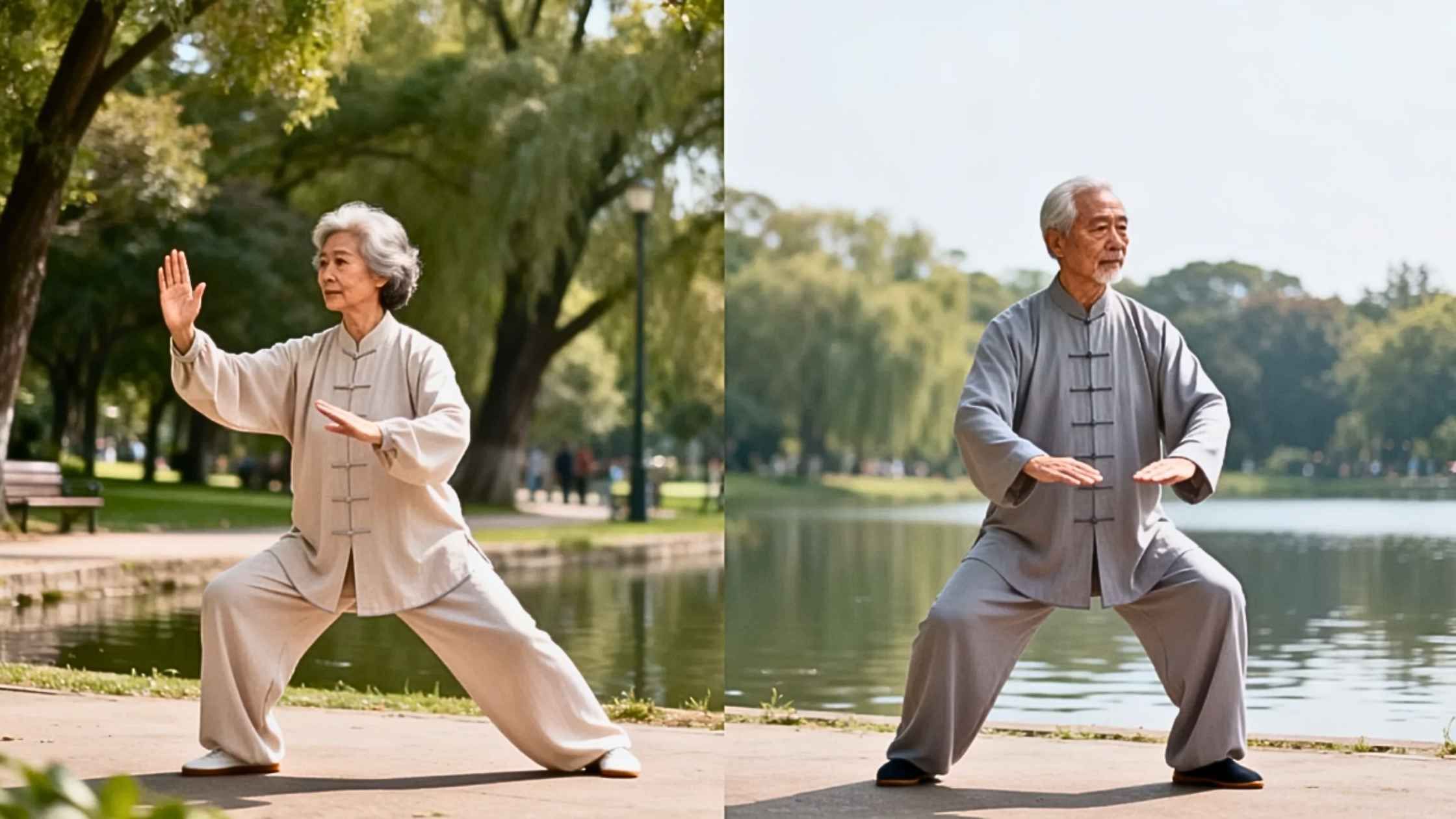
Tai Chi and Qigong both use slow, mindful movement to cultivate qi—the vital energy that flows through your body according to Traditional Chinese Medicine. The practices share common roots and overlapping benefits, which is why they're often mentioned together and sometimes confused for the same thing.
They're not. Tai Chi is a complex, choreographed martial art form that can take months to learn. Qigong is simpler, often using a single movement repeated with focused breath and attention. This guide breaks down the origins, key differences, and research-backed benefits of each practice to help you decide which fits your goals—or whether practicing both makes sense.
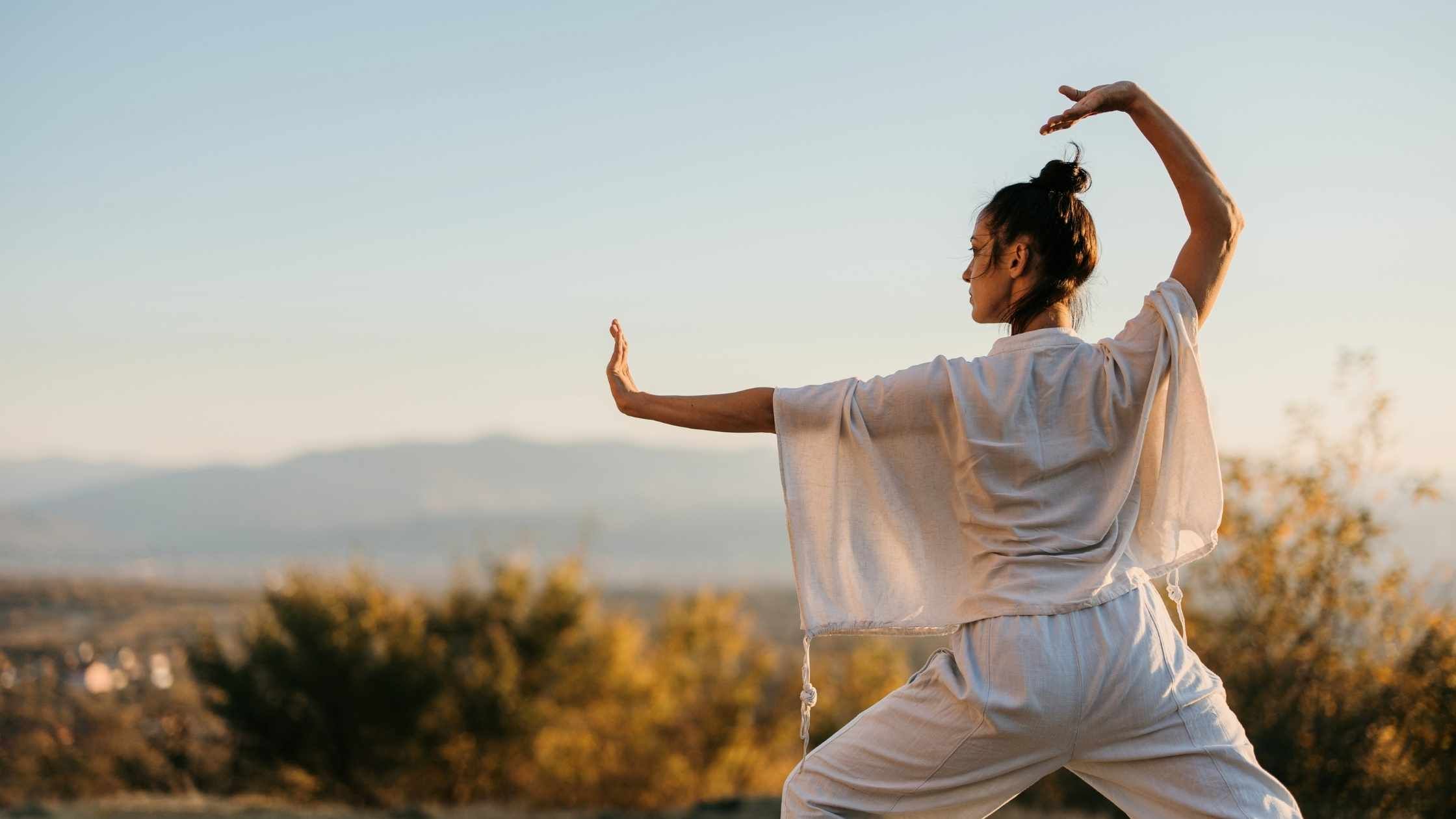
What is Tai Chi
Tai Chi and Qigong are both ancient Chinese practices that use mindful movement, breathing, and meditation to cultivate qi—the vital energy that, according to Traditional Chinese Medicine, flows through all living things. Qigong is generally simpler, focusing on repetitive motions for health. Tai Chi is more complex, with choreographed sequences that originated from martial arts.
The name offers a clue about what you're practicing. "Tai Chi" (sometimes spelled "taiji") translates roughly to "supreme ultimate," pointing to the balance of yin and yang that the practice aims to create in your body.
Origins and martial arts history of taijiquan
Tai Chi grew out of Chinese martial arts traditions several centuries ago. While it started as a fighting system, most people today practice it for health rather than self-defense.
Core principles of Tai Chi practice
Four elements form the foundation of Tai Chi:
-
Continuous movement: Sequences flow without pause, like water moving through a stream
-
Rooted stance: Weight shifts between legs while staying grounded, building stability from the feet up
-
Mind-body integration: Breath coordinates with each movement, unifying physical and mental focus
-
Balance and coordination: Complex forms challenge memory and body awareness over time
These elements work together. The continuous flow keeps energy moving, while the rooted stance gives that movement a stable base.
What Tai Chi means in English
"Tai Chi" comes from the Chinese concept of taiji, which represents the interplay of yin and yang—complementary opposites that, according to TCM, govern all natural processes. Light and dark, active and restful, expanding and contracting. Practicing Tai Chi, then, is practicing balance itself.
What is Qigong
Qigong is a broader practice focused on cultivating qi through simpler, often repetitive movements, breathwork, and meditation. Unlike Tai Chi, Qigong has always been practiced purely for health, healing, and spiritual development—never as a martial art.
The word breaks down simply. "Qi" means vital energy or life force. "Gong" means skill developed through practice. Together, Qigong translates to something like "energy work" or "the art of cultivating vitality."
Origins of Qigong and energy cultivation
Core principles of Qigong practice
Three elements define most Qigong practice:
-
Repetitive movements: Often a single motion repeated many times, making it accessible from the first session
-
Stillness and meditation: Can be practiced seated, standing, or lying down
-
Breath coordination: Deep focus on breathing patterns that direct qi through the body's energy pathways
The simplicity is intentional. By repeating one movement with full attention, you can focus entirely on the internal experience rather than trying to remember what comes next.
What Qigong means in English
"Qi" refers to the vital energy that flows through all living things according to TCM. "Gong" means skill built through dedicated practice. Put them together, and Qigong literally means "energy skill" or "life force cultivation."
Key differences between Tai Chi and Qigong
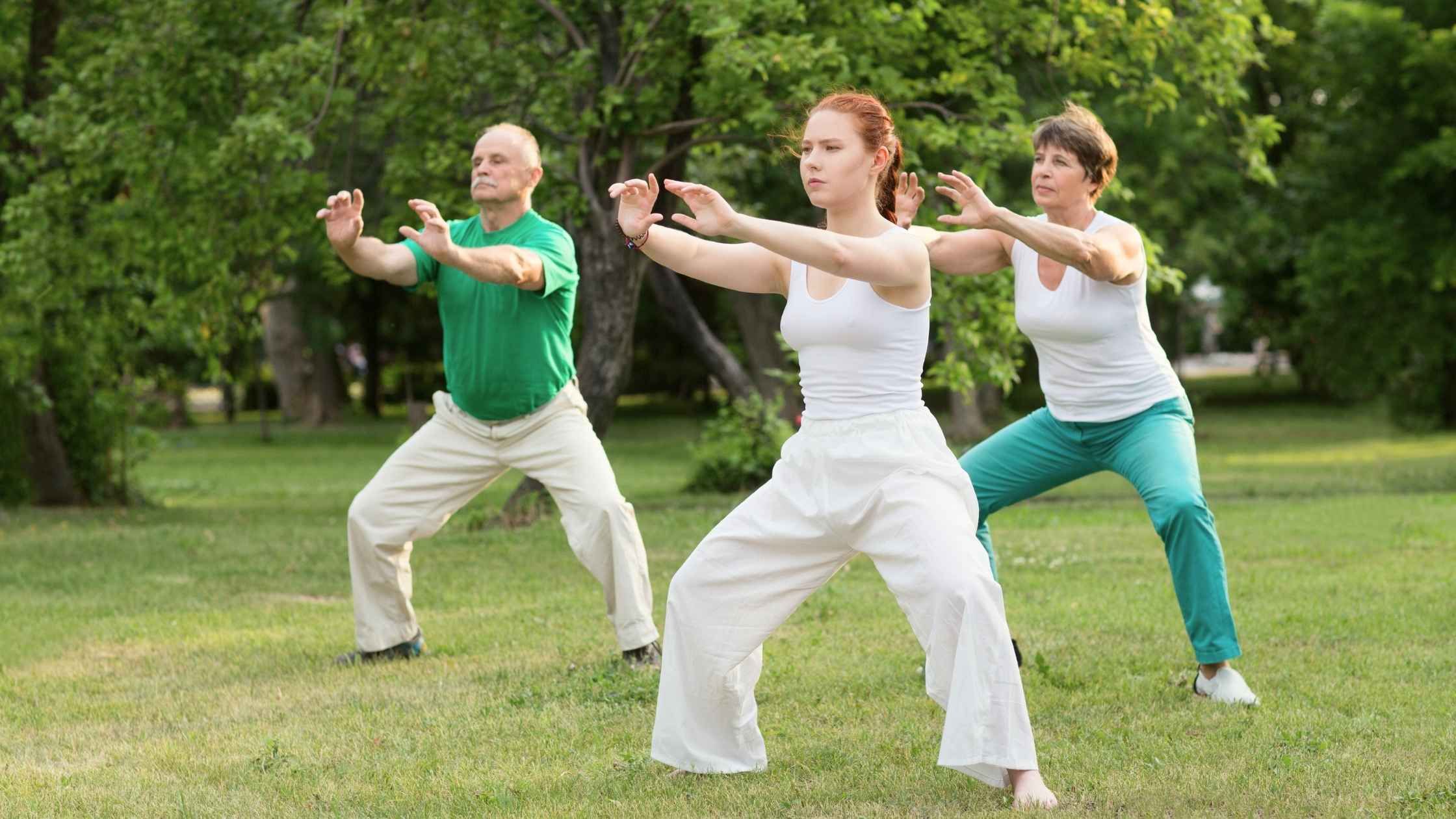
The core distinction comes down to complexity and purpose. Tai Chi uses long, choreographed sequences with martial arts roots. Qigong uses simpler, often repetitive movements focused purely on health.
| Aspect | Tai Chi | Qigong |
|---|---|---|
| Movement style | Choreographed, flowing sequences | Simpler, often repetitive single movements |
| Primary focus | Martial arts forms combined with meditation | Health, healing, and energy cultivation |
| Complexity | Higher—takes months or years to learn forms | Lower—accessible for beginners immediately |
| Space needed | More space for flowing forms | Can be done in a small space or seated |
| Variety | A few major styles (Yang, Chen, Sun, Wu) | Thousands of styles for different health goals |
Movement complexity and structure
Tai Chi forms involve many connected movements performed in a specific sequence, sometimes taking 20 minutes or more to complete. Learning a form is like learning a choreographed dance—you're memorizing a long series of transitions that flow into each other.
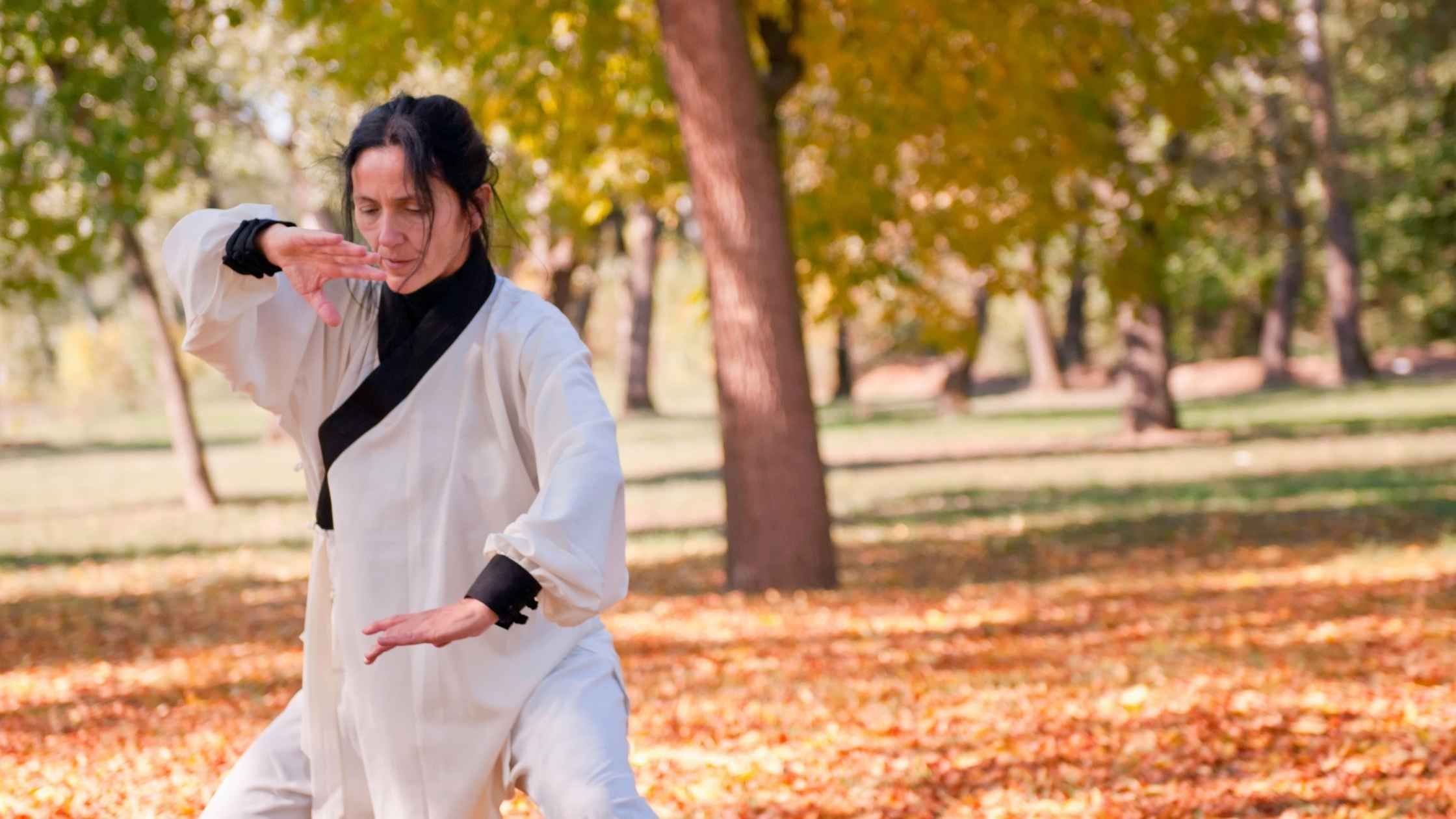
Qigong, on the other hand, often uses a single movement repeated many times. You might raise and lower your arms while breathing deeply, or shift your weight side to side with a gentle twist. This makes qigong immediately accessible, even in your first session.
Martial arts focus vs energy cultivation
Tai Chi retains self-defense applications in its movements, even if rarely used that way today. The postures and transitions were originally designed for combat, which gives them a particular quality of alertness and responsiveness.
Qigong has always been practiced purely for health and spiritual development. There's no martial component to consider, which is part of why the movements tend to be simpler and more repetitive.
Time required to learn and master
A complete Tai Chi form can take months to memorize and years to refine. The complexity is part of the appeal for many practitioners—there's always something new to discover, even after decades of practice.
Physical intensity and pace
Qigong often includes more stillness, seated practice, or gentle repetition. This makes it particularly accessible for people with mobility limitations or those recovering from injury.
Why spelling varies between Chi Kung, Qigong, and Tai Chi
You'll see these practices spelled several different ways, which can be confusing when you're first exploring them. The variation comes from how Chinese characters get converted into English letters.
Romanization systems explained
Two main systems exist for writing Chinese words in English. Wade-Giles, the older system, gives us "chi kung" and "t'ai chi." Pinyin, the modern standard used in mainland China, gives us "qigong" and "taiji."
Both spellings refer to exactly the same practices. Pinyin has become more common in recent decades, but you'll still encounter Wade-Giles spellings in older books and some traditional schools.
Common spelling variations you will see
-
Qigong: chi gong, chi kung, qi gong
-
Tai Chi: t'ai chi, taiji, taijiquan
-
Qi vs Chi: Same concept, different romanization (qi = Pinyin, chi = Wade-Giles)
Health benefits of Tai Chi backed by research
Research supports several benefits for adults seeking low-impact wellness options:
-
Balance and fall prevention: Tai chi improves stability and reduces fall risk by 24%, especially in older adults (source)
-
Cardiovascular health: Regular practice supports heart health, with practitioners seeing systolic blood pressure reductions of 10.6 mmHg (source)
-
Stress and anxiety reduction: The meditative movement helps calm the nervous system (source)
-
Joint health and flexibility: Gentle movements support range of motion without high-impact strain (source)
Health benefits of Qigong backed by research
Qigong research has expanded in recent years, with studies examining effects across multiple areas:
-
Energy and fatigue management: Qigong reduces fatigue and improves perceived energy levels (source)
-
Immune function support: Research suggests qigong may support immune response (source)
-
Mental clarity and focus: The breath and meditation components support cognitive function (source)
-
Pain management: Qigong serves as a complementary approach for chronic pain conditions (source)
Shared benefits of Tai Chi and Qigong for body and mind
Despite their differences, both practices offer overlapping benefits:
-
Stress reduction: A meta-analysis of 31 studies found both practices significantly reduce anxiety and depression, activating the parasympathetic nervous system and shifting the body toward rest and recovery
-
Mind-body connection: Both integrate breath, movement, and mental focus into a unified practice
-
Low-impact accessibility: Both are gentle on joints and suitable for most fitness levels
-
Qi cultivation: Both aim to build and balance vital energy, though through different approaches
Which is better for beginners Tai Chi or Qigong
Neither practice is objectively "better." The right choice depends on what appeals to you and what you're hoping to achieve.
Why Qigong is often easier to start
Many beginners also find that Qigong's simplicity makes it easier to focus on breath and internal sensation rather than worrying about whether they're doing the movements correctly.
Why Tai Chi offers more structure over time
Tai Chi provides a progressive learning path. Once you've learned a form, you have a complete, repeatable routine that builds depth over years of practice.
The complexity becomes rewarding rather than frustrating once the basics click into place. Many practitioners appreciate having a clear structure to follow, especially for daily practice.
Which practice is better for seniors
Qigong may be more accessible for those with mobility limitations since many exercises can be done seated or in a small space.
How to combine Tai Chi and Qigong in one routine
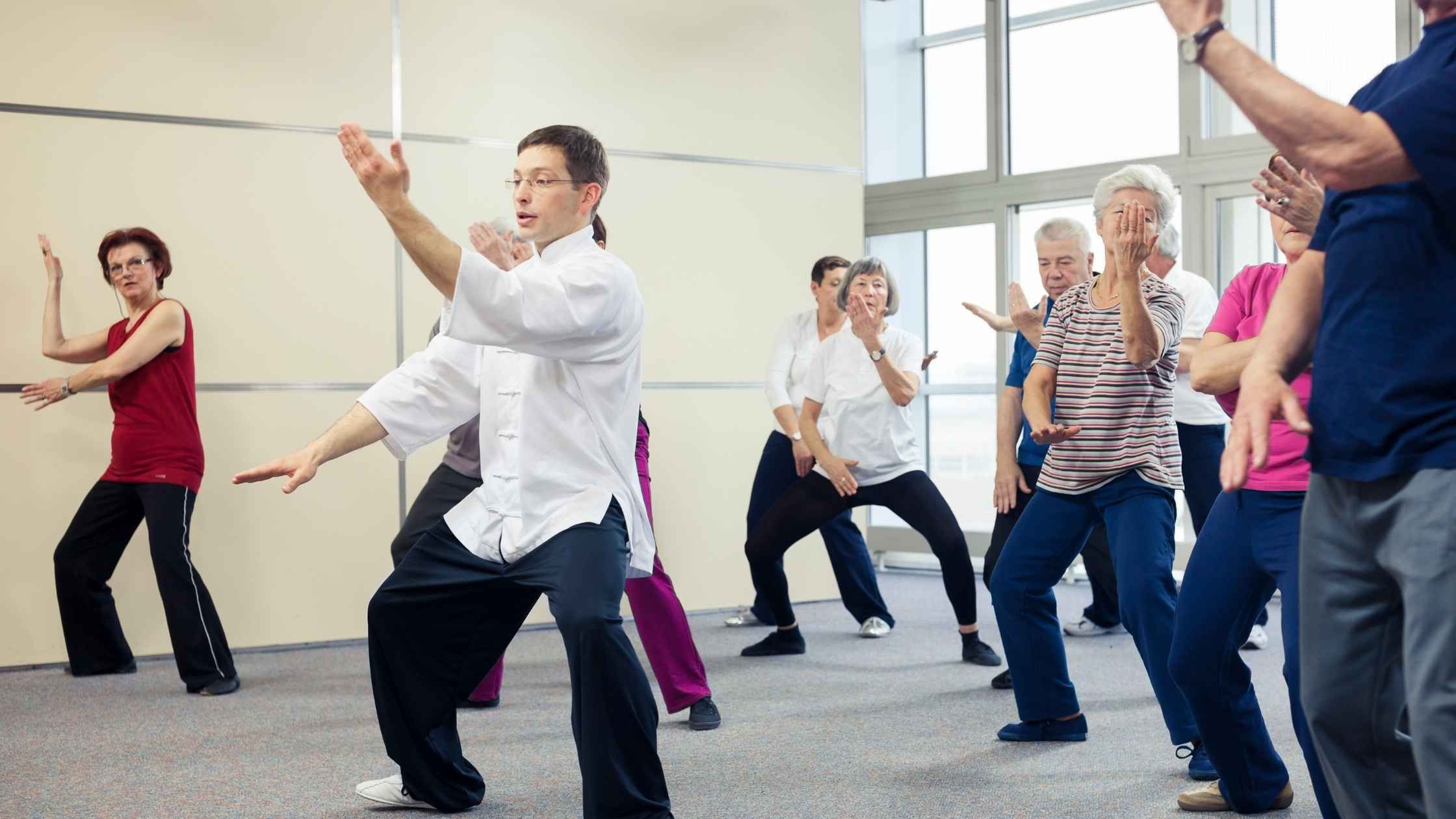
You don't have to choose just one. Many traditional schools teach both practices together, and combining them offers a more complete approach.
Using Qigong as a warm-up for Tai Chi
Qigong's simpler movements prepare the body and focus the mind before practicing Tai Chi forms. This is a common approach in traditional training—a few minutes of Qigong breathing and movement, followed by Tai Chi practice.
The Qigong portion helps you settle into your body and breath before tackling the more complex choreography of Tai Chi.
Building a 10 to 15 minute daily practice
A practical daily routine might include 5 minutes of Qigong to warm up and center your attention, followed by 10 minutes of Tai Chi form practice. Even this brief commitment, maintained consistently, produces noticeable benefits over time.
How to get started with Tai Chi or Qigong at home
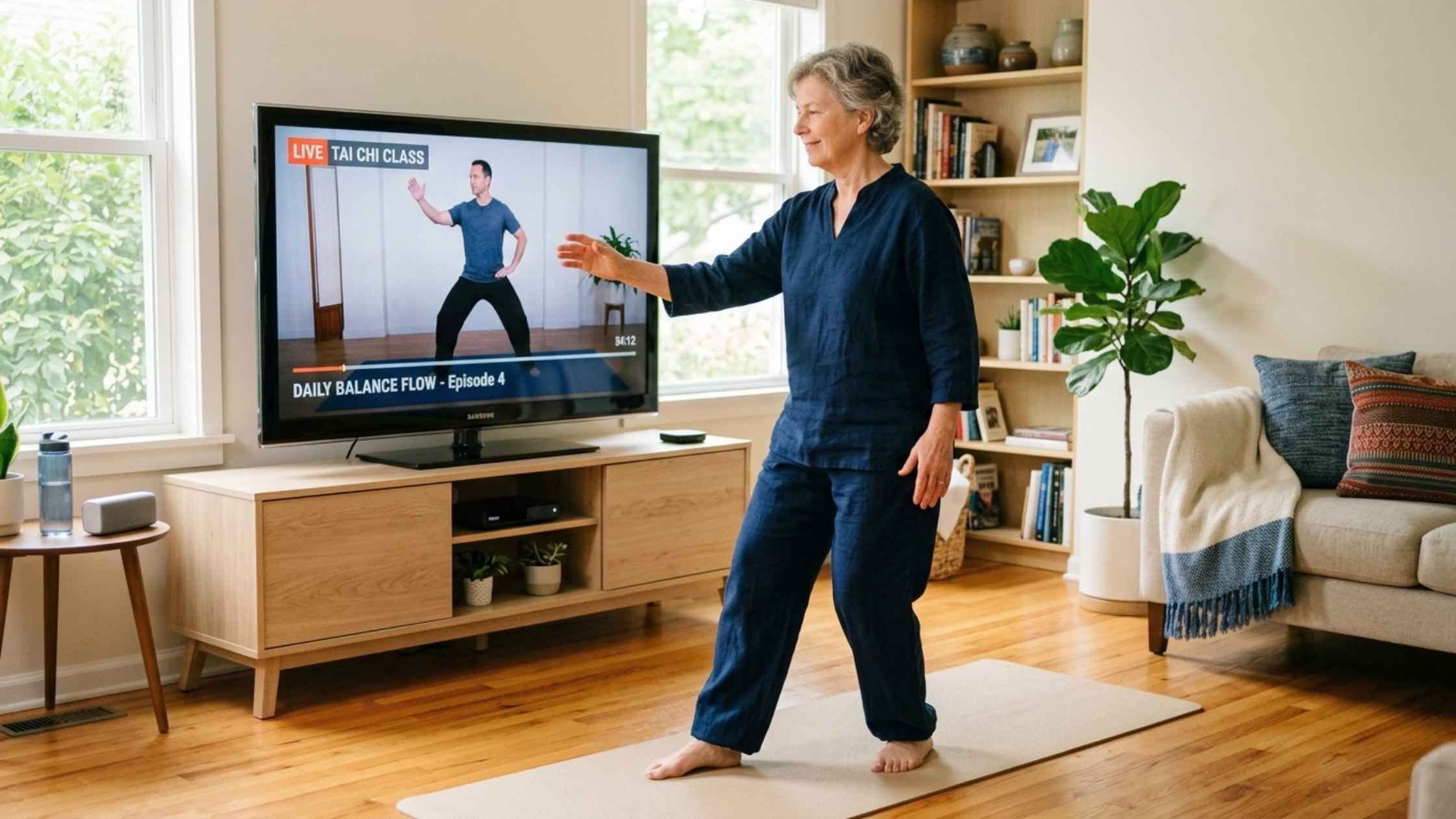
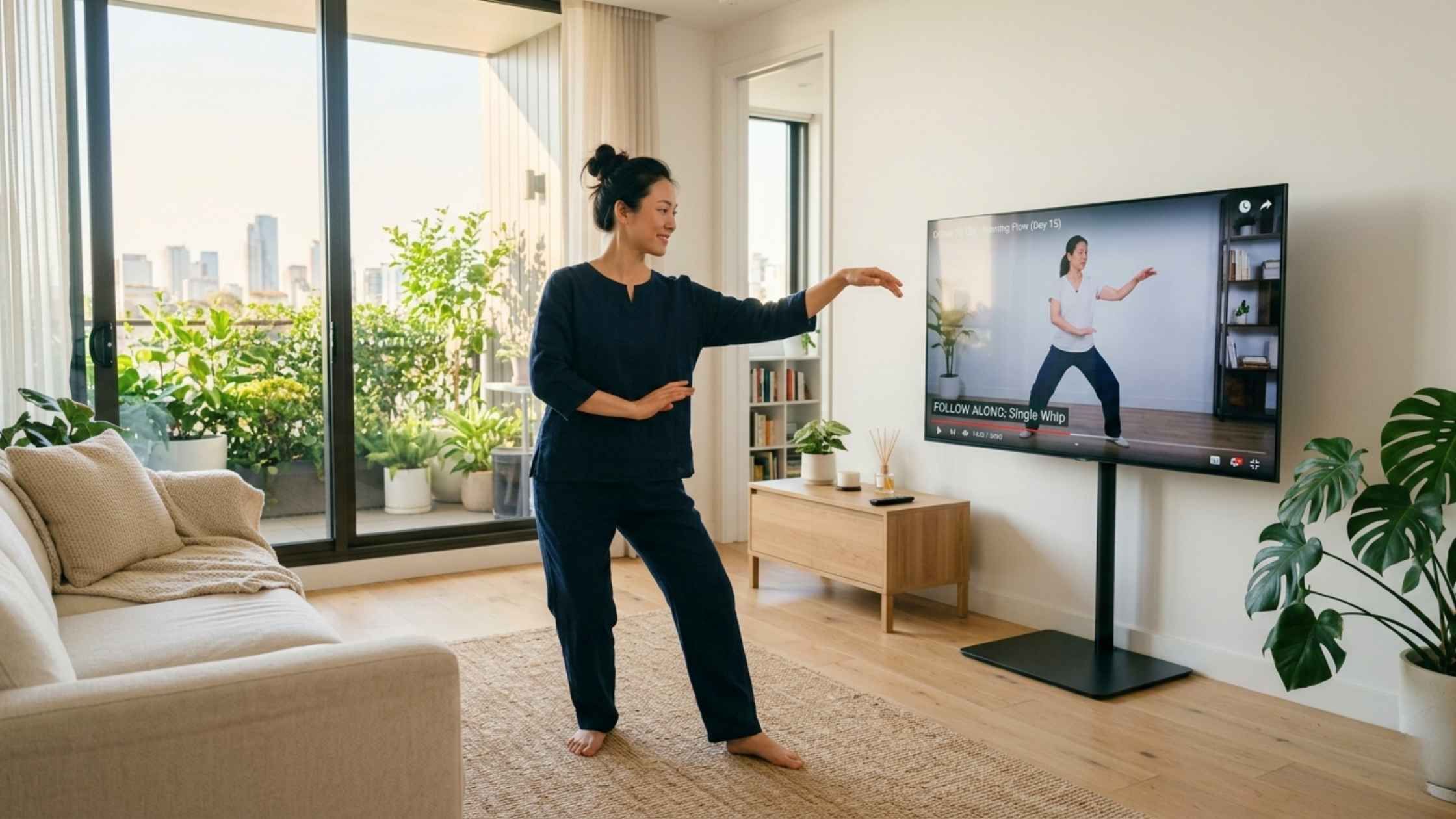
Both practices can be learned through guided video instruction, especially at the beginner level. You don't need special equipment or a large space to begin.
What to expect in your first session
Expect a slow pace with emphasis on breath and posture. Results build over time with consistent practice—many people notice feeling calmer after just one session, while improvements in balance and flexibility typically develop over several weeks.
Practicing with video classes vs local instruction
Video classes offer convenience and accessibility for busy schedules. In-person instruction provides feedback on form and the opportunity to ask questions. Both are valid starting points, and many practitioners use a combination of both as they progress.
Build balance with Tai Chi and Qigong through ZenFit
ZenFit brings both practices together in one platform, with step-by-step video guidance for Tai Chi and Qigong that assumes no prior experience. Sessions are designed to fit into 10-15 minutes daily, with personalized recommendations based on your wellness goals and progress tracking to help build consistent habits.
FAQs about Tai Chi vs Qigong
What are the disadvantages of Qigong?
Qigong is very gentle and may not provide the cardiovascular or strength challenge some people seek. Quality also varies widely across the thousands of Qigong styles, so finding qualified instruction matters.
What is the 70 percent rule in Tai Chi?
The 70 percent rule advises practitioners to use only about 70 percent of their effort, range, or capacity—never pushing to full exertion. This supports relaxation, prevents injury, and allows energy to flow freely.
Is Tai Chi a type of Kung Fu or martial art?
Yes, Tai Chi (taijiquan) originated as a Chinese martial art and is sometimes classified under the broader "kung fu" umbrella. Today, most people practice Tai Chi primarily for health rather than self-defense.
How long before you feel results from Tai Chi or Qigong practice?
Many practitioners report feeling calmer and more relaxed after just one session. Noticeable improvements in balance, flexibility, or energy often develop with consistent practice over several weeks.
Can you do Tai Chi or Qigong with arthritis or chronic pain?
Yes, both practices are low-impact and can often be adapted for people with arthritis or chronic pain. Consulting a healthcare provider before starting is wise, and instructors experienced with your condition can offer helpful modifications.