Learn Tai Chi Online: Best Virtual Classes and Training Programs
Published on April 28, 2026 | Updated on May 28, 2026

Laura Mitchell
Laura is a wellness content creator specializing in holistic health and movement for healthy aging. As an expert in Tai Chi and Qigong, she passionately integrates Chinese wellness practices into her daily lifestyle.
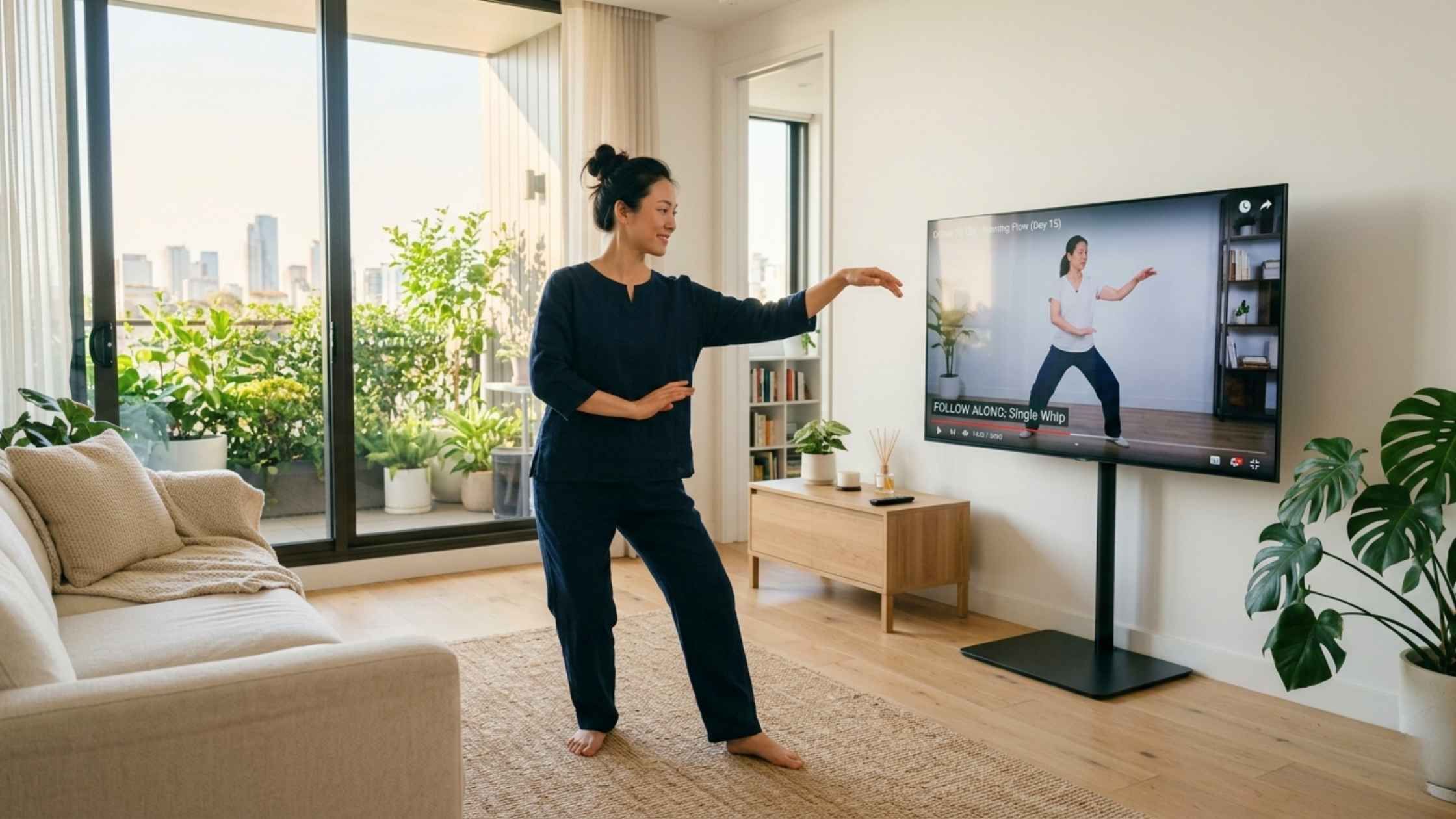
Table of Contents
- Can You Learn Tai Chi Online Effectively
- What Is Tai Chi and Why Learn It Online
- Types of Online Tai Chi Classes Available
- Best Online Tai Chi Classes for Beginners
- Free Online Tai Chi Classes and Resources
- Tai Chi vs Qigong for Online Learning
- How to Choose the Best Online Tai Chi Course
- Research-Backed Health Benefits of Tai Chi
- How to Start Learning Tai Chi at Home
- How to Stay Consistent with Online Tai Chi Practice
- Start Your Tai Chi Journey with ZenFit
- FAQs
Tai Chi looks like it requires a studio, a master, and years of dedication. In reality, you can learn the fundamentals from your living room with nothing more than a phone and a few minutes a day.
This guide covers the best online Tai Chi classes for beginners, compares live versus on-demand formats, and walks through how to build a consistent practice at home.
Can You Learn Tai Chi Online Effectively
Yes, you can learn Tai Chi online through platforms that offer structured, step-by-step video instruction. Popular options include Dr. Paul Lam's Tai Chi for Health programs, the Tai Chi Foundation's live and on-demand courses, and apps like ZenFit that combine tai chi with qigong and wellness tracking. Beginners typically pick up foundational movements, breathing patterns, and proper posture within a few weeks of consistent daily practice.
Online learning actually offers a few advantages over traditional classes. You can replay tricky transitions as many times as you want, pause mid-movement to check your form, and practice at whatever hour fits your life. The key is choosing a course with clear instruction and then showing up regularly—even 10 to 15 minutes a day builds real progress.
What Is Tai Chi and Why Learn It Online
The practice centers on qi (pronounced "chee"), a concept from TCM that translates roughly to "life energy." According to this framework, qi flows through pathways in the body called meridians, and tai chi movements help keep that energy circulating smoothly. Online learning makes this traditionally in-person practice accessible to anyone with an internet connection and a few spare minutes.
Origins and philosophy of Tai Chi Quan
Tai Chi Quan (the full name, meaning "supreme ultimate fist") emerged in China several centuries ago. The practice draws from Taoist ideas about yin and yang—the principle that health comes from balancing opposing forces like activity and rest, tension and relaxation.
What started as a martial art gradually shifted toward health and wellness. Today, most people learn Tai Chi for its physical and mental benefits rather than self-defense.

Core principles of Tai Chi movement
Every Tai Chi style shares certain foundational elements:
-
Rooted stance: Proper weight distribution creates stability and a sense of connection to the ground
-
Relaxed movement: Muscles stay soft throughout each posture, without gripping or forcing
-
Breath coordination: Inhales and exhales match naturally with the movements
-
Mental focus: Calm awareness keeps attention anchored in the present moment
A simple movement done with proper alignment offers more benefit than a complex form performed mechanically. The principles matter more than memorizing elaborate sequences.
Who benefits most from Tai Chi practice
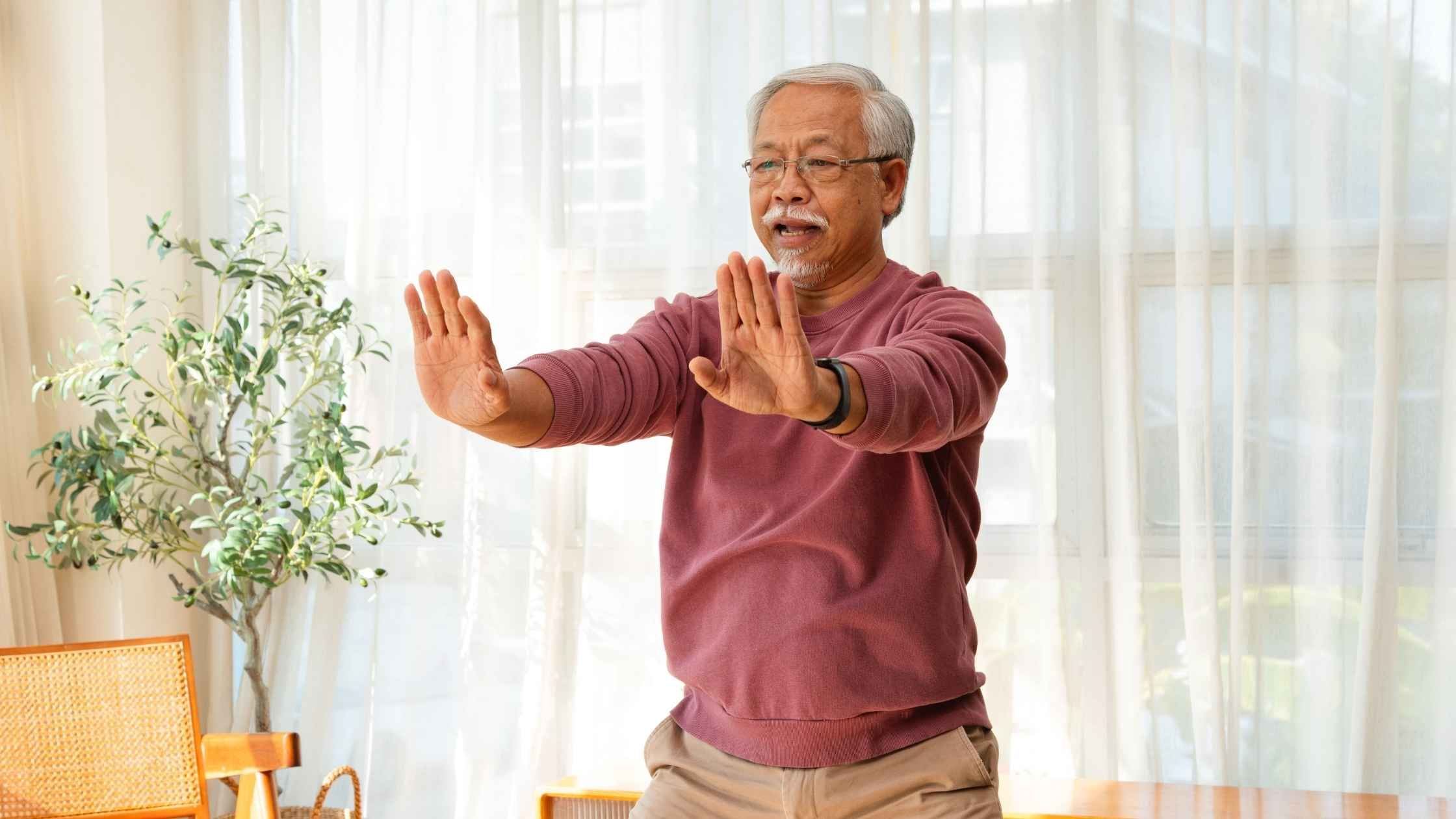
Tai Chi works well for a wide range of people. Older adults often appreciate the gentle, low-impact movements and the focus on balance. Busy professionals use it as a moving meditation to manage stress. People with chronic pain or limited mobility frequently discover that tai chi offers exercise they can actually sustain.
The practice adapts to virtually any fitness level—you can modify movements to match your current abilities and expand your range as you progress.
Types of Online Tai Chi Classes Available
Online Tai Chi instruction comes in three main formats, each with distinct trade-offs.
| Class Type | Best For | Interaction Level | Flexibility |
|---|---|---|---|
| Live virtual classes | Real-time feedback, community | High | Fixed schedule |
| On-demand video lessons | Self-paced learners | Low | Complete flexibility |
| Mobile apps | Daily practice, tracking | Medium | High flexibility |
Live virtual Tai Chi classes
Live-streamed sessions connect you with an instructor in real time, often through Zoom. You can ask questions, receive corrections, and practice alongside other students. The Tai Chi Foundation and Yang Family Virtual Classroom both offer this format.
The trade-off is scheduling—you have to show up at specific times, which doesn't work for everyone.
On-demand Tai Chi video lessons
Pre-recorded lesson libraries let you access instruction whenever you want. Platforms like Just Breathe Tai Chi and Dr. Paul Lam's programs offer extensive video collections organized by skill level. This format works well for people who want to replay sections repeatedly or practice at unusual hours.
Tai Chi mobile apps and programs
App-based learning combines video instruction with features like progress tracking, daily reminders, and structured programs. ZenFit, for example, integrates Tai Chi and Qigong classes with personalized wellness plans and habit-building tools in its app.
Best Online Tai Chi Classes for Beginners
Several platforms stand out for beginner-friendly instruction. Here's what each offers.
Dr. Paul Lam's Tai Chi for Health programs
Dr. Lam's subscription-based platform provides HD video lessons from beginner to advanced levels. The programs focus specifically on health benefits and include content designed for seniors and people with conditions like arthritis. Lessons work on computers, tablets, and phones.
Tai Chi Foundation live and on-demand courses
The Tai Chi Foundation teaches Yang family style through both live virtual classes and recorded sessions. They offer free introductory content alongside paid courses, so you can sample the instruction before committing.
Just Breathe Tai Chi on-demand classes
Just Breathe provides step-by-step video instruction designed to feel like attending a live class. The library covers both tai chi and qigong, with content organized for progressive learning.
Harvard Introduction to Tai Chi course
Harvard's self-paced video introduction emphasizes the research-backed health benefits of tai chi. The course provides a credible starting point for people who appreciate an academic approach to wellness.
ZenFit Tai Chi and Qigong video classes
ZenFit combines Tai Chi instruction with Qigong, TCM-based nutrition guidance, and mindfulness practices in one app. Sessions run 5 to 15 minutes, designed for busy schedules. The app's personalization adapts recommendations to your health goals, while built-in tracking helps you monitor energy levels and maintain consistency.
Explore ZenFit's beginner-friendly classes →

Free Online Tai Chi Classes and Resources
Not everyone wants to pay for instruction right away. Several free options let you explore tai chi before investing in a paid program.
Free Tai Chi classes for seniors online
Many YouTube channels offer gentle beginner routines specifically designed for older adults, emphasizing balance, joint-friendly movements, and clear verbal cues. Free senior-focused content provides a low-risk way to see whether tai chi feels right for your body.
Free beginner Tai Chi video lessons on YouTube
YouTube hosts numerous free tai chi sessions, including popular 15-minute beginner routines. Free videos work well as starting points, though they often lack the structured progression of paid courses.
Free Tai Chi training and certification programs
Truly free certification is rare in tai chi—most reputable instructor certifications require paid coursework and often some in-person training. However, free introductory training does exist for people who want to deepen their understanding before pursuing formal credentials.
Tai Chi vs Qigong for Online Learning
Tai chi and qigong often appear together, and the distinction can feel confusing at first. Both come from Chinese wellness traditions and involve gentle movement with breath coordination.
-
Tai Chi: Continuous flowing sequences called forms, with martial arts origins and more complex movement patterns
-
Qigong: Simpler repeated movements focused directly on qi cultivation, often easier for complete beginners
Key differences between Tai Chi and Qigong
Which practice is better for beginners
Many instructors recommend starting with Qigong because the movements are easier to learn. Once you've developed basic body awareness and breath coordination, tai chi forms feel more accessible. That said, some people prefer diving straight into Tai Chi—neither approach is wrong.
How to combine Tai Chi and Qigong in your routine
A practical approach uses qigong as a warm-up before tai chi practice. The simpler qigong movements prepare your body and focus your mind for the more complex forms. Apps like ZenFit integrate both practices into cohesive daily routines.
How to Choose the Best Online Tai Chi Course
With so many options available, a few criteria help narrow down the right fit.
Step-by-step teaching methodology
Look for courses that break down movements into learnable pieces rather than just demonstrating complete forms. Good instruction includes guided repetitions and explanations of common mistakes.
Instructor credentials and Tai Chi lineage
Tai chi has distinct styles—Yang, Chen, Wu, and Sun are the most common. Qualified instructors typically studied within a recognized lineage. Yang style is the most widely taught and generally recommended for beginners.
Class length and daily practice structure
Short daily sessions tend to produce better results than long weekly ones. Courses designed around 10 to 20 minute daily practices support better habit formation than those requiring hour-long commitments.
Device compatibility and accessibility
Make sure your chosen platform works on the devices you'll actually use. Being able to practice anywhere with an internet connection removes friction from maintaining consistency.
Research-Backed Health Benefits of Tai Chi
Scientific studies support several benefits that make tai chi worth learning, particularly for adults seeking gentle, sustainable exercise.
Physical benefits of regular Tai Chi practice
-
Improved balance: Research links tai chi to a 24% reduction in fall risk and better stability in older adults
-
Enhanced flexibility: Gentle stretching within movements increases range of motion over time
-
Low-impact strength building: Weight shifts and stances strengthen legs and core without joint stress
Mental and emotional wellness benefits
Tai Chi benefits for specific health conditions
How to Start Learning Tai Chi at Home
Getting started requires less than you might think.
1. Choose your Tai Chi style and online course
Yang style is the most common for beginners and the easiest to find quality instruction for. Pick one structured course rather than jumping between multiple sources—consistency in instruction helps you build proper foundations.
2. Set up your practice space at home
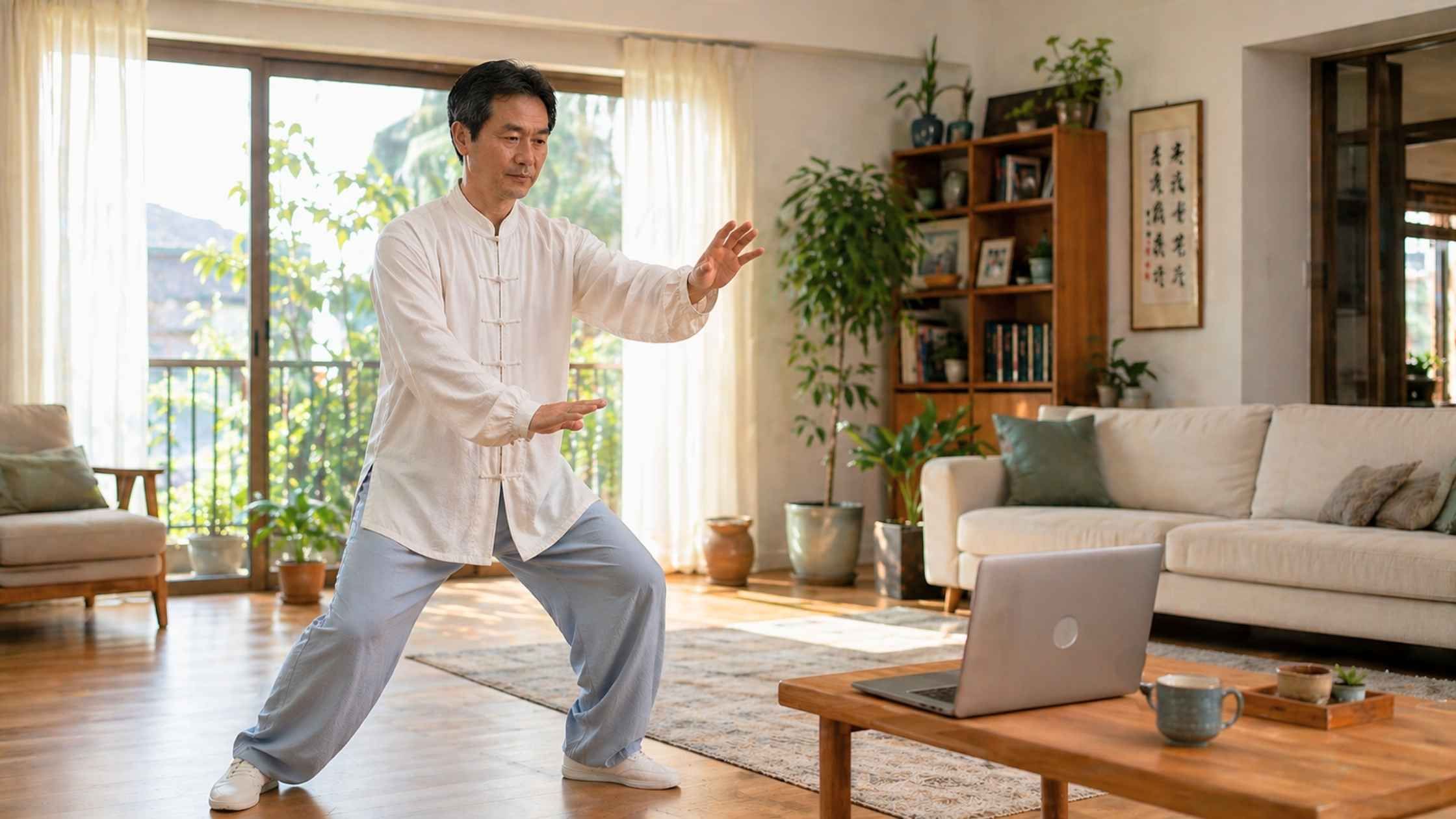
You need enough room to extend your arms fully and take a few steps in any direction. A non-slip surface and comfortable, loose-fitting clothing are the only real requirements.
3. Start with short daily sessions
Even five minutes of focused practice builds the habit. Consistency matters more than duration when you're beginning—you can gradually extend sessions as tai chi becomes part of your routine.
4. Track your progress and energy levels
Logging your practice helps you notice improvements and maintain motivation. Apps like ZenFit include built-in tracking for routines, energy levels, and mood.
How to Stay Consistent with Online Tai Chi Practice
Self-directed practice requires some structure to maintain.
Set realistic daily practice goals
Start smaller than you think necessary. A goal of "practice for three minutes" is more likely to become consistent than "practice for thirty minutes."
Use reminders and streak tracking
Phone reminders or app notifications prompt you to practice before the day gets away from you. Streak tracking creates positive reinforcement—you won't want to break a chain of consecutive practice days.
Join online Tai Chi communities
Many platforms include forums or community features where practitioners share experiences and encourage each other. Social connection adds accountability that pure self-direction often lacks.
Start Your Tai Chi Journey with ZenFit
Online Tai Chi learning is accessible, effective, and adaptable to virtually any schedule. The key is choosing quality instruction and committing to regular practice, even if that means just a few minutes daily.
ZenFit offers a holistic approach that combines Tai Chi and Qigong with mindfulness practices and TCM-informed wellness guidance—all designed for seniors and busy modern schedules.
FAQs
How long does it take to learn basic tai chi movements online?
Most beginners can learn foundational movements and a simple sequence within a few weeks of consistent daily practice. However, tai chi is traditionally viewed as a lifelong practice with continuous refinement.
Can seniors learn tai chi safely through online video classes?
Tai chi is considered one of the safest exercises for older adults, and many online programs are specifically designed with seniors in mind. The gentle, low-impact movements and emphasis on balance make it particularly appropriate for this population.
What clothing and equipment do I need for tai chi practice at home?
Tai chi requires no special equipment. Comfortable, loose-fitting clothing that allows free movement works well. Most practitioners wear flat, flexible shoes or practice barefoot on a non-slip surface.
How many times per week should beginners practice tai chi online?
Daily short sessions are more effective than longer weekly sessions. Most instructors recommend practicing a little every day—even five to ten minutes—rather than occasional extended sessions.
Can I earn a tai chi instructor certification entirely online?
Some organizations offer online certification components, but most reputable tai chi certifications require some in-person training or assessment. Online coursework often supplements rather than replaces in-person requirements.
Is learning tai chi online as effective as attending in-person classes?
Online learning can be highly effective for foundational skills and solo practice. Video instruction allows unlimited repetition and self-paced learning. However, in-person classes offer hands-on corrections and partner exercises that video cannot fully replicate.