How Tai Chi Helps Reduce Anxiety Without Medication
Published on March 17, 2026

Laura Mitchell
Laura is a wellness content creator specializing in holistic health and movement for healthy aging. As an expert in Tai Chi and Qigong, she passionately integrates Chinese wellness practices into her daily lifestyle.
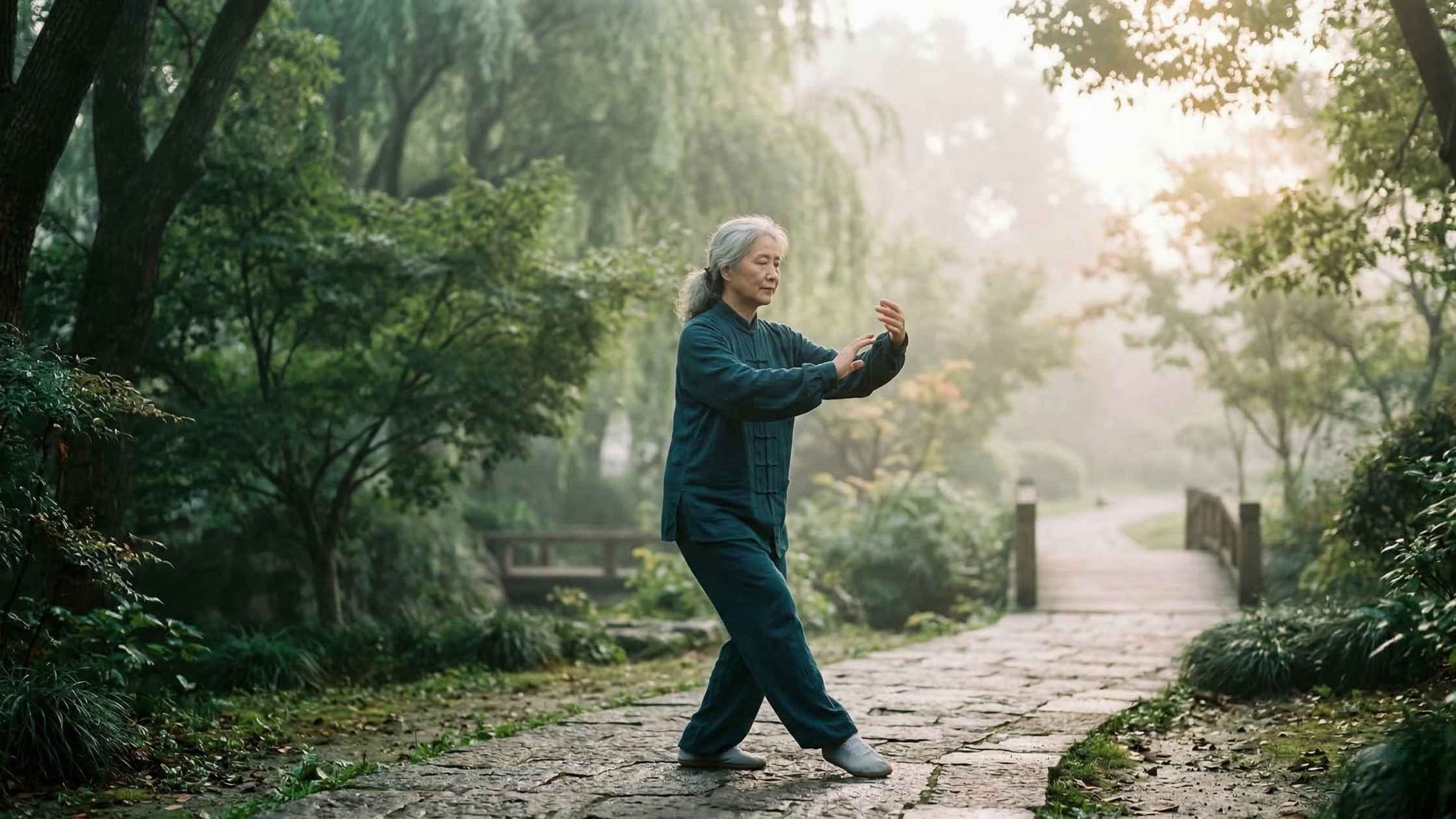
Stress and anxiety often feel like problems happening in your head, but they show up in your body too: tight shoulders, shallow breathing, a racing heart that won't settle. Tai chi addresses both at once, using slow movement and focused breath to shift your nervous system out of overdrive.
This ancient Chinese practice works as moving meditation, calming anxious thoughts while releasing physical tension you may not even realize you're holding. Below, you'll find the science behind why tai chi reduces stress naturally, specific poses that promote calm, and practical steps to start practicing today.
What is tai chi
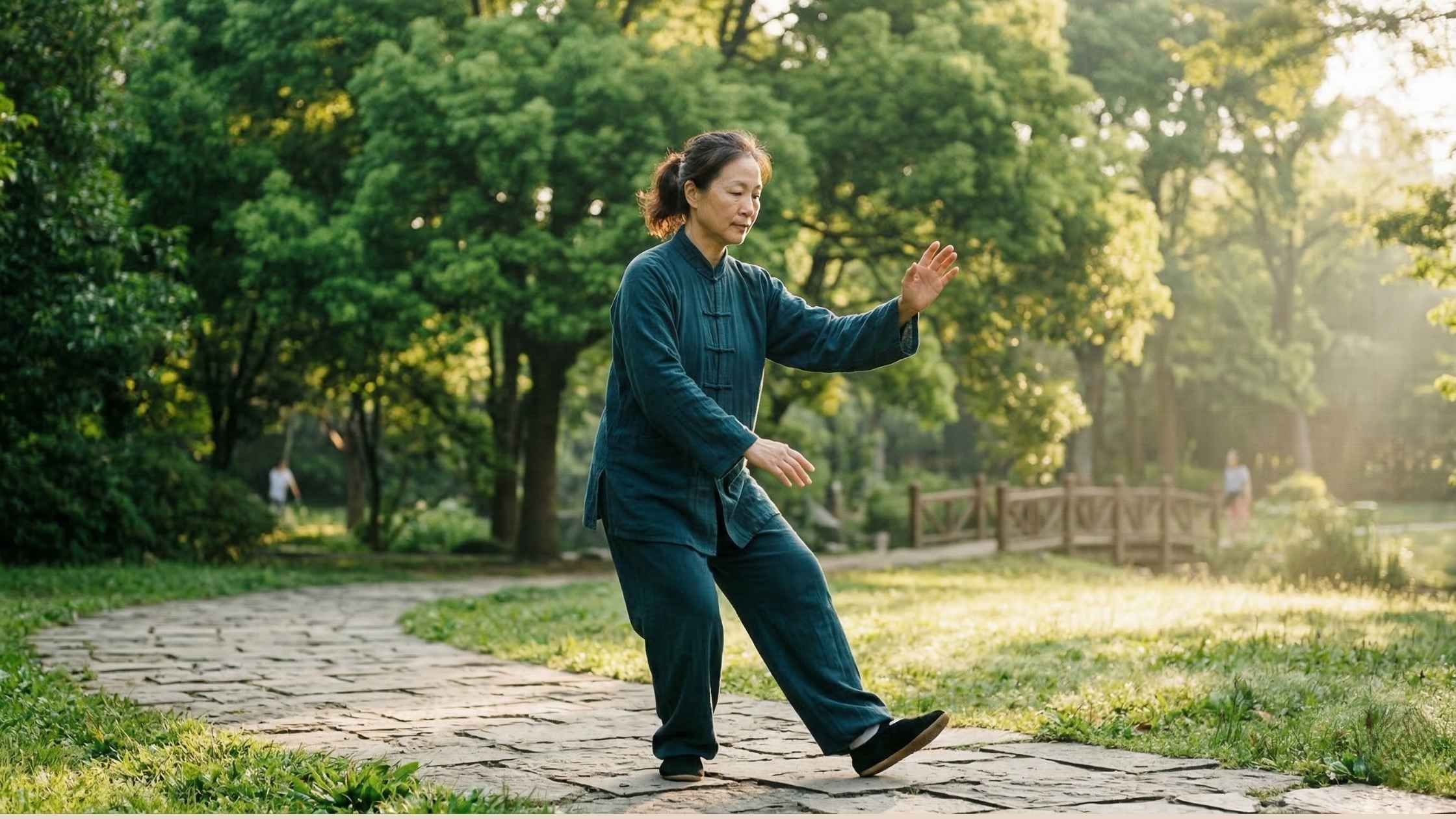
Originally developed in China centuries ago as both a martial art and healing practice, tai chi is now practiced worldwide primarily for wellness. The movements gently stretch and rotate muscles, tendons, and ligaments while the focused breathing activates your body's natural relaxation response.
Three elements work together during practice:
-
Slow, deliberate movements: Continuous sequences performed at an unhurried pace, allowing your attention to stay anchored in the present
-
Breath coordination: Each movement paired with slow inhaling and exhaling, which directly influences heart rate and stress hormones
-
Mental focus: Attention directed toward body sensations rather than racing thoughts, creating a meditative quality
You don't need flexibility, strength, or experience to start. The practice adapts to your current abilities.
Why natural stress relief matters
Medication helps many people manage anxiety, yet it often comes with side effects or doesn't fit everyone's approach to health. For those seeking alternatives, lifestyle-based practices offer a different path: one that builds skills rather than just treating symptoms.
Tai chi falls into this category. With regular practice, you're training your nervous system to respond more calmly to everyday stressors. The effects tend to compound over time, and you can practice anywhere without special equipment.
This approach appeals especially to adults over 40 or anyone with joint sensitivities who wants gentle movement that supports both body and mind.
How tai chi reduces stress and anxiety naturally
Several mechanisms explain why tai chi calms the body and mind. Each one addresses a different aspect of how stress and anxiety show up physically and mentally.
Calming the mind through moving meditation
This focused attention is what makes tai chi a form of moving meditation. Rather than trying to empty your mind, you're redirecting it toward physical sensations happening right now. Anxious mental chatter naturally quiets when your attention has somewhere else to go.
Activating the parasympathetic nervous system
Your autonomic nervous system operates in two modes. The sympathetic mode handles fight-or-flight responses, while the parasympathetic mode manages rest-and-digest functions. Chronic stress keeps many people stuck in sympathetic overdrive, with elevated heart rate, shallow breathing, and tense muscles.
Tai chi's slow movements and deep breathing activate the parasympathetic response. This signals safety to your brain and lowers cortisol production. Over weeks of regular practice, your baseline stress level can shift, making you less reactive to daily pressures.
Regulating breath and heart rate
Breathing is the one autonomic function you can consciously control. Tai chi uses this to your advantage through diaphragmatic breathing, which means inhaling deeply into the belly rather than shallowly into the chest.
Restoring qi balance and yin-yang harmony
Traditional Chinese Medicine views anxiety as reflecting an imbalance of qi, or vital energy, and a disruption between yin and yang forces in the body. Tai chi's flowing movements are designed to circulate qi smoothly through energy pathways called meridians.
Whether you interpret the benefits through a TCM lens or a scientific one, the calming effects remain consistent. Many practitioners find that thinking in terms of energy balance helps them tune into subtle body sensations they might otherwise overlook.
Science-backed benefits of tai chi for anxiety
Research increasingly supports what practitioners have observed for centuries. Here's what studies show:
-
Reduces symptoms of anxiety and depression: Regular tai chi practice improves mood and emotional regulation, with effects comparable to conventional exercise interventions 1
-
Lowers cortisol levels: Practice is associated with decreased production of stress hormones, helping break cycles of chronic stress 2
-
Improves sleep quality: Practitioners often report better sleep, which directly supports mental health and emotional stability 3
-
Enhances emotional resilience: Long-term practice builds capacity to handle stress more calmly, with improved self-efficacy 4
-
Promotes relaxation response: Tai chi activates parasympathetic nervous system activity, reducing physiological stress markers 5
Many people notice a calming effect after a single session, though sustained benefits typically develop with consistent practice over several weeks.
Tai chi and qigong for stress relief
Tai chi and qigong share common roots in Chinese wellness tradition. Both effectively support stress management, though they differ in structure and complexity.
How tai chi supports stress management
Tai chi's flowing sequences release muscular tension and gently stretch soft tissues throughout the body. The continuous nature of the movements, with one posture flowing into the next, keeps your mind engaged and prevents it from wandering back to anxious thoughts.
The physical component matters too. Gentle stretching and rotation of muscles, tendons, and ligaments releases tension that often accumulates in the shoulders, neck, and back during stressful periods. You're addressing both the mental and physical dimensions of stress simultaneously.
How qigong helps with anxiety
Many practitioners combine both approaches: qigong for quick stress relief during the day and tai chi for a more complete movement practice. The two complement each other well.
| Aspect | Tai Chi | Qigong |
|---|---|---|
| Movement style | Flowing sequences | Stationary or simple movements |
| Complexity | More structured forms | Easier to learn initially |
| Focus | Movement + breath + intention | Breath + energy cultivation |
| Best for | Those wanting fuller practice | Beginners or those with mobility limits |
Breathwork and meditation in tai chi for stress
Breath sits at the center of tai chi's stress-relieving power. The practice emphasizes diaphragmatic breathing, which involves slow, deep breaths that expand the belly rather than the chest.
This breathing style directly affects your nervous system. Slow, deep breaths stimulate the vagus nerve, which activates your parasympathetic response and signals your brain to calm down. The effect is immediate and measurable.
The basic approach involves:
-
Inhale through the nose: Slow, deep breath expanding the belly
-
Exhale through the mouth or nose: Gentle, controlled release
-
Coordinate with movement: Inhale on opening movements, exhale on closing movements
You don't need to perfect this immediately. Simply paying attention to your breath during practice naturally deepens and slows it over time.
Tai chi poses for anxiety relief
Certain tai chi movements are particularly effective for promoting calm. Each of the following postures can be practiced individually or as part of a longer sequence.
Wave hands like clouds
This gentle side-to-side movement promotes fluidity and releases shoulder tension. The rhythmic, repetitive nature makes it especially meditative, and the slow weight shifts between feet help anchor attention in the body.
Grasp the sparrow's tail
A foundational sequence that builds focus and grounding through weight shifting. The slow, deliberate transitions between postures keep your attention in the present moment rather than on anxious thoughts.
Single whip
An expansive posture that opens the chest and encourages deep breathing. The extended arm position creates a sense of spaciousness that counteracts the contracted, closed-in feeling that often accompanies anxiety.
Brush knee and push
This forward-stepping movement combines coordination with breath to release nervous energy. The gentle forward momentum can feel like physically moving through and past anxious feelings, giving the practice a sense of progress and flow.
How to start practicing tai chi for stress relief
Beginning a tai chi practice is simpler than many people expect. You don't need special equipment, clothing, or a particular level of fitness to get started.
1. Begin with short daily sessions
Five to fifteen minutes daily works better than longer sessions done sporadically. Consistency matters more than duration when building a new habit. Short sessions also make it easier to practice even on busy days.
2. Focus on breath before movement
Before adding movement, spend a minute or two simply breathing slowly and deeply. This establishes the calm foundation that makes the movements effective for stress relief. The breath sets the tone for everything that follows.
3. Follow guided instruction for proper form
Video guidance helps you learn correct posture and sequencing safely. Trying to learn from written descriptions alone often leads to confusion or improper form that reduces the practice's benefits.
Tip: The ZenFit app offers step-by-step tai chi and qigong classes designed for beginners, with sessions as short as five minutes.
4. Track your progress and energy levels
Noting your mood and energy before and after practice reveals patterns you might otherwise miss. Many people are surprised to discover how consistently tai chi improves their state, and tracking builds motivation for continued practice.
Why practice tai chi for anxiety with ZenFit
ZenFit brings together tai chi, qigong, breathwork, and mindfulness in one platform designed for natural stress relief. The app combines Traditional Chinese Medicine principles with modern exercise science, translating ancient practices into daily routines that fit real schedules.
Sessions range from five to fifteen minutes. Video instruction guides you through proper form, while built-in tracking helps you monitor mood, energy, and progress over time. For those new to tai chi, structured programs remove guesswork and build skills progressively.
Ready to start your journey
Natural stress relief is available right now, without medication, equipment, or prior experience. Tai chi offers a gentle, sustainable path to calmer days.
Frequently asked questions about tai chi and anxiety
What is the 70 percent rule in tai chi?
The 70 percent rule means practicing movements at only 70 percent of your full range or effort. This prevents strain, keeps the body relaxed during practice, and maintains the soft, flowing quality that makes tai chi effective for stress relief.
How long does it take for tai chi to reduce anxiety?
Can tai chi replace anxiety medication?
Tai chi is a complementary practice that supports natural stress relief, though it works differently than medication. If you're currently taking prescribed medication for anxiety, consulting your healthcare provider before making changes is wise. Many people find tai chi helpful alongside other treatments.
Is qigong or tai chi better for anxiety?
Both practices effectively reduce anxiety through similar mechanisms. Qigong may suit those wanting simpler, more stationary exercises, while tai chi offers a more complete movement-based meditation. Many practitioners benefit from incorporating both into their routine.
Can beginners with no flexibility practice tai chi for stress relief?
Yes. Tai chi is low-impact and adaptable to all fitness and flexibility levels. The movements can be modified for limited mobility, and the 70 percent rule means you're never pushing to your physical limits. This accessibility makes tai chi ideal for beginners seeking gentle stress relief.