Beginner-Friendly Tai Chi Courses You Can Start Today
Published on May 1, 2026 | Updated on May 28, 2026

Laura Mitchell
Laura is a wellness content creator specializing in holistic health and movement for healthy aging. As an expert in Tai Chi and Qigong, she passionately integrates Chinese wellness practices into her daily lifestyle.
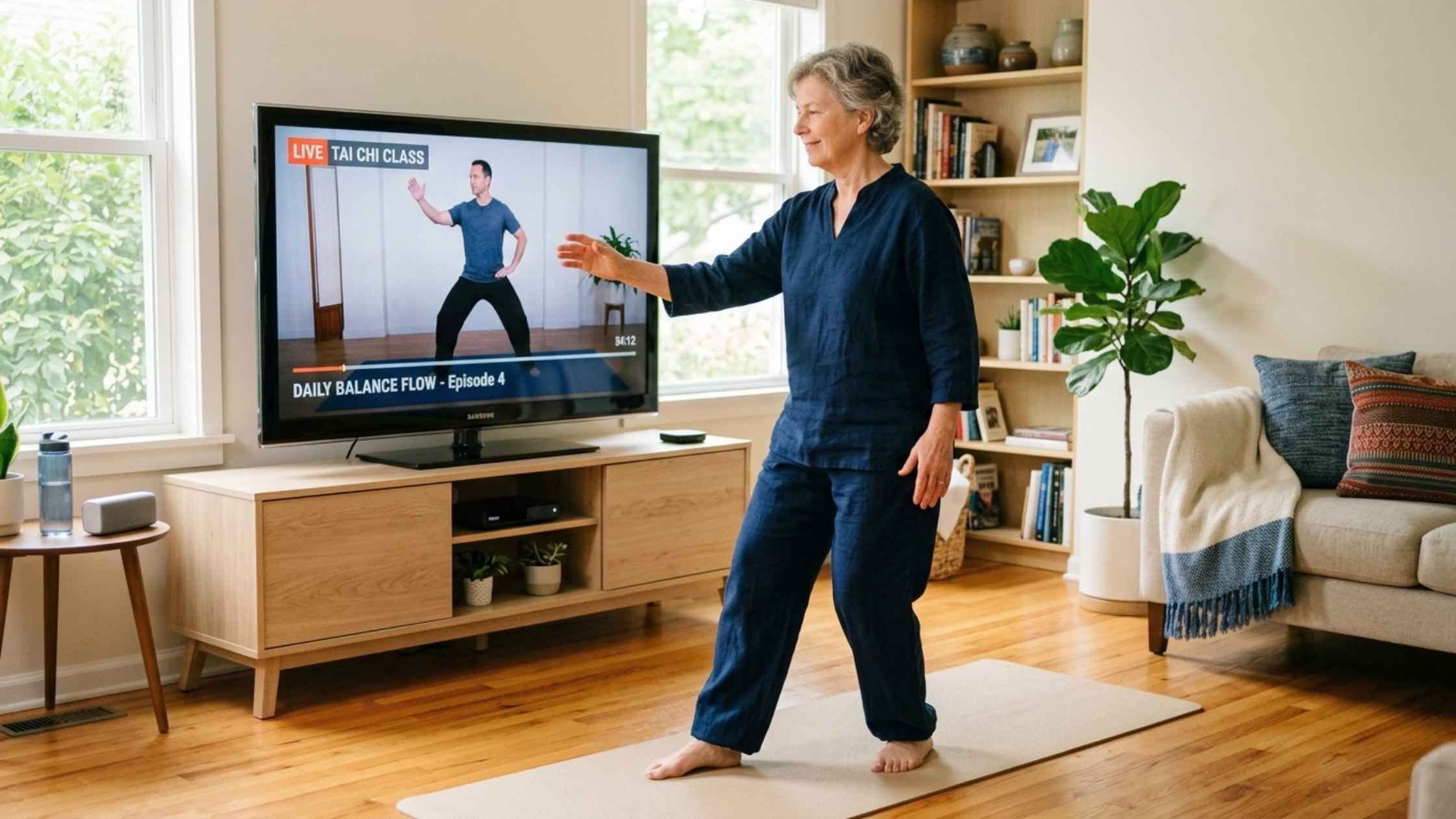
Table of Contents
- Why Learn Tai Chi Online
- Types of Online Tai Chi Classes
- What Beginners Learn in Tai Chi Courses
- How Online Tai Chi Lessons Are Taught
- How to Choose the Right Online Tai Chi Course
- Best Online Tai Chi Courses for Beginners
- How to Learn Tai Chi at Home
- Start Your Tai Chi Practice with ZenFit
- FAQs
Tai Chi looks deceptively simple—slow, flowing movements that anyone can follow. But finding the right course to actually learn it, especially one that fits your schedule and assumes no prior experience, often proves more complicated than the practice itself.
This guide breaks down the types of online tai chi classes available, what beginners typically learn, and how to choose instruction that matches your goals and lifestyle.
Why Learn Tai Chi Online
Tai Chi courses offer gentle, low-impact exercise that improves balance, flexibility, and stress levels—and quality instruction is now available entirely online. Popular platforms like Tai Chi for Health, Tai Chi Foundation, and various on-demand video libraries make learning accessible for complete beginners, seniors seeking mobility support, and people managing chronic discomfort. Costs typically range from $50 to $150 per month for structured programs, though many instructors offer free introductory classes.
Online instruction works particularly well for tai chi because the practice emphasizes slow, deliberate movements that translate clearly through video. You can see exactly how the instructor shifts weight, positions hands, and coordinates breath with motion.
Practice Anytime with On-Demand Access
On-demand Tai Chi courses let you practice whenever your schedule allows. There's no rushing to make a 6 PM class or rearranging your evening around a fixed time slot.
This flexibility matters for building consistency. When practice fits naturally into your day, you're more likely to show up regularly—and regular practice is what produces results.
Learn from Home Without Commuting
Practicing at home removes one of the biggest barriers to starting any wellness routine: getting there. No parking, no gym bag, no travel time.
Your living room, backyard, or a quiet corner of your office can become your practice space. All you really need is enough room to extend your arms comfortably.
Replay Lessons to Master Movements
Unlike in-person classes where instruction moves forward whether you've absorbed it or not, online lessons let you pause, rewind, and repeat. This proves especially valuable when learning new movements.
Tai chi involves subtle weight shifts and precise hand positions that often take several viewings to internalize. Watching a movement five times before trying it yourself accelerates the learning process considerably.
Save Money Compared to In-Person Classes
Studio tai chi classes typically run $15 to $25 per session, which adds up quickly with regular attendance. Online subscriptions often cost less per month than a single in-person class.
Many platforms also offer free tai chi classes for beginners, giving you a chance to explore the practice before committing financially.
Types of Online Tai Chi Classes
Understanding the different formats available helps you choose instruction that matches how you learn best. Each approach offers distinct advantages depending on your goals and schedule.
Live Online Tai Chi Classes
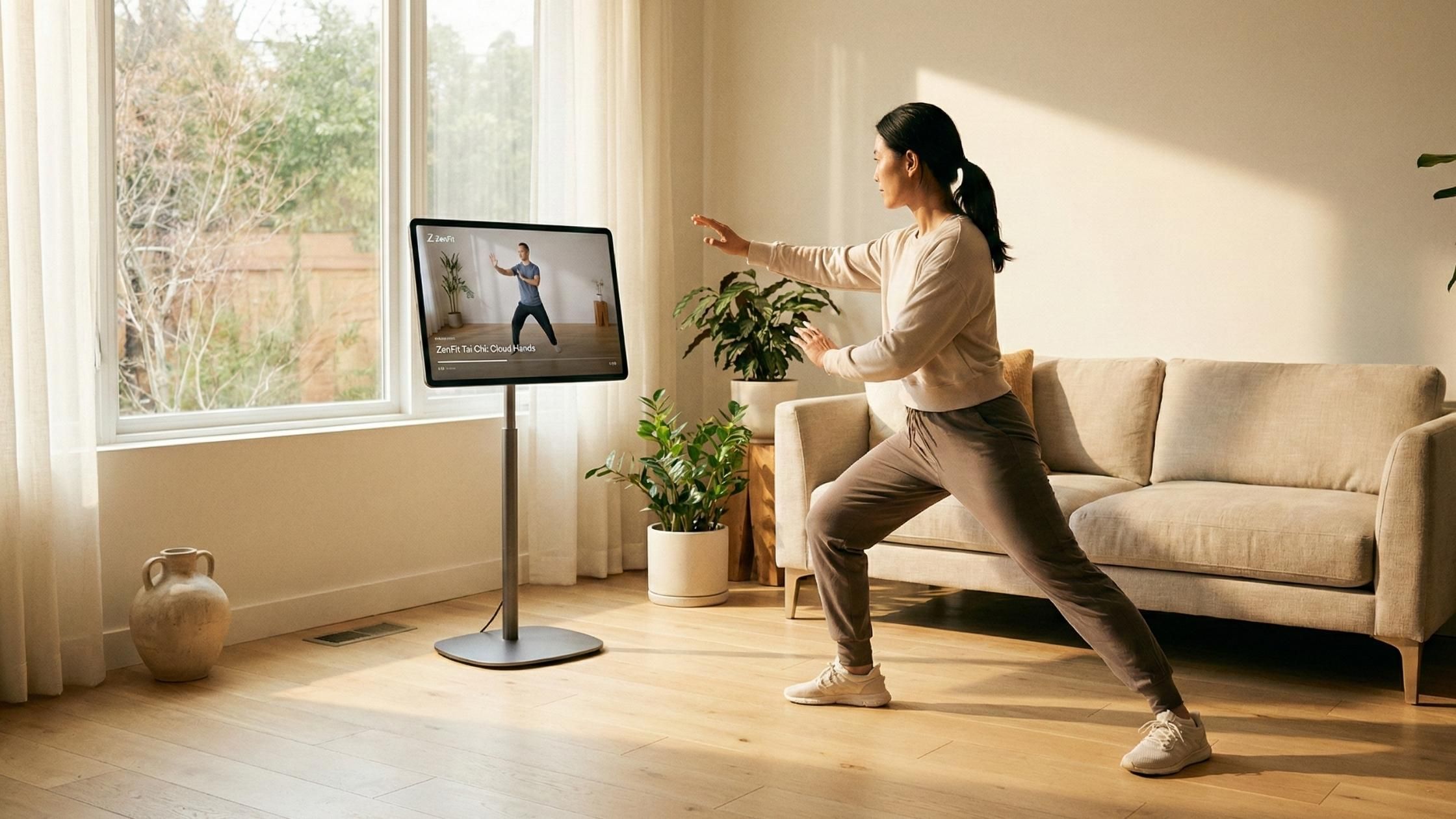
Live virtual classes happen in real time, typically through Zoom or similar platforms. An instructor guides the session while you follow along, and you can often ask questions or request clarification.
This format works well if you value accountability and real-time feedback. Scheduled sessions also create structure that some learners find motivating.
On-Demand Tai Chi Video Courses
Pre-recorded courses let you work through a structured curriculum at your own pace. Lessons are typically organized progressively, building skills from foundational movements to complete forms.
The self-paced nature suits busy schedules and different learning speeds. You might breeze through some lessons and spend extra time on others.
Tai Chi and Qigong Combined Programs
Qigong (pronounced "chee-gong") is a related Chinese practice that uses simpler, repetitive movements to cultivate qi—the body's vital energy according to Traditional Chinese Medicine. Many courses bundle tai chi and qigong together because they complement each other naturally.
Free Tai Chi Classes for Beginners
Free online classes provide a low-commitment way to explore tai chi before investing in a paid program. YouTube hosts numerous beginner-friendly tutorials, and many subscription platforms offer free trial periods.
Once you've confirmed interest, transitioning to a structured paid course typically accelerates progress.
| Format | Best For | Schedule | Interaction |
|---|---|---|---|
| Live online classes | Learners who want real-time feedback | Fixed times | Direct instructor Q&A |
| On-demand courses | Busy schedules, self-paced learners | Anytime | None or community forums |
| Combined tai chi and qigong | Holistic wellness seekers | Varies | Depends on platform |
| Free beginner classes | Trying tai chi before committing | Anytime | Limited |
What Beginners Learn in Tai Chi Courses
Knowing what to expect from beginner instruction helps set realistic expectations. Most introductory courses cover the same foundational elements, though teaching styles vary.
Basic Stances and Body Alignment
Every tai chi movement builds on proper stance and alignment. You'll learn how to position your feet, distribute your weight, and maintain a relaxed but upright posture.
Correct alignment protects your joints and allows energy to flow freely. Rushing past Tai Chi fundamentals often leads to developing habits that become harder to correct later.
Fundamental Tai Chi Movements
Beginner courses introduce slow, flowing movements characteristic of the practice. You might learn movements with names like "parting the wild horse's mane" or "wave hands like clouds"—descriptive phrases that help you visualize the motion.
The slowness is intentional. Moving deliberately builds body awareness and allows you to notice subtle sensations you'd miss at normal speed.
Breathing Techniques and Qi Awareness
Qi (pronounced "chee") refers to life energy in Traditional Chinese Medicine. Tai chi coordinates breath with movement to help this energy circulate throughout your body.
You'll typically learn to breathe deeply into your lower abdomen rather than shallowly into your chest. This diaphragmatic breathing activates the body's relaxation response and supports the calming effects tai chi is known for.
Simple Forms You Can Practice Daily
A "form" in tai chi is a sequence of connected movements performed in a specific order. Beginners start with short forms—sometimes just 8 to 12 movements—that can be completed in a few minutes.
Rather than needing 30 minutes or more, you can maintain your practice in 10 to 15 minutes, which dramatically improves consistency.

How Online Tai Chi Lessons Are Taught
Quality online instruction follows predictable patterns that make learning accessible even without an in-person teacher present.
Step-by-Step Video Instruction
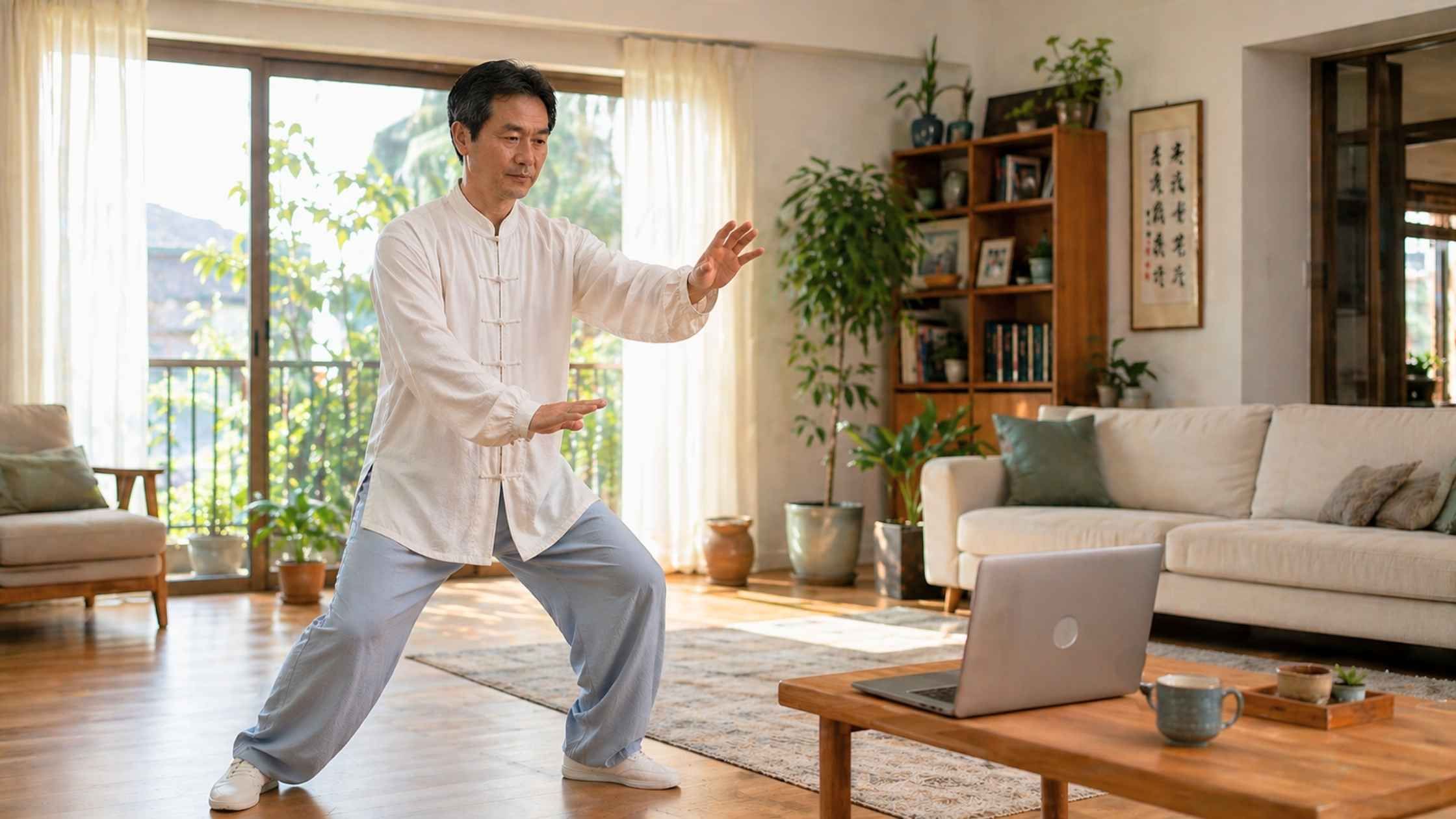
Good instructors break each movement into small, manageable pieces. You'll often see demonstrations from multiple angles—front, side, and sometimes overhead—so you can understand exactly how the body moves through space.
Many courses also include verbal cues that help you internalize movements without constantly watching the screen. Over time, you'll find yourself following along by ear as much as by sight.
Guided Repetitions for Muscle Memory
Learning tai chi involves more than understanding movements intellectually—your body needs to remember them. Courses typically include practice sections where you repeat movements multiple times with the instructor.
This repetition builds what's sometimes called "muscle memory," though it's really your nervous system learning to execute movements automatically.
Built-In Progress Tracking
Some platforms and apps track your completed lessons, practice streaks, and wellness metrics like energy levels or mood. This tracking serves two purposes: it shows you how far you've come, and it provides gentle accountability.
Apps like ZenFit integrate this kind of tracking alongside tai chi instruction, making it easier to build and maintain consistent habits.
How to Choose the Right Online Tai Chi Course
With numerous options available, a few key considerations help narrow the field to courses that fit your specific situation.
Match the Course to Your Health Goals
Different courses emphasize different outcomes:
- Stress relief: Some programs focus primarily on relaxation and calming the nervous system
- Balance and fall prevention: Over 14 million older adults fall yearly, and these courses prioritize stability exercises and weight-shifting practice
- Flexibility and joint health: Certain programs emphasize range of motion and gentle stretching
- Weight management over 50: Some programs support healthy body composition through consistent, gentle movement
- Martial arts foundations: A few courses approach tai chi with self-defense applications in mind
Identifying your primary goal before choosing helps ensure the instruction aligns with what you're hoping to achieve.
Look for Beginner-Friendly Instruction
Courses explicitly labeled for beginners typically use clearer explanations and avoid assuming prior knowledge. The instructor's teaching style matters too—look for patient, detailed guidance rather than rapid demonstrations.
Reading reviews or watching preview videos can reveal whether an instructor's approach resonates with you.
Consider Session Length and Schedule Flexibility
Short daily sessions often produce better results than longer weekly practices. A 10-minute daily routine builds habit and retention more effectively than a single 60-minute session each week.
Look for courses designed around brief, consistent practice rather than marathon sessions.
Check for Holistic Wellness Features
Some platforms offer Tai Chi as part of a broader wellness ecosystem that includes mindfulness practices, nutrition guidance, or health tracking. If you're interested in a more integrated approach to wellbeing, comprehensive options provide additional value.
Explore ZenFit's beginner-friendly classes rooted in Chinese Wellness→
Best Online Tai Chi Courses for Beginners
Rather than reviewing every available option, here are the categories worth exploring based on what you're looking for.
Courses with Structured Beginner Programs
Platforms like Tai Chi for Health Institute offer progressive curricula specifically designed for new learners. Programs build systematically from foundational concepts to complete forms, ensuring you develop proper technique before advancing.
Structured programs work well if you prefer clear direction over choosing your own path through scattered content.
Platforms Offering Short Daily Sessions
Some courses are built around the reality that most people have limited time. Sessions of 5 to 15 minutes make daily practice achievable even during busy periods.
ZenFit's Tai Chi and Qigong video classes follow this approach, with step-by-step instruction designed to fit into a 10 to 15 minute daily routine.
Apps That Combine Tai Chi with Qigong and Mindfulness
If you're drawn to a holistic approach that addresses body, mind, and energy together, apps integrating multiple practices offer convenience and coherence. Rather than juggling separate platforms for movement, meditation, and wellness tracking, everything lives in one place.
This integration proves especially valuable for beginners who aren't yet sure which practices will resonate most.
How to Learn Tai Chi at Home
Getting started requires less preparation than you might expect. Here's a practical sequence for beginning your home practice.
1. Create a Quiet Practice Space
Find a calm area with enough room to step forward, backward, and side to side with arms extended. A space roughly 6 feet by 6 feet works for most beginner movements.
Remove tripping hazards and minimize distractions. A quiet environment helps you focus on the subtle sensations that make tai chi effective.
2. Select an Online Course for Beginners
Starting with a structured beginner course produces better results than piecing together random videos. A well-designed curriculum ensures you learn foundational skills before attempting more complex movements.
Look for courses that explicitly welcome complete beginners and offer clear, patient instruction.
3. Start with Short Daily Sessions
Consistency matters more than duration, especially when building a new habit. Beginning with just 10 minutes daily establishes the routine without feeling overwhelming.
You can always extend sessions once the habit is solid. Starting small and building gradually tends to produce more sustainable practice than ambitious beginnings that fizzle out.
4. Use an App to Track Your Progress
Tracking practice sessions, energy levels, and how you feel before and after creates useful feedback. Over time, you'll notice patterns that help you understand how tai chi affects your wellbeing.
Start Your Tai Chi Practice with ZenFit
ZenFit brings together Tai Chi, Qigong, and mindfulness practices in one app designed for busy schedules. The step-by-step video classes assume no prior experience and are built around 5 to 15 minute daily sessions.
Beyond movement instruction, ZenFit offers AI-powered personalization based on your body type and health goals, drawing on Traditional Chinese Medicine principles alongside modern fitness science. You'll also find guided breathing exercises, TCM-based nutrition guidance, and tracking tools for routines, energy levels, and mood.
FAQs
Can you learn Tai Chi effectively through online classes?
Yes—online tai chi courses with step-by-step video instruction allow beginners to learn proper form and build consistent practice at home. The ability to pause, rewind, and repeat lessons often accelerates learning compared to in-person classes where instruction moves forward regardless of whether you've absorbed it.
How long does it take to learn basic Tai Chi movements?
Most beginners can learn foundational stances and simple forms within a few weeks of regular practice. Deeper benefits like improved balance, flexibility, and stress reduction typically develop over several months of consistent daily practice.
Are online Tai Chi classes suitable for seniors or people with limited mobility?
What is the difference between Tai Chi and Qigong?
Tai chi involves flowing sequences of martial arts-inspired movements performed in a specific order (called forms). Qigong uses simpler, often stationary exercises focused on cultivating qi through breath and gentle movement. Both practices share roots in Traditional Chinese Medicine and are frequently taught together.
Do I need any equipment to practice Tai Chi at home?
No special equipment is required. Wear comfortable, loose-fitting clothing that allows free movement. Flat shoes or bare feet work well on most surfaces. The only real requirement is enough space to move your arms and take a few steps in any direction.