How Tai Chi Improves Balance and Helps Prevent Falls in Older Adults
Published on January 8, 2026 | Updated on January 16, 2026

Laura Mitchell
Laura is a wellness content creator specializing in holistic health and movement for healthy aging. As an expert in Tai Chi and Qigong, she passionately integrates Chinese wellness practices into her daily lifestyle.
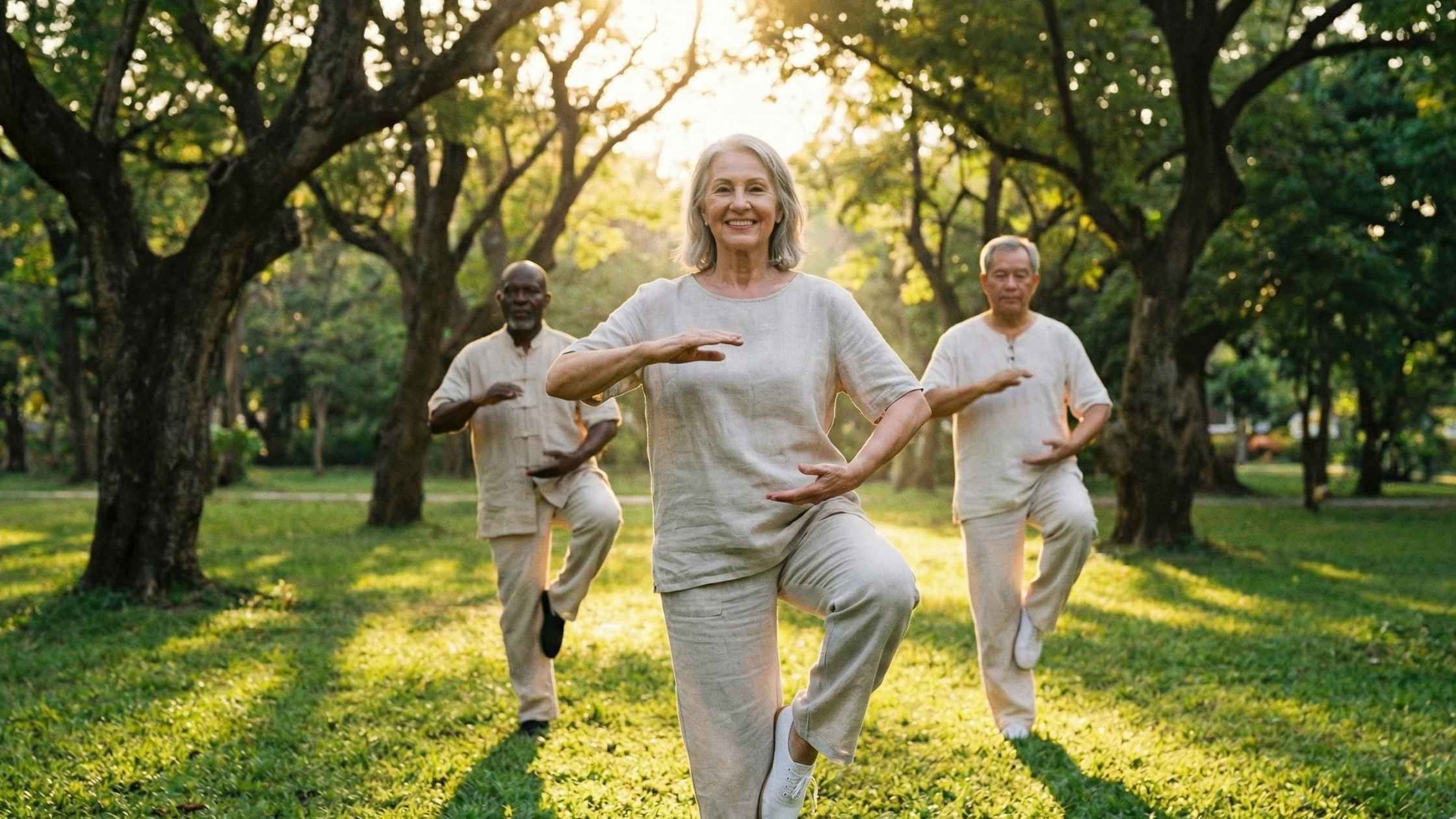
Tai Chi offers a gentle, evidence-based approach to building the balance and stability that protect against falls. This guide covers how the practice works, what research shows about its effectiveness, and how to begin even if you've never tried it before.
What is Tai Chi
Tai Chi is a slow, flowing form of exercise that improves balance and reduces fall risk in older adults by strengthening leg muscles, sharpening coordination, and training the body to sense its position in space. Originally developed centuries ago in China as a martial art, Tai Chi has become one of the most widely practiced forms of gentle movement worldwide.

The practice involves moving through a series of connected postures while breathing deeply and staying mentally focused. Each movement flows into the next without pause, creating a continuous, meditative rhythm. In Traditional Chinese Medicine, this type of movement is thought to cultivate "qi," or vital energy, though you don't need to subscribe to that philosophy to benefit from the physical practice.
What makes Tai Chi distinctive is the combination of physical and mental engagement. You're not just going through motions—you're paying attention to how your weight shifts, where your feet are placed, and how your body moves through space. This awareness is precisely what builds better balance over time.
Why balance and fall prevention matter for older adults

There's also a psychological dimension worth noting. After experiencing a fall, or even a close call, many people start moving less. They avoid stairs, skip walks, or hesitate before standing up. This caution is understandable, but it often backfires. Less movement leads to weaker muscles and stiffer joints, which actually increases fall risk.
Breaking this cycle requires gentle, progressive exercise that builds strength and confidence without creating new risks. Tai Chi fits this description well because the movements are slow, controlled, and adaptable to different fitness levels.
Science-backed benefits of Tai Chi for fall prevention
-
Reduced fall rates: People who practice Tai Chi regularly experience fewer falls. Some studies report that participants are up to 50% less likely to fall compared to non-practitioners. [1]
-
Improved balance and stability: The slow weight-shifting movements directly train the systems responsible for keeping you upright. Practitioners show measurable improvements in postural control. [2]
-
Better mobility and walking speed: Regular practice often translates to smoother, more confident movement during everyday activities like walking, turning, and navigating stairs. [3]
-
Less fear of falling: Beyond physical changes, Tai Chi helps reduce the anxiety that often accompanies balance concerns. This psychological benefit encourages continued activity rather than avoidance. [4]
-
Faster corrective responses: The practice strengthens the connection between sensing a balance challenge and responding to it, allowing for quicker adjustments when footing becomes uncertain. [5]
How Tai Chi improves balance in older adults
The benefits listed above don't happen by accident. Several specific mechanisms explain why Tai Chi works so well for balance improvement.

Strengthening lower body muscles
Every Tai Chi posture involves holding a slightly bent-knee stance while shifting weight from one leg to the other. This sustained engagement builds strength in the quadriceps, calves, and ankle stabilizers—the same muscles that catch you when you stumble.
Enhancing proprioception and body awareness
Proprioception refers to your body's ability to sense where it is in space without looking. When you close your eyes and touch your nose, proprioception guides your hand. Tai Chi trains this sense through constant attention to foot placement, weight distribution, and posture. Over time, your body becomes better at making automatic corrections before a wobble turns into a fall.
Building core stability
The upright posture maintained throughout Tai Chi engages the deep muscles of the abdomen and lower back. A stronger core provides a more stable center of gravity, which makes all other movements more secure.
Improving flexibility and joint mobility
Stiff hips, knees, and ankles limit your ability to adjust when balance is challenged. The gentle stretching and circular movements in Tai Chi gradually increase range of motion in these joints, allowing for smoother, more adaptive movement.
Developing mind-body coordination
Tai Chi requires you to think about what you're doing while you're doing it. This focused attention strengthens the neural pathways between intention and action, improving reaction time and coordination during daily activities.
Tai Chi for arthritis and fall prevention

Joint pain and stiffness often go hand-in-hand with balance concerns, and Tai Chi addresses both. The movements are gentle on joints because there's no jumping, sudden impact, or jarring motion. Instead, the practice emphasizes smooth, continuous flow that can actually reduce stiffness over time.
The Tai Chi for Arthritis program, developed by Dr. Paul Lam, was designed specifically for people with arthritis or elevated fall risk. Organizations including the Arthritis Foundation and the Centers for Disease Control and Prevention have recognized it as an evidence-based intervention.
Tip: If joint pain is a concern, starting with shorter sessions of five to ten minutes allows your body to adapt gradually. Many practitioners find that consistency matters more than duration.
Additional Tai Chi elderly benefits
Balance improvement is often the primary reason older adults begin Tai Chi, but the practice offers several related benefits worth mentioning.
Stress reduction and relaxation
The combination of slow movement, deep breathing, and mental focus activates the parasympathetic nervous system, which governs relaxation. Many practitioners describe feeling calmer and more grounded after a session.
Pain management
Regular practice may help ease chronic discomfort, particularly in the back, knees, and hips. The gentle movements promote circulation and release muscle tension that can contribute to pain.
Improved sleep quality
Reduced stress and physical tension often translate to better sleep. Some practitioners report falling asleep more easily and waking less frequently during the night.
Cognitive function support
Learning and remembering movement sequences engages memory and concentration. While more research is needed, some studies suggest that mind-body practices like Tai Chi may support cognitive health as we age.
Who Can Benefit from Tai Chi for Fall Prevention
One of Tai Chi's greatest strengths is its accessibility. The practice can be adapted for a wide range of physical conditions and fitness levels.
| Who Benefits | Why Tai Chi Works Well |
|---|---|
| Adults 40+ concerned about balance | Low-impact with gradual progression |
| Seniors with previous falls or fear of falling | Builds both physical stability and confidence |
| People with arthritis or joint stiffness | Gentle on joints while improving mobility |
| Complete beginners | No equipment or prior experience required |
| Those recovering from injury or surgery | Movements can be modified or performed seated |
The movements can be performed standing, with support from a chair or wall, or entirely while seated. This flexibility means the practice can grow with you as your abilities change.
How to practice Tai Chi for balance
Certain elements of Tai Chi practice contribute most directly to balance improvement. Understanding these can help you focus your attention during practice.
Slow and continuous movements
The deliberate pace of Tai Chi gives your muscles time to engage fully and your nervous system time to register changes in position. Moving slowly also reduces the risk of strain or injury.
Weight shifting and single-leg stances
Much of Tai Chi involves transferring weight from one foot to the other. These transitions challenge your balance in a controlled, predictable way, gradually building the stability needed for less predictable situations.
Controlled breathing
Coordinating breath with movement helps maintain focus and prevents the muscle tension that can interfere with smooth motion. Deep, steady breathing also supports relaxation throughout the practice.
Focused attention
Staying mentally present during each movement enhances proprioception and body awareness. This concentration transforms simple physical motions into effective balance training.
How to get started with Tai Chi for fall prevention
Beginning any new practice involves some uncertainty, but Tai Chi is designed to meet you wherever you are. Here's a practical approach.
1. Choose a beginner-friendly program
Programs designed specifically for seniors or fall prevention offer the gentlest introduction. The Tai Chi for Arthritis program is one well-researched option, and many apps provide guided instruction suitable for complete beginners.
2. Start with short daily sessions
Five to ten minutes of daily practice produces better results than occasional longer sessions. Brief, consistent practice is easier to maintain and allows your body to adapt without fatigue.
3. Focus on basic postures first
Foundational stances build the strength and awareness that more complex movements require. Rushing into advanced forms often means missing the benefits that come from mastering the basics.
4. Practice consistently and track progress
Daily repetition creates the muscle memory and neural adaptations that improve balance. Noting changes in energy, stability, or confidence can help maintain motivation over time.
Why practice Tai Chi with ZenFit
ZenFit offers step-by-step video instruction designed for beginners, with sessions as short as five minutes. The Tai Chi and Qigong programs emphasize gentle, joint-friendly movement that fits into real schedules.
The app's AI-powered personalization adapts recommendations based on your body type and health goals, drawing on both Traditional Chinese Medicine principles and modern exercise science. A built-in health tracker lets you monitor changes in balance, energy, and overall vitality as your practice develops.
Whether you're starting fresh or returning to movement after time away, ZenFit provides structure and guidance that makes daily practice feel achievable.
Ready to start your journey
Tai Chi offers a proven path to better balance and reduced fall risk. The practice adapts to your current abilities, requires no special equipment, and can be done almost anywhere.
FAQs about Tai Chi for balance and fall prevention
- Can I practice Tai Chi if I use a walker or cane?
Yes. Many Tai Chi movements can be performed while holding onto a stable surface, and some programs offer seated variations that provide similar benefits without standing.
- How long does it take to see balance improvements from Tai Chi?
Most practitioners notice improved stability and confidence within a few weeks of consistent daily practice. Benefits continue to accumulate over months and years.
- Is Tai Chi safe to practice after a hip replacement or major surgery?
Tai Chi is generally considered safe after surgical recovery, though checking with a healthcare provider first is wise. Gentle, modified programs can accommodate most post-surgical limitations.
- Can Tai Chi exercises be performed while seated?
Yes. Seated Tai Chi is effective for those with limited mobility. Core movements and breathing techniques adapt well to a chair while still providing balance and coordination benefits.
- What is the difference between Tai Chi and Qigong for balance improvement?
Tai Chi involves flowing sequences of connected movements, while Qigong typically focuses on simpler, often stationary postures combined with breathing exercises. Both support balance, and many people practice both.