Tai Chi vs Yoga: Which Practice Is Right for You
Published on February 8, 2026 | Updated on June 10, 2026

Laura Mitchell
Laura is a wellness content creator specializing in holistic health and movement for healthy aging. As an expert in Tai Chi and Qigong, she passionately integrates Chinese wellness practices into her daily lifestyle.
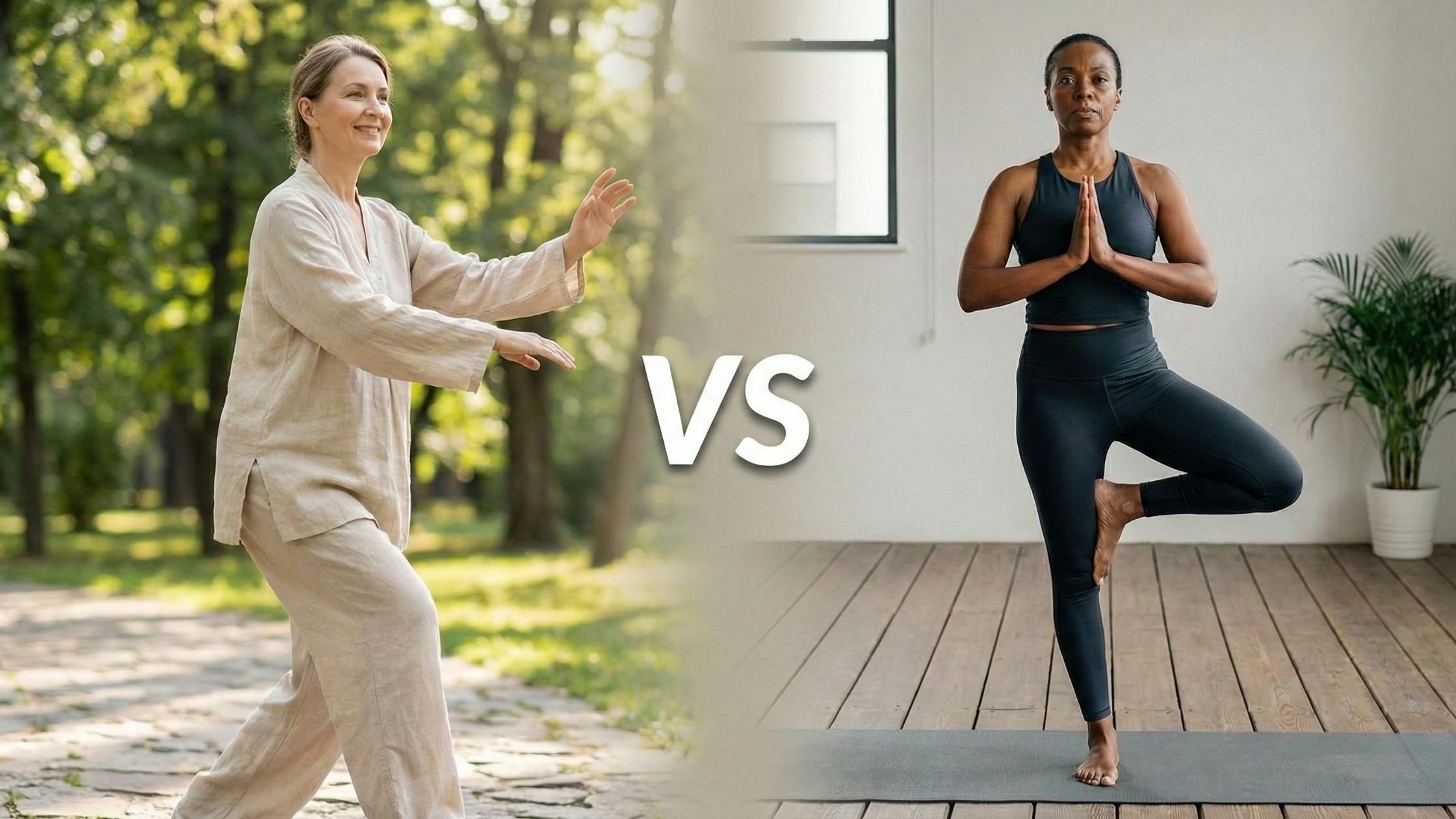
Imagine starting your day with slow, flowing movements in a quiet park — or holding a steady pose on your mat as you focus on your breath. Both Tai Chi and yoga offer gentle paths to better health, but they work in very different ways. Tai Chi moves continuously through standing sequences rooted in Chinese martial arts, while yoga builds strength and flexibility through held poses from ancient Indian tradition.
Choosing between them—or deciding to practice both—depends on your body, your goals, and what kind of movement feels right to you. This guide breaks down the origins, benefits, and practical differences to help you find your fit.
What is the difference between tai chi and yoga
Tai chi uses flowing, martial-arts inspired movements focusing on balance and internal energy flow, while yoga uses held static poses to build strength and flexibility. Tai chi is typically performed standing with slow, continuous sequences. Yoga, on the other hand, includes varied positions—standing, seated, and lying down—with poses held for several breaths.
Both practices are low-impact and promote mind-body connection, yet they achieve this through different approaches. In Traditional Chinese Medicine, Qi refers to your body's internal life force or vital energy. Tai chi emphasizes cultivating and balancing this Qi through gentle movement. Yoga focuses on uniting body, mind, and spirit through physical postures called asanas.
| Movement Style | Primary Focus | Typical Positions | Best For | |
|---|---|---|---|---|
| Tai Chi | Slow, continuous, flowing | Balance, Qi flow, mindfulness | Standing | Gentle exercise, fall prevention, stress relief |
| Yoga | Static holds with transitions | Flexibility, strength, breath awareness | Standing, seated, lying down | Building strength, increasing flexibility |
Tai chi and yoga origins and philosophy
Where each practice comes from helps explain why they feel so different in action.
Tai chi roots in Chinese martial arts
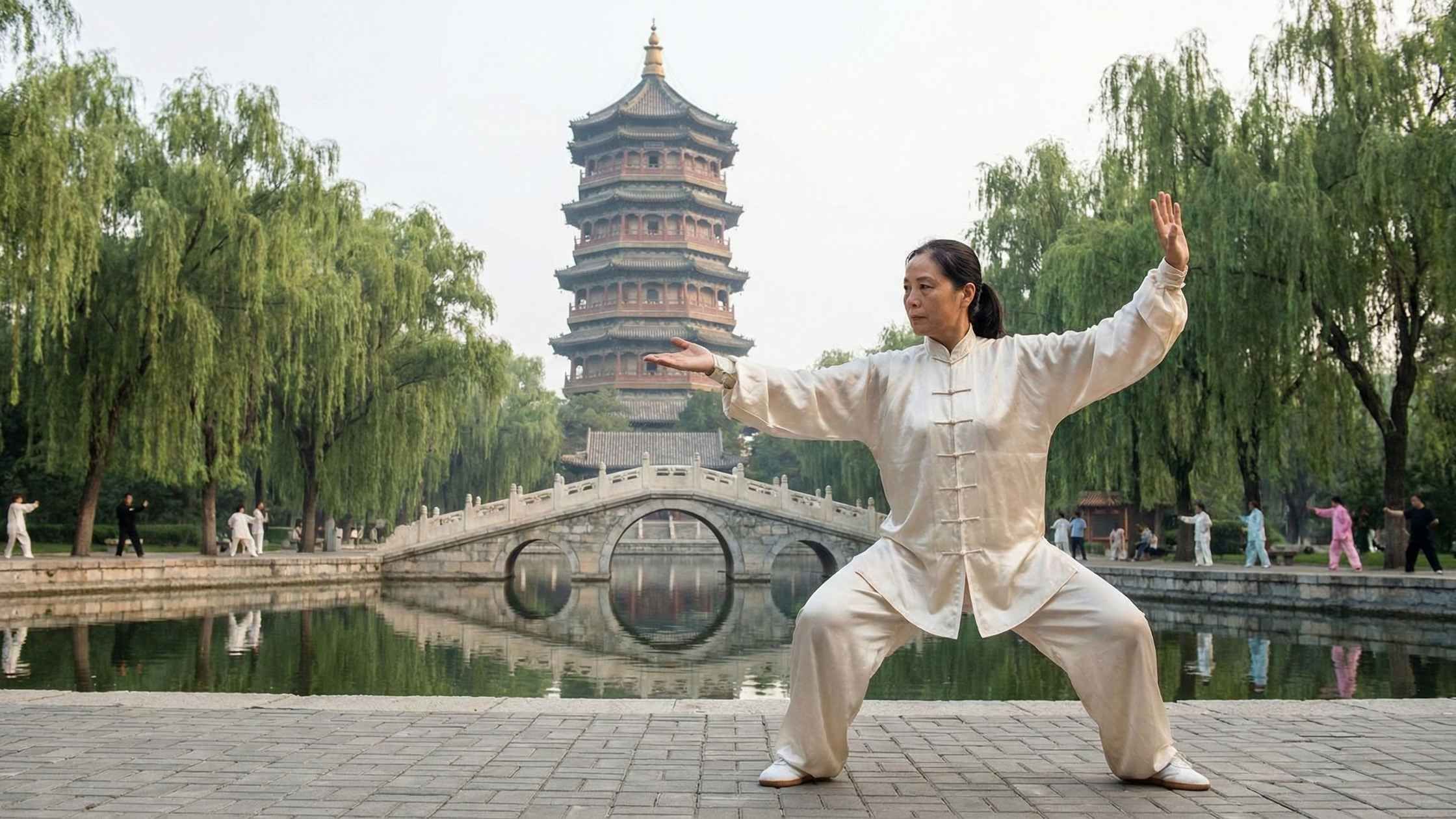
Traditional Chinese Medicine views health as the smooth flow of Qi throughout the body. When this energy becomes blocked or imbalanced, discomfort and illness can follow. Tai chi aims to restore and maintain this natural flow through its slow, circular movements.
Yoga origins in ancient India
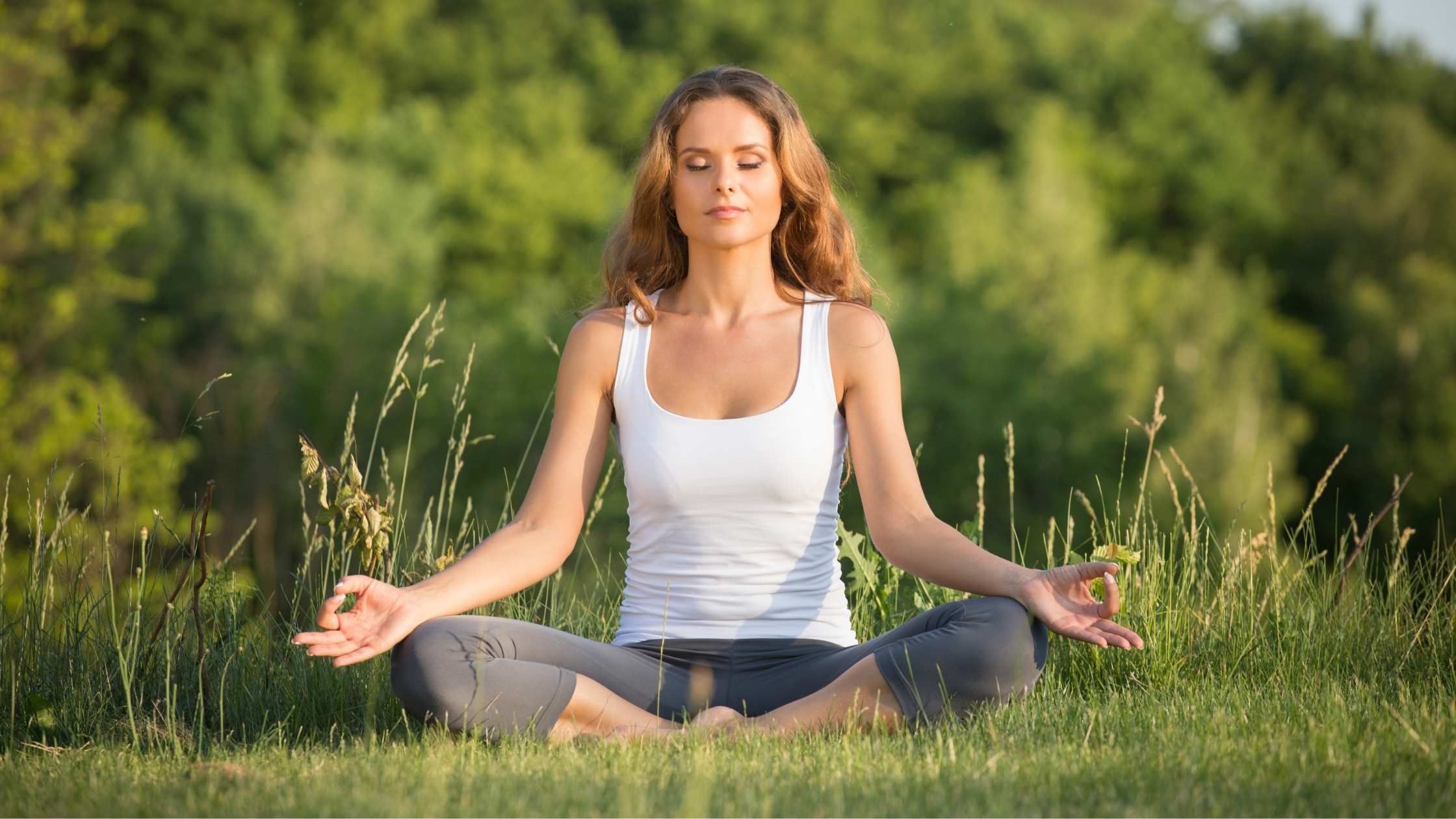
The word yoga means "to unite," reflecting its goal of connecting body, mind, and spirit. This practice originated in ancient India thousands of years ago as a spiritual discipline combining physical postures, breathing techniques called pranayama, and meditation.
Modern yoga has branched into many styles. Hatha yoga emphasizes foundational poses. Vinyasa links movement with breath in flowing sequences. Yin yoga involves holding gentle stretches for extended periods. Each style offers a different experience within the same tradition.
How tai chi and yoga movement styles compare
The way you move in each practice creates distinct experiences and benefits.
Tai chi flowing sequences
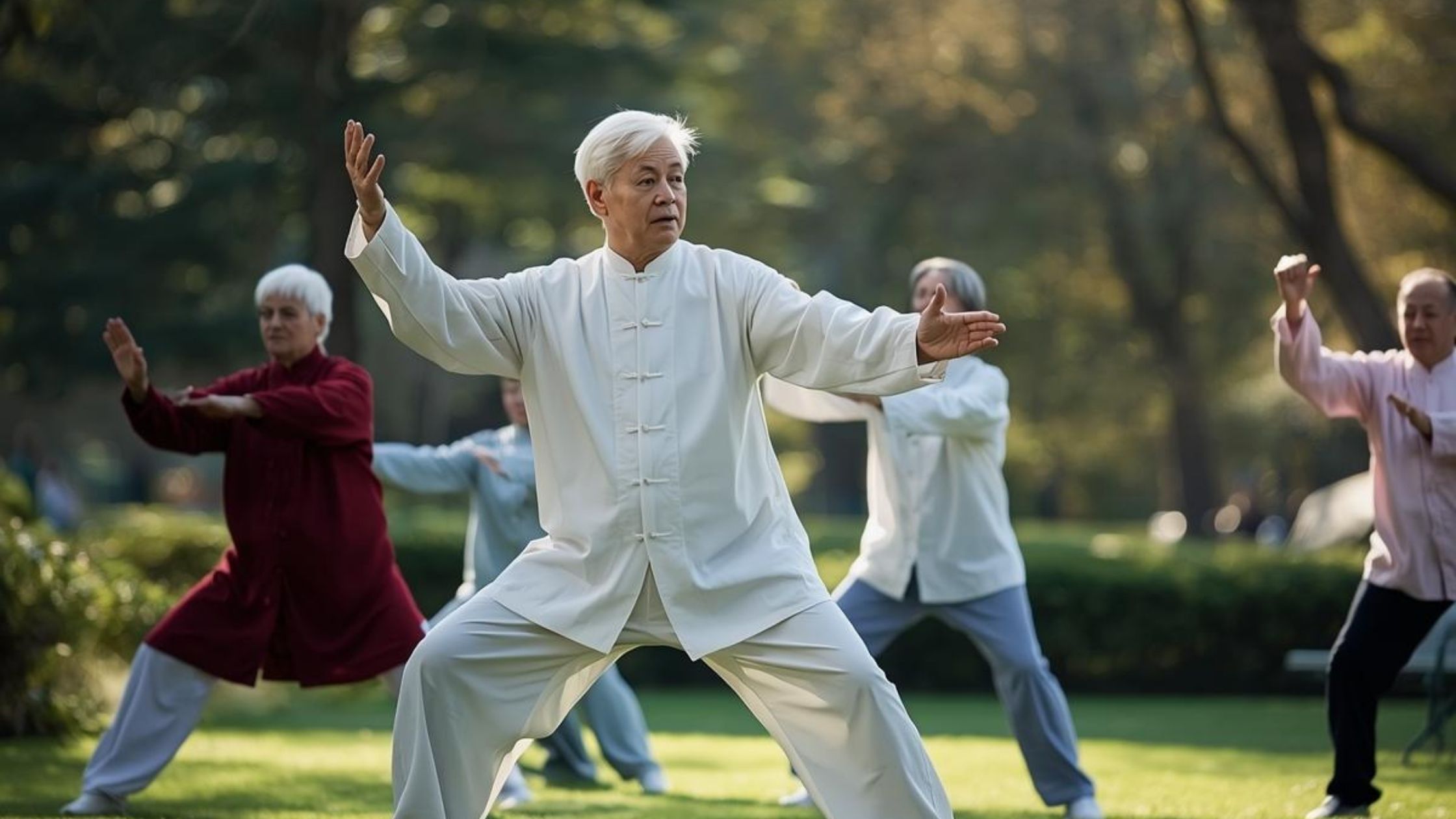
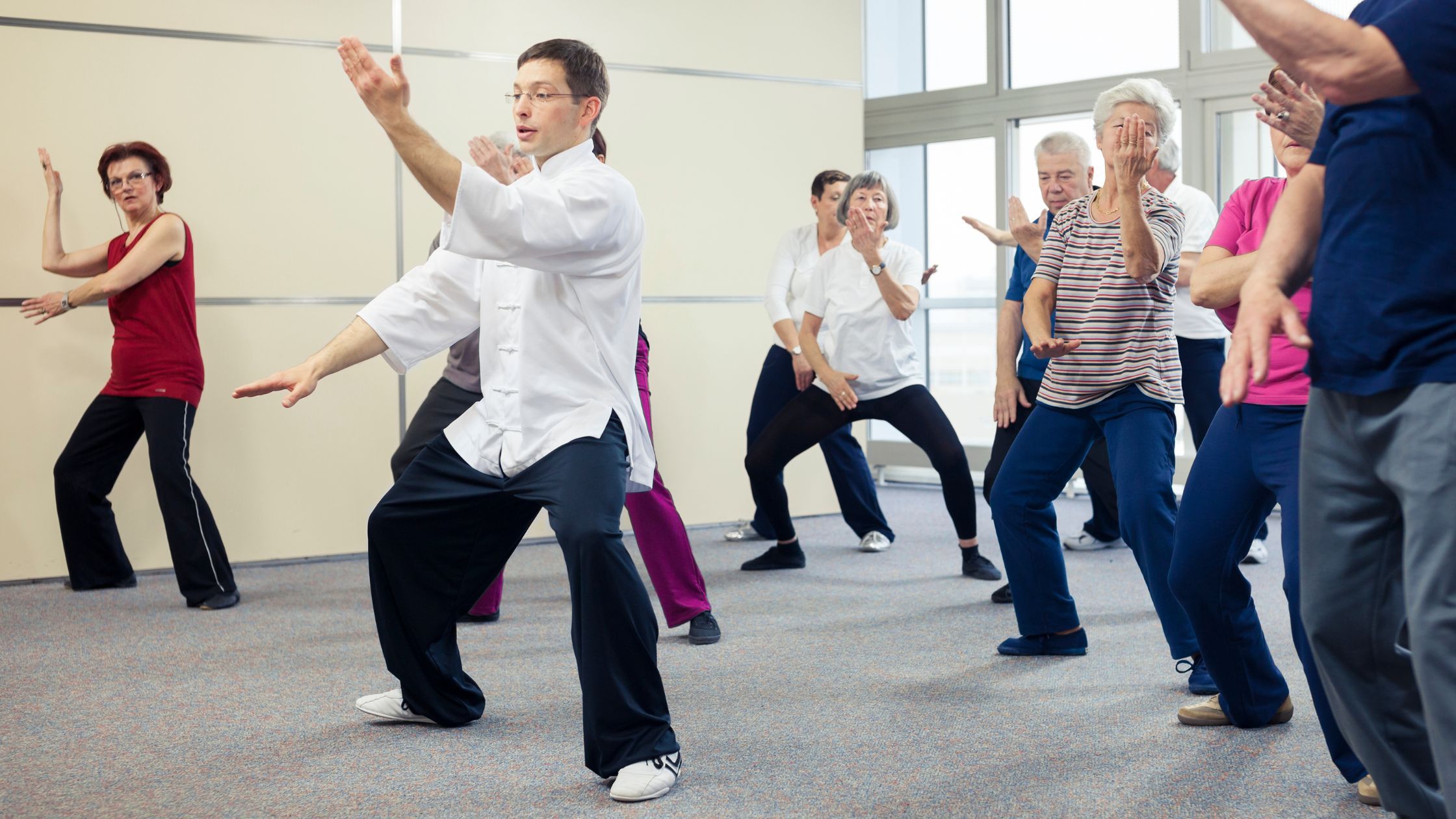
Tai chi movements flow together without stopping, creating a continuous dance-like quality. You shift your weight smoothly from one leg to the other while your arms trace circular patterns through the air. This flowing quality can feel meditative, almost hypnotic, once you learn the basic movements.
-
Continuous motion: Sequences link together without pauses, keeping you in constant gentle movement
-
Standing practice: Most movements happen upright with soft knees and relaxed shoulders
-
Circular patterns: Arms and legs follow smooth, rounded paths rather than sharp angles
Yoga postures and transitions
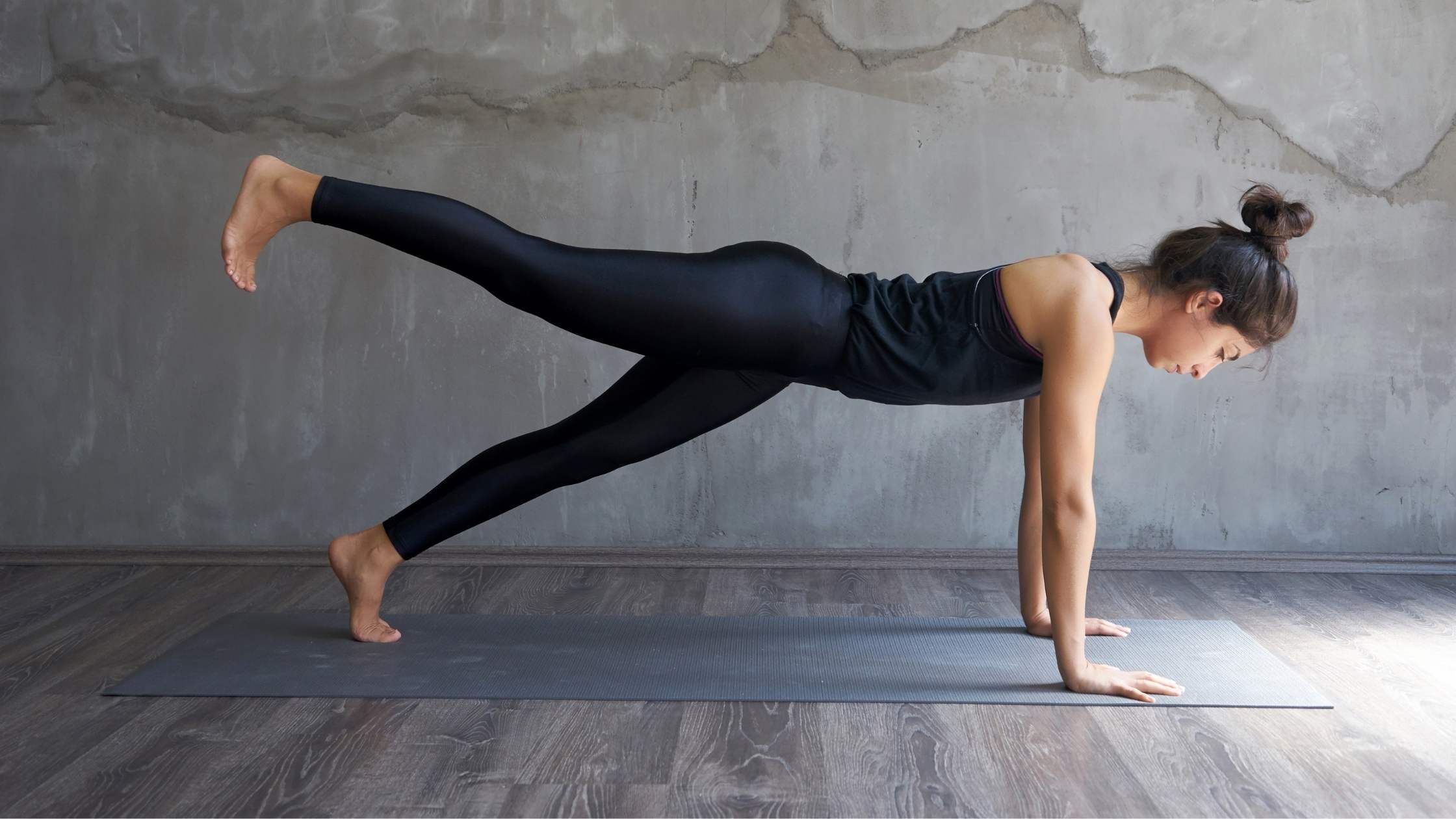
Yoga involves holding poses for several breaths before transitioning to the next position. You might hold a warrior pose for five breaths, then flow into a forward fold, then settle into a seated twist. The variety of positions means yoga engages your body in many different ways within a single session.
-
Static holds: Poses are maintained for multiple breath cycles, building strength and awareness
-
Varied positions: Practice includes standing, seated, supine, and sometimes inverted poses
-
Breath linking: Transitions often happen on an inhale or exhale, connecting movement to breath
Benefits of tai chi vs yoga
Both practices deliver meaningful benefits, though they excel in different areas.
Physical benefits
| Benefit | Tai Chi | Yoga |
|---|---|---|
| Balance | Excels at dynamic balance and fall prevention | Improves static balance through held poses |
| Flexibility | Gentle joint mobility | Deeper stretches for muscle flexibility |
| Strength | Lower body and postural muscles | Core, upper body, and full-body strength |
| Joint health | Low-impact, ideal for sensitive joints | Varies by style; some poses can stress joints |
Mental and emotional benefits
Both tai chi and yoga activate your body's relaxation response, helping to reduce stress hormones and calm the nervous system. The focused attention required by both practices interrupts anxious thought patterns and anchors you in the present moment. Regular practice of either can improve sleep quality and emotional resilience over time.
Equipment and space for tai chi or yoga
Practical considerations matter when choosing a new practice.
Tai chi requires almost nothing to get started—no mat, no props, just enough space to take a few steps in any direction. You can practice in a living room, a park, or even a small office during a break.
Yoga typically calls for a mat to cushion your joints and prevent slipping. Props like blocks, straps, and bolsters can make poses more accessible, especially for beginners. You'll also want enough floor space to lie down with arms extended.
Who should choose tai chi
Certain people find tai chi particularly well-suited to their needs and circumstances.
Seniors seeking gentle exercise
Beginners with limited fitness experience
You don't need any flexibility or prior fitness experience to start tai chi. The movements can be modified easily, and you never have to get down on the floor or hold challenging positions.
Those recovering from illness or fatigue
If you're rebuilding strength after illness or managing chronic fatigue, tai chi offers a way to move without depleting your energy reserves. The practice is gentle enough to support recovery while still providing meaningful benefits.
Who should choose yoga
Yoga may be the better fit depending on your goals and preferences.
Those seeking flexibility and core strength
Yoga's held poses and deep stretches effectively build flexibility, often faster than other gentle practices. Many poses also engage your core muscles intensively, building stability and strength throughout your midsection.
People who enjoy physical challenges
For those wanting more intensity, vigorous styles like Vinyasa or Power Yoga offer athletic challenge. You can work up a sweat and build significant strength while still enjoying the mindfulness benefits.
Practitioners looking for variety
With dozens of yoga styles available, you can find practices ranging from deeply restorative to physically demanding. This variety keeps the practice fresh and allows you to match your session to your energy level on any given day.
Is tai chi or yoga better for specific health conditions
Your health situation might point toward one practice over the other.
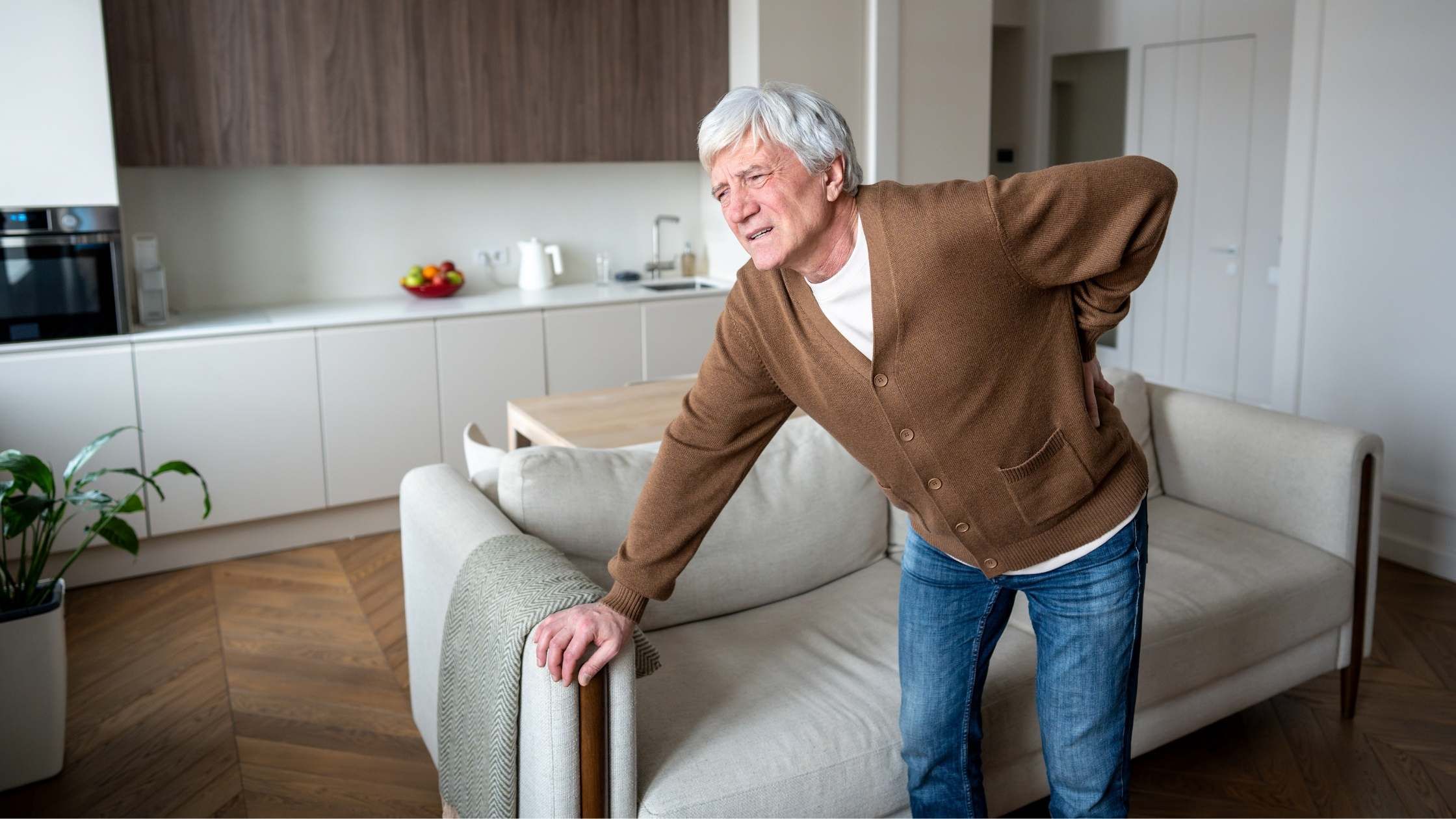
Arthritis and joint pain
Stress and anxiety
Both practices effectively manage stress and anxiety. Tai chi's continuous movement may suit people who find stillness uncomfortable or who tend to feel more anxious when holding still. Yoga often includes explicit relaxation techniques like savasana, also called corpse pose, that some find deeply calming.
Balance and fall prevention
Can you practice both tai chi and yoga
You don't have to choose just one. Many people find that tai chi and yoga complement each other beautifully, addressing different aspects of physical and mental wellness.
How tai chi compares to qigong
You might also encounter qigong, sometimes spelled chi kung, and wonder how it relates to tai chi.
Both practices share roots in Traditional Chinese Medicine and aim to balance your body's energy. Think of qigong as the foundation and tai chi as a more elaborate expression of the same principles.
How to get started with tai chi or yoga
Beginning either practice is simpler than you might expect.
-
Find beginner-friendly instruction: Look for classes or apps designed specifically for newcomers, where movements are explained clearly and modifications are offered
-
Start with short sessions: Even 10-15 minutes of daily practice builds consistency and delivers benefits
-
Listen to your body: Both traditions encourage modifying movements and avoiding pushing through pain
-
Consider guided apps: Digital instruction makes home practice accessible and removes the intimidation of walking into a studio
Find your path to balanced wellness
The right choice ultimately depends on your personal goals, physical condition, and what feels good to you. Choose tai chi for flowing balance work and gentle energy cultivation. Choose yoga for building strength and flexibility through varied poses. Or practice both for comprehensive mind-body wellness.
FAQs
Is tai chi a spiritual practice like yoga?
Tai chi has philosophical roots in Taoism but is typically practiced today as a health exercise rather than a spiritual discipline. The spiritual elements of yoga vary widely depending on the style and instructor—some classes are purely physical, while others incorporate chanting, philosophy, or meditation.
Does tai chi build muscle tone and strength?
Tai chi builds functional strength, particularly in the legs and core, through its slow, controlled movements. The constant slight squat position and weight shifts work your lower body steadily. However, it's less focused on muscle building than vigorous yoga styles or resistance training.
How many times per week should beginners practice tai chi or yoga?
Most practitioners benefit from practicing two to three times per week, though even brief daily sessions can improve consistency and results. Starting with shorter, more frequent practice often works better than occasional longer sessions.
What is the difference between chi kung and qigong?
Chi kung and qigong are different spellings for the same Chinese practice. Qigong uses modern Pinyin romanization, while chi kung uses the older Wade-Giles system. You'll see both spellings in books and classes, but they refer to identical practices.
Can people with limited mobility practice tai chi or yoga while seated?
Yes, both tai chi and yoga can be adapted for seated practice. Chair tai chi and chair yoga classes are widely available and make both practices accessible for people with mobility limitations, balance concerns, or those who cannot stand for extended periods.