5 Best Free Tai Chi Apps for Daily Practice in 2026
Published on March 3, 2026

Laura Mitchell
Laura is a wellness content creator specializing in holistic health and movement for healthy aging. As an expert in Tai Chi and Qigong, she passionately integrates Chinese wellness practices into her daily lifestyle.
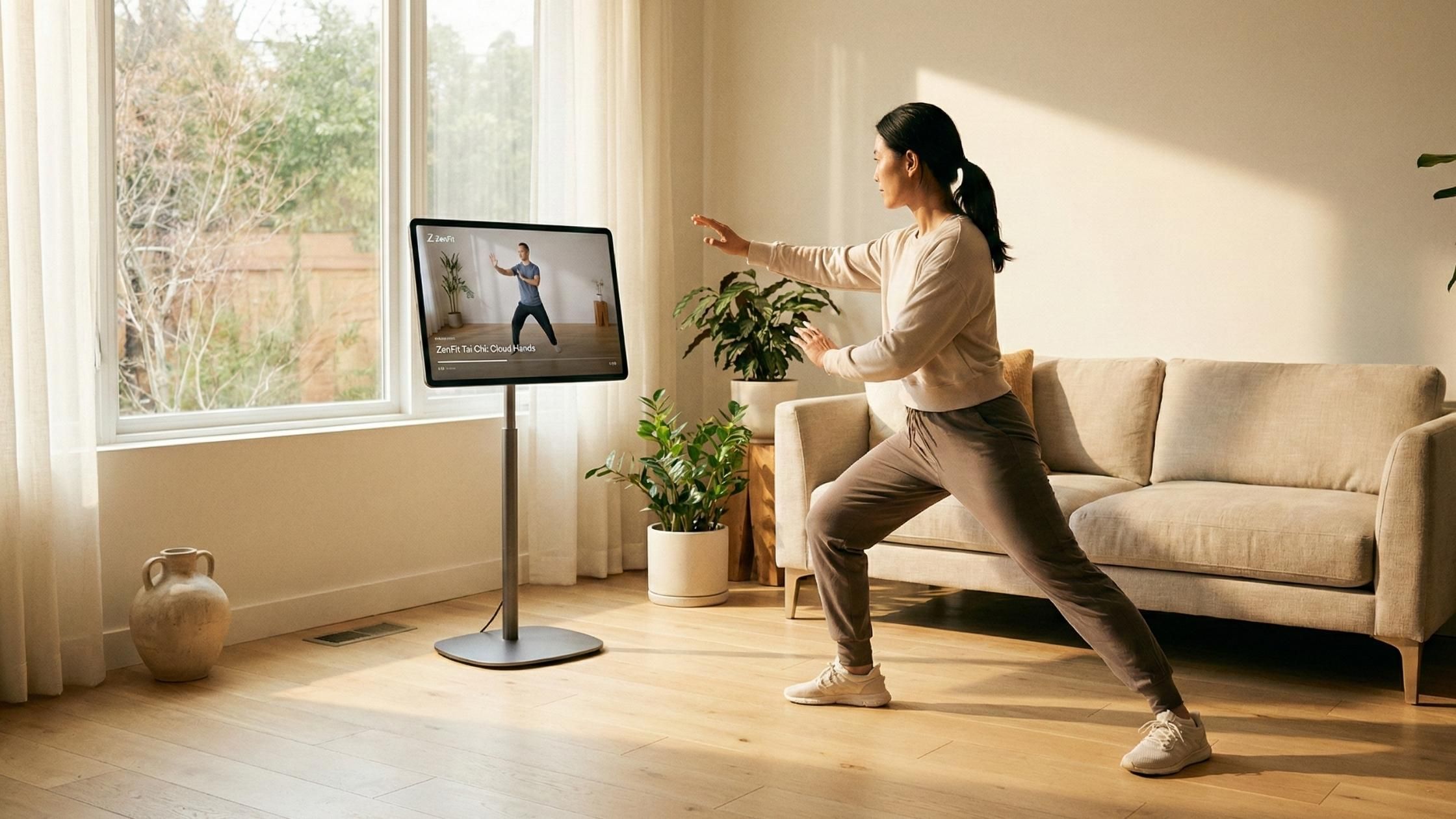
Finding the right tai chi app can feel like sorting through a crowded marketplace where every option claims to be beginner-friendly. The difference between an app that gathers dust and one you actually use often comes down to a few practical details: session length, instruction clarity, and whether the approach fits your life.
This guide covers five free tai chi apps worth trying, what features matter most when choosing one, and how to turn occasional practice into a daily habit that sticks.
The Best Free Tai Chi Apps for Beginners and Beyond

What follows are five free options worth considering, each with a different strength depending on what you're looking for.
| App Name | Best For | Key Features | Platforms |
|---|---|---|---|
| ZenFit | TCM-integrated holistic practice | AI personalization, 5-15 min sessions, qigong + nutrition | iOS, Android |
| Tai Chi at Home | Straightforward guided lessons | Multi-angle video, expert instruction | iOS, Android |
| 7 Minute Chi | Ultra-short daily sessions | Calming narration, foundational movements | iOS |
| Yang Tai Chi for Beginners | Traditional form training | Front/rear video views, step-by-step breakdown | iOS, Android |
| SilverSneakers GO | Older adults and Medicare members | Broader wellness content, gentle movement focus | iOS, Android |
ZenFit

Tai Chi at Home
Tai Chi at Home keeps things simple. The app offers professionally filmed lessons shot from multiple camera angles, which helps when you're trying to figure out exactly where your hands and feet belong during a movement.
There's no extra complexity here—just clear visual guidance that works well if you've never tried tai chi before and want to follow along in your living room.
7 Minute Chi
Seven minutes sounds almost too short to matter, yet that brevity is exactly the point. 7 Minute Chi strips tai chi down to foundational movements with calm narration, removing the "I don't have time" excuse entirely.
For busy professionals or anyone who struggles to carve out longer practice windows, this app offers a realistic entry point. Short daily sessions often produce better results than longer sporadic ones simply because they actually happen.
Yang Tai Chi for Beginners
Yang style is the most widely practiced form of tai chi in the world. It emphasizes slow, flowing movements and deep relaxation rather than martial applications. This app breaks down traditional Yang sequences with both front and rear video views, so you can check your positioning from different perspectives.
If learning authentic forms matters to you—the actual sequences passed down through generations of practitioners—this app provides that foundation with step-by-step instruction.
SilverSneakers GO
SilverSneakers GO isn't exclusively a tai chi app. It offers tai chi content alongside other gentle exercise options, making it a broader wellness platform rather than a specialized tool.
The app works particularly well for older adults, and many people with Medicare Advantage plans can access it for free. If you're curious about tai chi but also want yoga, stretching, and other low-impact options in one place, SilverSneakers GO covers that ground.
What to Look for in a Free Tai Chi App
Beyond the apps listed above, you'll find dozens of other options in the app stores. Knowing what separates genuinely helpful instruction from frustrating experiences can save you time and keep your motivation intact.
-
Clear demonstrations: Multiple camera angles or rotatable 3D views let you see exactly where hands and feet belong during each movement
-
Flexible session lengths: The best apps offer both quick daily practices and longer guided flows, so you can match your available time on any given day
-
Style variety: Access to different tai chi styles (Yang, Chen, Sun) or related practices like qigong gives you room to explore as you progress
-
Progress tracking: Built-in logging features help maintain consistency and show improvement over weeks and months
-
Offline access: Downloadable lessons mean you can practice while traveling, outdoors, or anywhere with spotty internet
Tip: Apps offering sessions under 10 minutes make excellent starting points. Building the habit matters more than session length during the first few weeks.
Science-Backed Benefits of Practicing Tai Chi with an App
Tai chi is a gentle martial art involving slow, flowing movements coordinated with deep breathing. Sometimes called "meditation in motion," it originated in China centuries ago and has since become one of the most studied mind-body practices in modern research.
Practicing through an app makes tai chi accessible without requiring class schedules or instructor availability. The benefits accumulate through regular practice:
-
Improved balance and reduced fall risk: Regular tai chi strengthens lower body stability and proprioception, which is the body's awareness of its position in space [1]
-
Stress reduction and mental clarity: Research indicates tai chi lowers cortisol levels and activates the parasympathetic nervous system, the body's "rest and digest" mode [2]
-
Joint-friendly strength building: Evidence supports tai chi for improving flexibility and muscle tone without high-impact strain on joints [3]
-
Better sleep quality: Clinical trials link consistent practice to improved sleep patterns and reduced insomnia symptoms, with 150 minutes per week showing measurable improvements [4]
-
Enhanced cognitive function: Studies suggest tai chi supports memory, attention, and processing speed, particularly in older adults, with meta-analyses showing significant improvements in executive function [5]
Ten minutes of daily practice, sustained over weeks and months, tends to produce more measurable changes than occasional longer sessions. Consistency matters more than duration.
How to Build a Daily Tai Chi Habit with Your App
1. Start with short sessions
Five minutes feels manageable even on hectic days. Beginning with the shortest available lessons reduces friction and builds confidence. Once the habit feels natural, longer sessions become easier to add.
2. Set daily practice reminders
Most tai chi apps include notification features. Scheduling practice at the same time each day—after morning coffee, during a lunch break, or before bed—creates a routine that eventually runs on autopilot. After a few weeks, the reminder often becomes unnecessary because the habit has taken hold.
3. Track your progress and streaks
Seeing consecutive practice days logged in an app creates accountability. Many people find that maintaining a streak becomes motivating on its own. Skipping "just one day" feels harder when it means breaking a 14-day run.
4. Practice in a consistent space
Designating a specific area at home for practice signals to your brain that it's time to focus. Tai chi requires minimal room—just enough space to extend your arms fully in all directions. A corner of the living room or bedroom works fine.
Tai Chi Apps vs. YouTube and In-Person Classes
You might wonder whether an app is actually the best way to learn tai chi. Each approach has genuine strengths, and many practitioners eventually use more than one.
| Learning Method | Advantages | Limitations |
|---|---|---|
| Tai Chi Apps | Structured progression, progress tracking, practice reminders, on-demand access | No real-time feedback, requires self-discipline |
| YouTube Tutorials | Free, vast variety, immediately accessible | Unstructured, inconsistent quality, no progress tracking |
| In-Person Classes | Direct instructor feedback, community support, hands-on correction | Fixed schedules, travel required, higher cost |
Apps work well as a primary daily practice, especially for beginners building foundational habits. YouTube offers tremendous variety but can leave you unsure what to practice next or whether you're progressing correctly. In-person classes provide something apps cannot: a teacher who watches your form and offers real-time adjustments.
A common pattern among committed practitioners involves using an app for daily home practice while attending occasional in-person classes for form correction. The approaches complement each other rather than competing.
Why Practice Tai Chi at Home with ZenFit
ZenFit differs from general fitness apps by grounding every routine in Traditional Chinese Medicine. Programs draw on concepts like yin-yang balance and qi cultivation, treating wellness as something that involves the whole person rather than isolated muscle groups.
-
TCM-rooted approach: Routines integrate ancient Chinese wellness principles with modern exercise science, connecting movement to broader ideas about energy and balance
-
AI-personalized plans: The app adapts to your individual body type, health goals, and available time rather than offering one-size-fits-all sequences
-
Holistic integration: Tai chi combines with qigong, Chinese nutrition guidance, and mindfulness practices in one unified system
-
Designed for real schedules: Sessions fit into busy days without requiring lengthy time commitments or special equipment
For anyone curious about how Chinese wellness traditions can support balance, flexibility, and calm in daily life, ZenFit translates thousands of years of accumulated wisdom into practical routines that fit modern schedules.
Ready to Start Your Journey
Daily tai chi practice offers a path to better balance, reduced stress, and sustainable wellness. The right app makes that path accessible from wherever you are, whenever you have a few minutes.
ZenFit brings together gentle movement, personalized guidance, and the depth of Traditional Chinese Medicine in sessions designed for real life.