Qigong for Seniors: 10-Minute Morning Routine for Flexibility
Published on April 30, 2026 | Updated on June 15, 2026

Laura Mitchell
Laura is a wellness content creator specializing in holistic health and movement for healthy aging. As an expert in Tai Chi and Qigong, she passionately integrates Chinese wellness practices into her daily lifestyle.
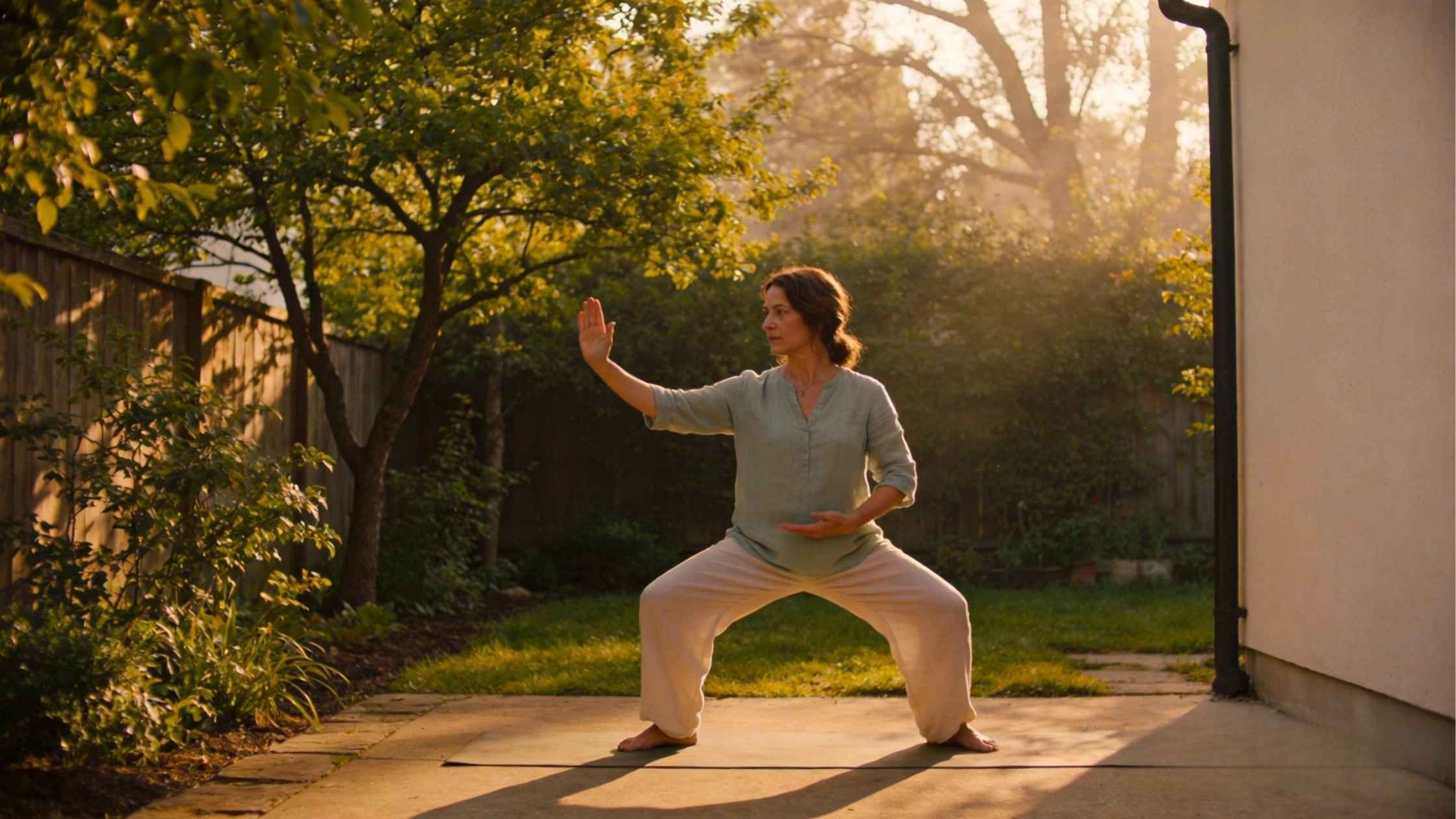
Stiff joints in the morning don't have to be your new normal. Qigong—a gentle Chinese practice combining slow movement, deep breathing, and focused attention—offers a low-impact way to restore flexibility without straining your body.
This guide walks you through a complete 10-minute morning routine designed specifically for older adults, along with the science behind why these simple movements work and how to adapt them to any mobility level.
What is qigong and why is it ideal for older adults
The word itself tells you what it's about. "Qi" means life energy, and "gong" means skill developed through practice. Put them together, and you get something like "the art of building vitality."
Three elements form the foundation of every qigong session:
- Body (Shen): Gentle movements or held postures open the body's energy pathways, called meridians in Traditional Chinese Medicine
- Breath (Xi): Coordinated breathing patterns help direct qi through your system
- Mind (Yi): Focused intention guides energy where it's needed
When posture, breath, and attention work together, qi flows more freely. That alignment is what makes the practice effective—not the complexity of the movements.
Why qi gong exercises for seniors support flexibility and joint health
Unlike stretching that pushes muscles to their limits, qigong works with the body's natural range of motion. The gentle, repetitive movements target fascia and connective tissue, areas that often tighten with age and respond well to slow, sustained movement rather than forceful stretching.
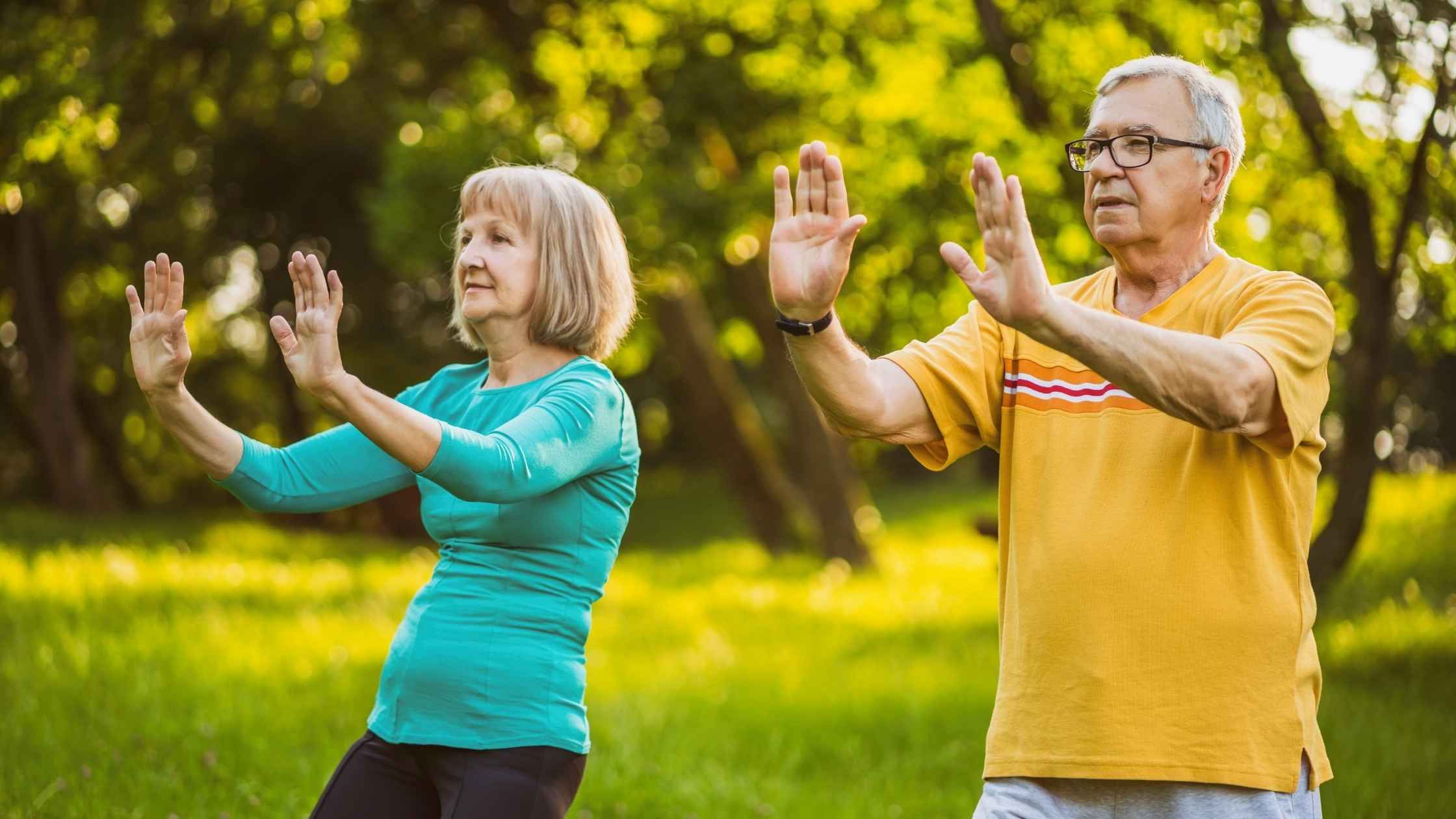
Science-backed health benefits of qigong for seniors
Beyond flexibility, qigong offers several evidence-supported benefits that matter particularly for older adults.
Improved balance and fall prevention
Increased strength and bone density
Boosted energy and reduced fatigue
Enhanced mental clarity and stress relief
Simple qigong exercises for elderly beginners
The following movements work well for anyone new to qigong. Each can be performed standing or seated, and none require previous experience.
Raising the sky
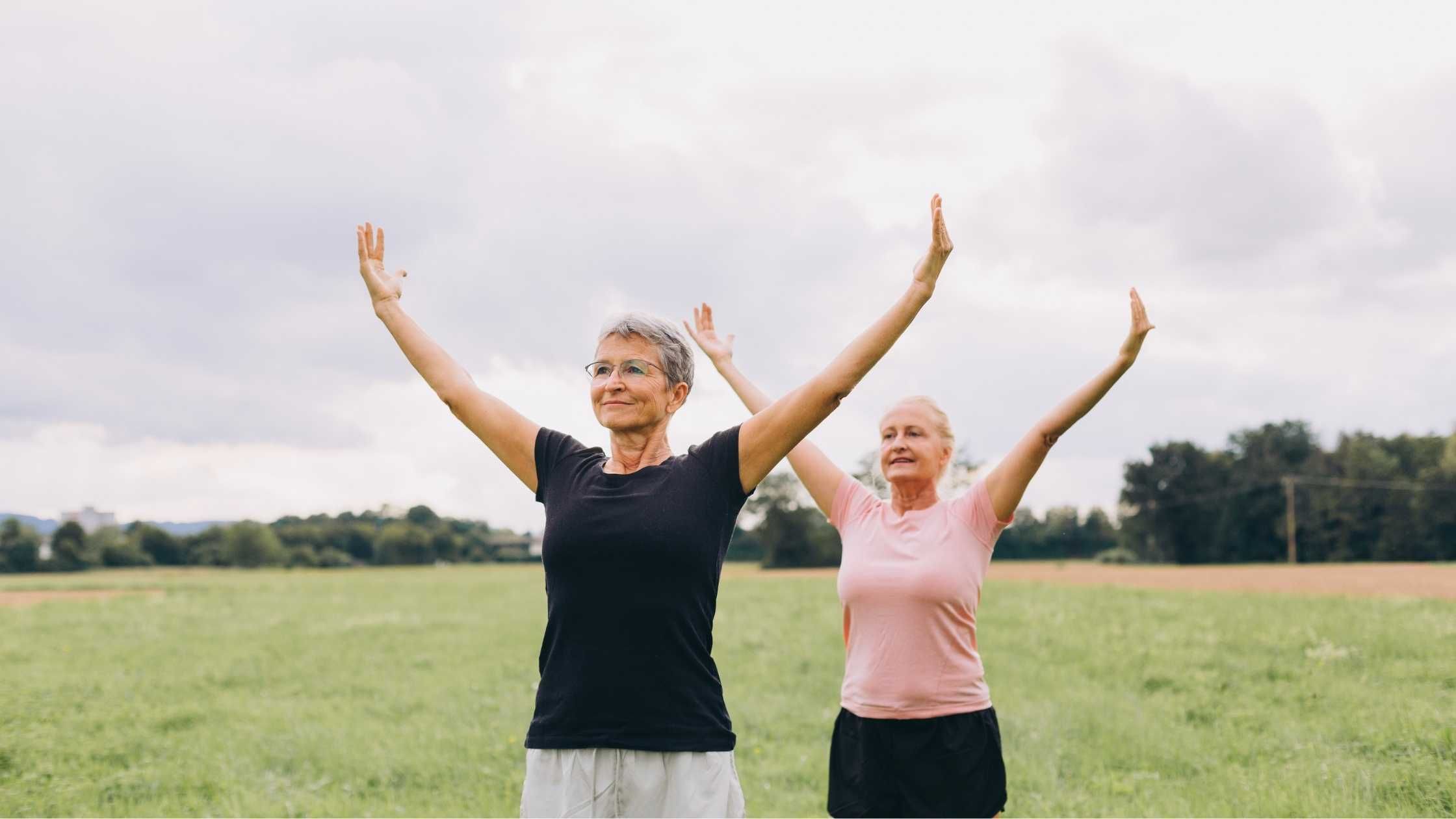
Stand with feet shoulder-width apart, arms relaxed at your sides. As you inhale, slowly raise both arms overhead with palms facing up, as if lifting the sky. Exhale and lower your arms back down. This movement opens the chest and shoulders while encouraging deep breathing.
Lifting the moon
From a standing position, interlace your fingers and raise your arms overhead. Gently bend to one side, creating a crescent shape with your body. Return to center and repeat on the other side. This releases tension along the lateral spine and ribcage.
Flowing breath stretch
With soft knees, let your arms hang naturally. As you exhale, fold forward gently from the hips, letting your arms sweep toward the floor. Inhale and slowly roll back up, arms floating upward. This lengthens the hamstrings and back without forcing the stretch.
Gentle trunk rotations
Stand with feet hip-width apart and let your arms hang loosely. Rotate your torso slowly from side to side, allowing your arms to swing naturally like empty coat sleeves. This mobilizes the spine and hips while releasing lower back tension.
Wrist and ankle circles
Extend one arm and make slow circles with your wrist in both directions. Repeat with the other wrist. Then, standing on one foot (use a chair for support if needed), make circles with your ankle. Small joint movements like this maintain dexterity and circulation in the extremities.

10-minute morning qi gong routine for flexibility and vitality
This sequence is designed specifically for morning practice, when joints tend to feel stiffest. Move through each step at your own pace, prioritizing smooth breathing over perfect form.
1. Centering breath and posture awareness
2. Neck and shoulder release sequence
Drop your chin toward your chest, then slowly roll your head in a half-circle from one shoulder to the other. Repeat three times.
Follow with shoulder shrugs: inhale as you lift your shoulders toward your ears, exhale as you release them down. This addresses the overnight tension that commonly accumulates in the upper body.
3. Spine flexion and extension flow
Place your hands on your thighs if seated, or let them hang naturally if standing. As you inhale, gently arch your back and lift your chest. As you exhale, round your spine and tuck your chin.
Flow between these positions for about two minutes. This warms the entire spine and prepares it for the day ahead.
4. Hip opening and lower back stretch
Make slow circles with your hips, as if tracing a large oval with your pelvis. Circle five times in each direction. Then, with soft knees, hinge forward slightly from the hips, letting your arms dangle. Hold for a few breaths. This addresses the lower body stiffness many seniors experience upon waking.
5. Closing energy gathering meditation
Stand or sit quietly with your hands resting on your lower abdomen, just below your navel. In Chinese medicine, this area is called the dantian and is considered the body's energy center. Take five slow, deep breaths, imagining warmth gathering beneath your hands. This seals the practice and cultivates qi for the day ahead.
Tip: Practice this routine at the same time each morning to build a sustainable habit. Even five minutes is valuable if ten feels like too much on busy days.
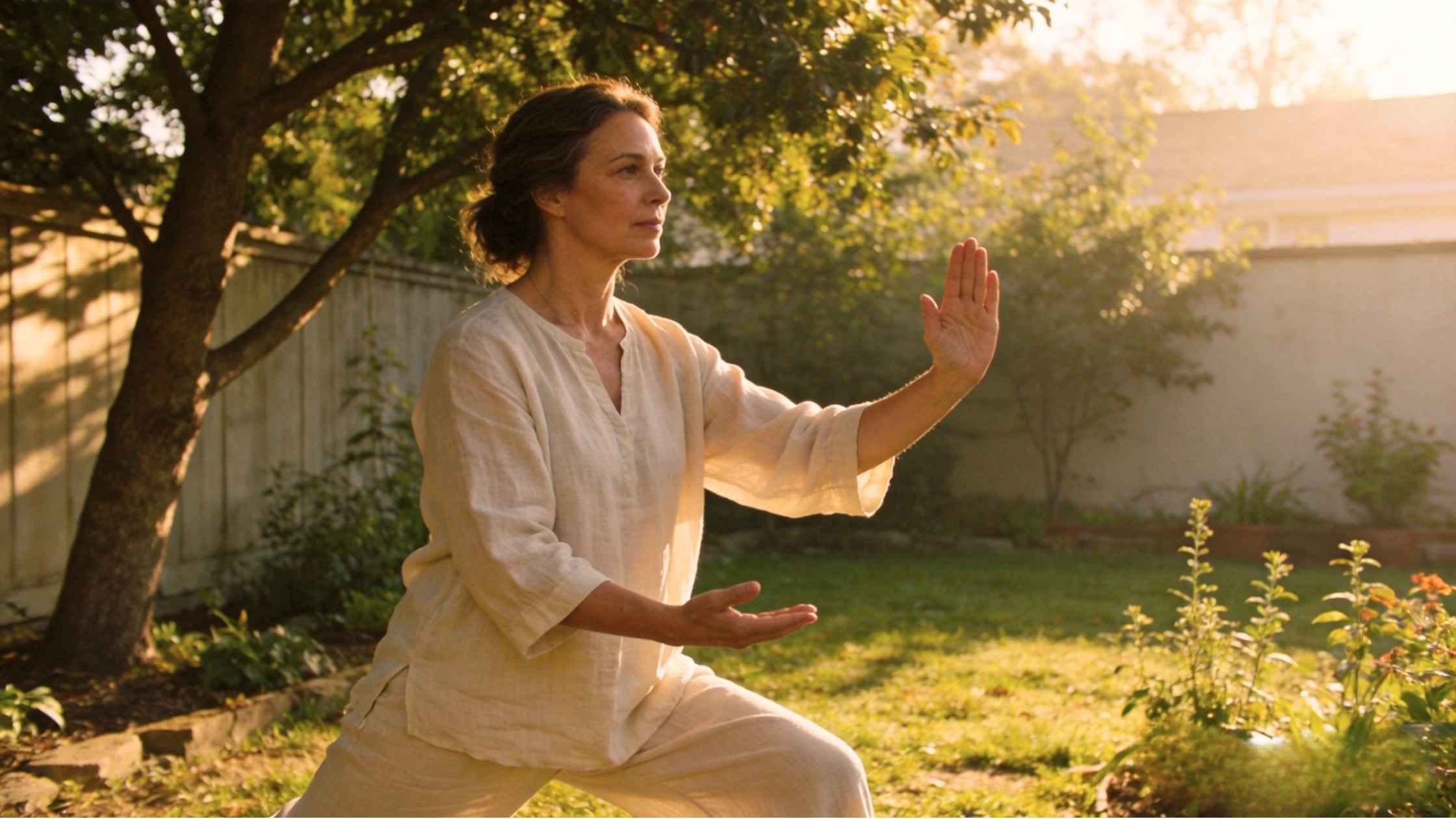
Gentle qigong for seniors with limited mobility
Seated qi gong exercises for seniors
Every movement in the routine above can be performed while sitting in a sturdy chair. The key is maintaining an upright posture with feet flat on the floor.
Chair-supported standing movements
For those who want to stand but feel unsteady, placing a chair nearby provides security. Rest one hand lightly on the chair back during movements that involve weight shifts or single-leg positions. This builds confidence gradually while still engaging the balance systems.
How long does it take for senior qigong practice to show results
Consistency matters more than duration. Many practitioners notice subtle shifts—improved mood, easier breathing, less morning stiffness—within the first two weeks of daily practice.
More substantial changes in flexibility, balance, and energy levels typically develop over six to twelve weeks. Research on qigong generally shows measurable improvements after eight weeks of regular practice, though individual experiences vary.
The key is approaching qigong as a daily habit rather than an occasional workout. Even brief sessions accumulate benefits over time.
How to build a consistent daily qi gong routine
Starting a new practice is straightforward. Maintaining it requires a bit of structure.
- Same time each day: Morning practice works well because it addresses overnight stiffness and sets a calm tone for the day
- Start shorter than you think: Five minutes daily beats twenty minutes twice a week
- Track your practice: Noting when you practice and how you feel afterward reinforces the habit
- Use guided support: Following along with video instruction removes the guesswork and keeps you engaged
Apps like ZenFit provide daily reminders, guided video classes designed for all levels, and progress tracking that helps maintain momentum.
Start your chi gong for seniors journey with guided video support
Learning qigong from written descriptions only takes you so far. Seeing the movements performed—and following along in real time—makes the practice more accessible and effective.
FAQs about qigong for seniors
What are the three golden rules of qigong practice?
The three golden rules are: relax the body, calm the mind, and breathe naturally. Relaxation means moving without forcing or straining. Calming the mind involves letting go of distracting thoughts. Natural breathing means allowing your breath to flow smoothly rather than controlling it rigidly.
Can seniors with arthritis safely practice qigong?
Yes, qigong's gentle, low-impact movements are generally safe for seniors with arthritis and may actually help reduce joint stiffness. The slow, circular motions encourage synovial fluid production, which lubricates joints naturally. However, consulting a healthcare provider before starting any new exercise program is always wise.
Is qigong or tai chi better for improving flexibility in older adults?
Can a daily qigong routine help seniors sleep better?
Many practitioners report improved sleep quality after establishing a regular qigong practice. The stress-reducing and nervous-system-calming effects help prepare the body for rest. While morning practice works well for flexibility, some seniors find an evening session particularly helpful for winding down.
Do seniors need any equipment to practice qigong at home?
No equipment is needed—just comfortable clothing and enough space to extend your arms freely. A sturdy chair is helpful for seated variations or for balance support during standing movements. Practicing barefoot or in flat, flexible shoes works best.