Simple Qigong Routine for Stress Relief and Emotional Balance in 2026
Published on March 6, 2026

Laura Mitchell
Laura is a wellness content creator specializing in holistic health and movement for healthy aging. As an expert in Tai Chi and Qigong, she passionately integrates Chinese wellness practices into her daily lifestyle.
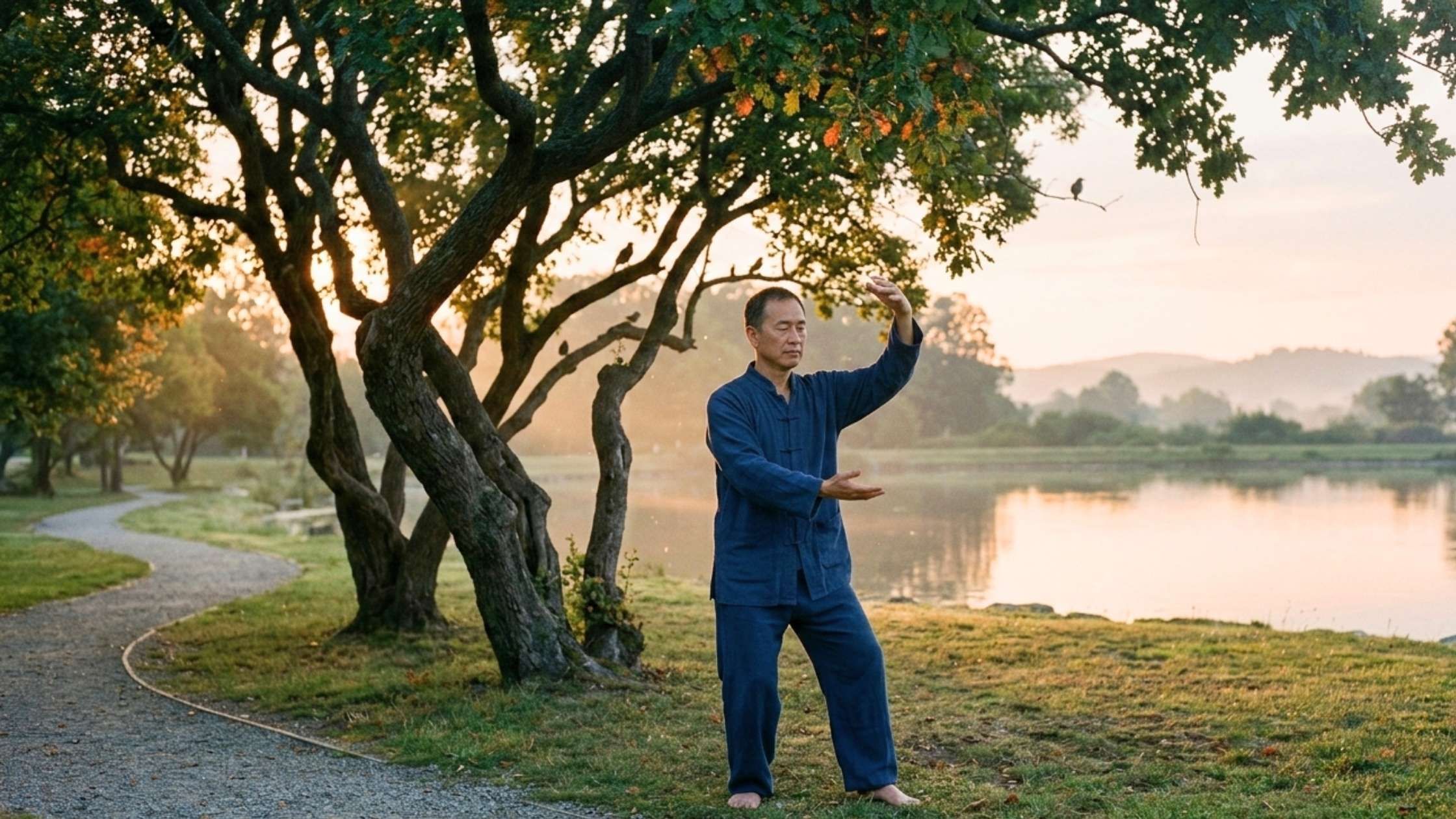
Stress doesn't just live in your mind—it settles into your shoulders, tightens your chest, and disrupts your sleep. Qigong, an ancient Chinese practice combining slow movement with deep breathing, works directly on these physical patterns to restore calm from the inside out.
This guide covers the core principles behind qigong's stress-relieving effects, five simple movements you can practice today, and how to build a sustainable daily routine that fits into even the busiest schedule.
What is Qigong
Qigong is a traditional Chinese practice that combines flowing movement, meditation, and breath regulation to enhance the body's natural energy flow. The name comes from two Chinese words: "qi" (pronounced "chee"), meaning life energy, and "gong," meaning skill developed through practice. Put together, qigong translates to something like "energy cultivation."
What makes qigong different from most exercise is its pace. Movements are slow and deliberate, coordinated with deep breathing. You're not trying to build muscle or burn calories. Instead, you're guiding energy through your body in a way that calms the nervous system.
The practice comes from Traditional Chinese Medicine, which views health as balanced energy flow. When qi moves freely through the body's meridians—the pathways energy travels along—you tend to feel calm and clear. When qi gets stuck, stress and tension often follow.
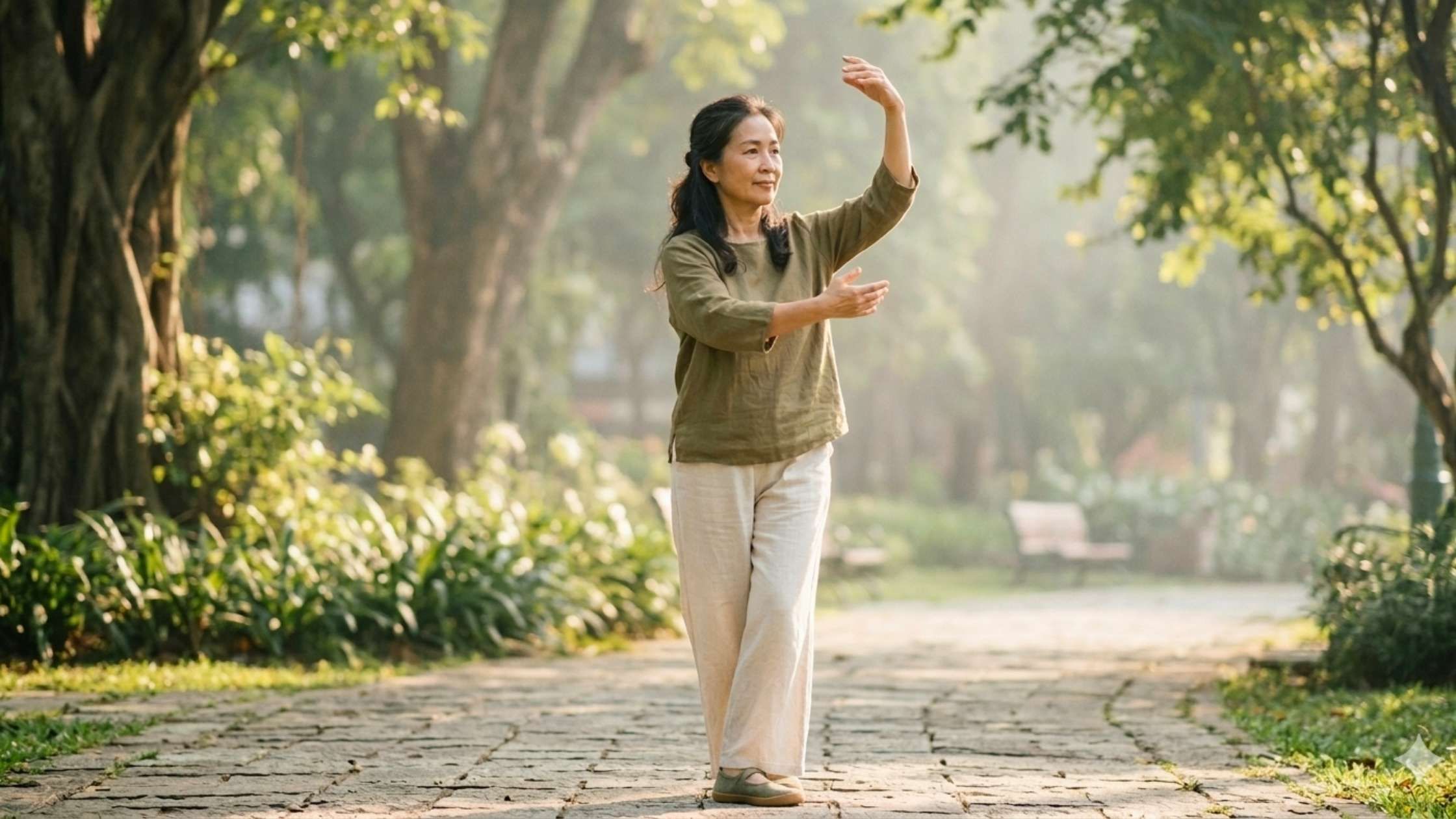
A Brief History of Qigong in Chinese Wellness
Qigong's roots go back over 4,000 years to ancient China, where it developed alongside medical practices, Taoist philosophy, and martial arts. Early practitioners used qigong for healing, spiritual growth, and building internal strength.
Over time, the practice branched into different forms. Medical qigong focused on treating illness. Martial qigong built power for combat. Spiritual qigong supported meditation. All three share the same foundation: coordinating breath, movement, and mental focus.
In recent decades, qigong has spread beyond China and caught the attention of Western researchers. Studies now examine its effects on stress, chronic pain, and mental health—bringing an ancient practice into modern scientific conversation.
Core Principles of Qigong Practice
Three elements work together to make qigong effective for stress relief. Each one plays a distinct role, and understanding them helps you get more from your practice.
Breath Regulation
Slow, deep breathing sits at the heart of qigong. This type of breathing—sometimes called "dan tian breathing" because it originates from the lower belly—activates the parasympathetic nervous system, the branch responsible for rest and recovery.
When you breathe into your belly rather than your chest, your heart rate naturally slows. Each exhale becomes a chance to let go of tension you might not even realize you're carrying.
Gentle Movement
Qi gong movements are deliberately slow and flowing. Nothing is forced or strained. This quality allows muscles to soften rather than tighten, and joints to move without impact.
Many movements follow circular or wave-like patterns, reflecting how energy naturally flows according to TCM theory. The goal isn't strength in the conventional sense—it's opening pathways for qi to circulate.

Focused Intention
Where your attention goes, energy follows. Qigong asks you to direct your mind inward, noticing sensations rather than thinking about your to-do list. This mental focus is what separates qigong from ordinary stretching.
By staying present—feeling your feet on the ground, noticing the rhythm of your breath—you give your busy mind a break. Many people find this aspect as valuable as the physical movements.
Science-Backed Benefits of Qigong for Stress Relief
Research supports what practitioners have observed for centuries. Here's what studies show about qigong's effects on stress and emotional well-being:
-
Calms the nervous system: Qigong shifts the body from fight-or-flight activation to rest-and-digest mode, reducing physiological stress responses [1]
-
Lowers cortisol: Regular practice reduces cortisol, the primary stress hormone, helping interrupt cycles of chronic stress [2], with stress management interventions showing medium positive effect sizes for cortisol reduction
-
Supports emotional balance: Systematic reviews find that qigong improves psychological well-being and reduces anxiety and depression symptoms [3]
-
Improves sleep: By calming the nervous system, qigong often leads to better sleep quality [4], with 54.7% experiencing improvements after 12 weeks of practice
-
Builds energy without exhaustion: Unlike intense workouts, qigong cultivates chi gong energy, leaving you refreshed rather than depleted [5]
Essential Qi Gong Movements for Stress Relief
The following movements form a simple routine you can complete in 10-15 minutes. Each one addresses areas where stress commonly builds up.
Standing Meditation
Start by standing with feet shoulder-width apart, knees slightly soft, arms hanging naturally. Let your shoulders drop. This posture, sometimes called "standing like a tree," grounds your energy and quiets mental noise before you begin moving. Even a minute or two here can shift your state.
Lifting the Sky
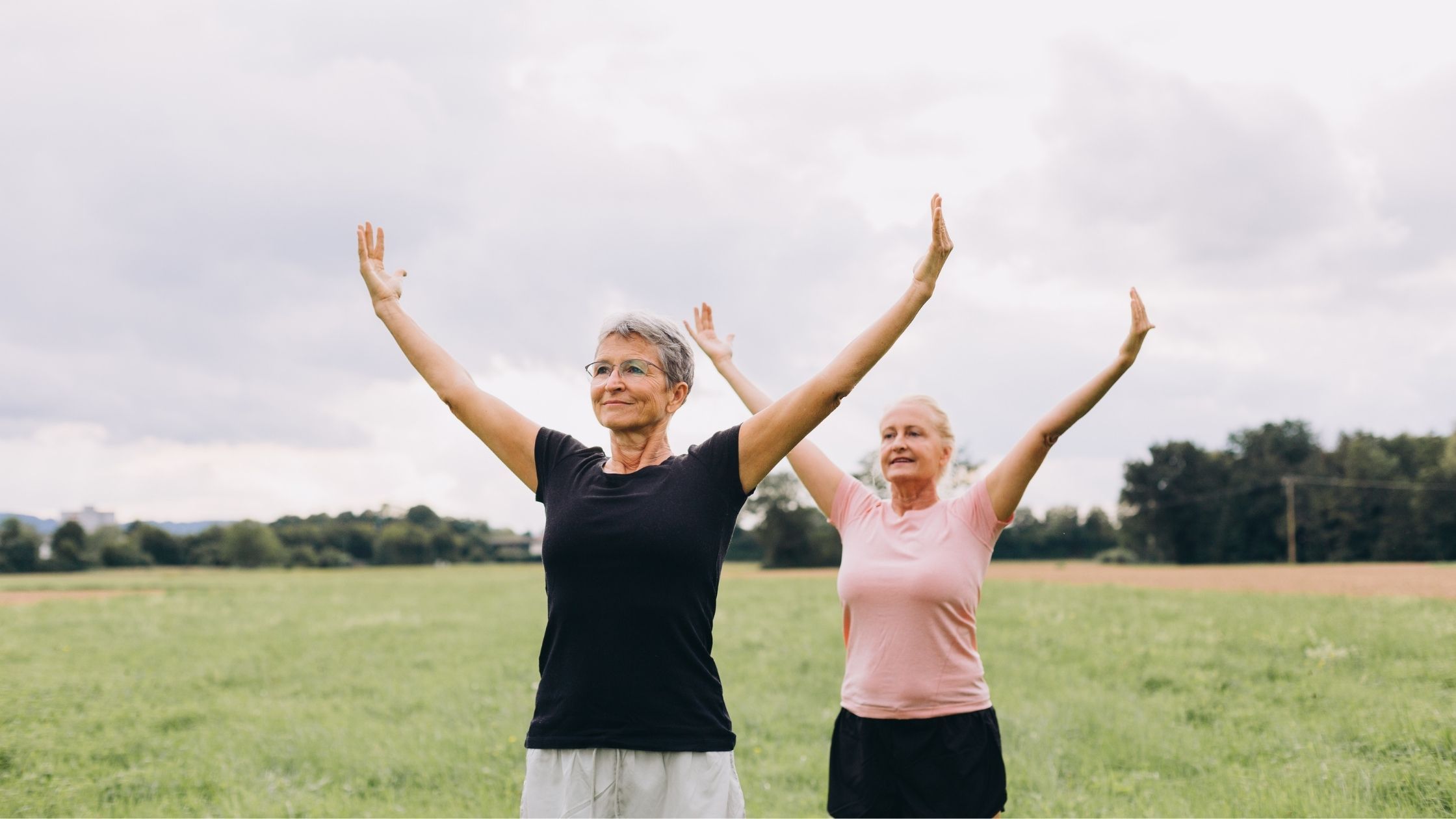
Raise both arms slowly overhead as you breathe in, palms facing upward as if lifting something light toward the ceiling. Lower them as you breathe out. This movement opens the chest and stretches the spine—two places where tension loves to hide.
Pushing Mountains
Extend your arms forward at chest height, palms facing out. Push gently forward as you exhale, then draw your hands back toward your chest as you inhale. The motion releases tightness in the shoulders and upper back.
Separating Heaven and Earth
Raise one arm overhead while pressing the other toward the ground, palms facing away from each other. Alternate sides with each breath. This stretch opens the side body and creates a sense of balance between upper and lower, left and right.
Shaking the Body to Release Tension
Stand with soft knees and gently bounce or shake your whole body for 30-60 seconds. Let your arms hang loose and your jaw relax. This simple technique releases accumulated tension remarkably fast. Many practitioners consider it one of the most effective stress-relief tools in qigong.
How Qi Gong Energy Supports Mental Calm
In TCM theory, emotional imbalance often reflects blocked or stagnant qi. Worry, frustration, and anxiety aren't just mental experiences—they correspond to disrupted energy flow in specific organs and pathways.
Qigong movements work to clear blockages and restore smooth circulation. When chi gong energy flows freely, you might notice clearer thinking, less emotional reactivity, and a steadier sense of groundedness.
This perspective aligns with what we now understand about the mind-body connection. Gentle movement, deep breathing, and focused attention all influence the nervous system in ways researchers can measure.
How to Practice a Simple Qigong Routine
Getting started requires no equipment or prior experience. Here's a straightforward approach that works for beginners.
Step 1: Choose a calm environment
Find a quiet space where you won't be interrupted. Outdoors works well, but any room with enough space to extend your arms will do.
Step 2: Adopt a relaxed standing posture
Stand with feet hip-width apart, knees slightly bent, shoulders relaxed, chin gently tucked. Imagine a string pulling the crown of your head gently upward.
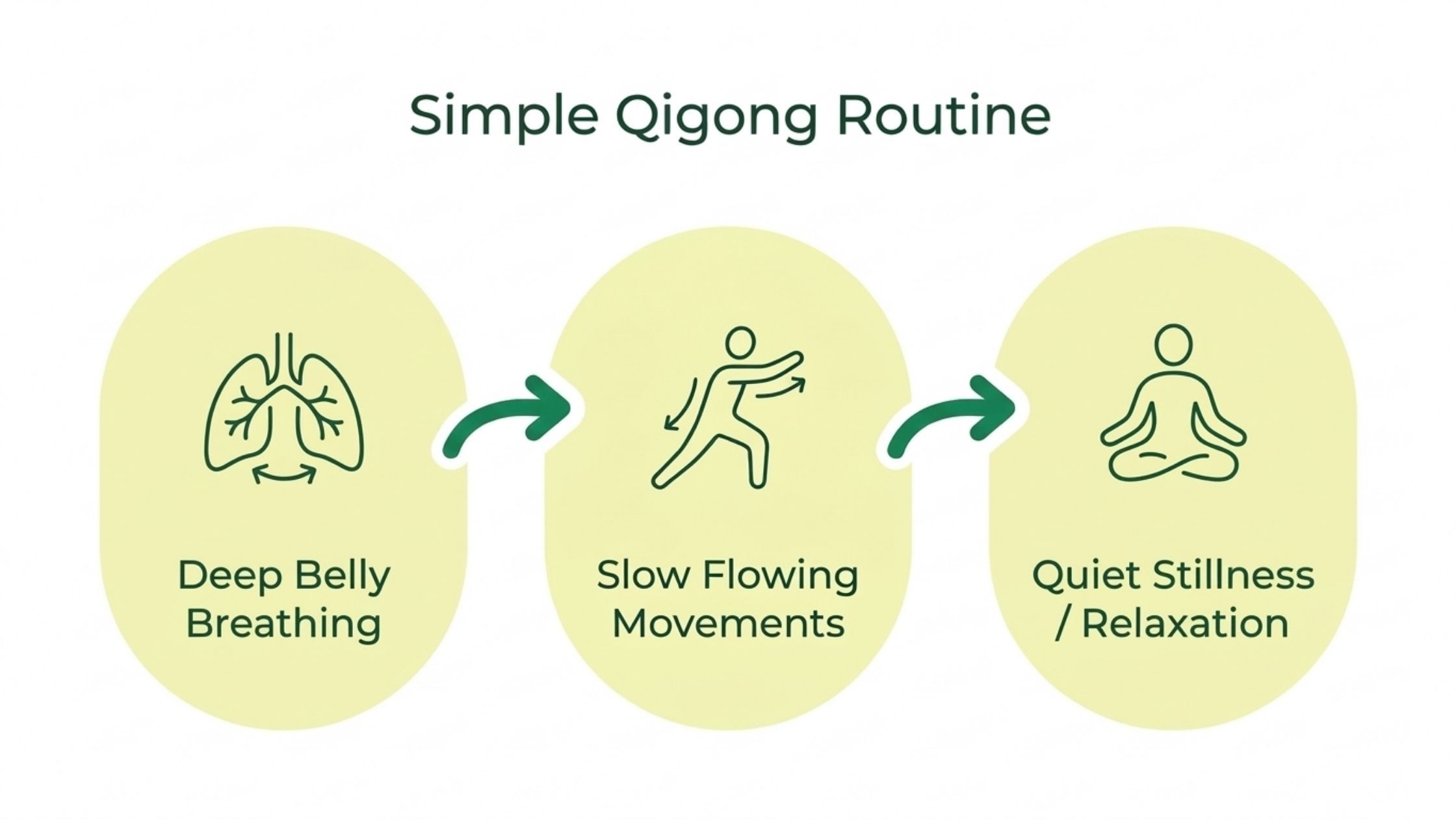
Step 3: Begin with deep belly breathing
Place your hands on your lower abdomen. Breathe slowly, feeling your belly expand on the inhale and soften on the exhale. Take 5-10 breaths before adding movement.
Step 4: Flow through each movement slowly
Move through the exercises described above, matching each movement to your breath. Slower is usually better—there's no rush.
Step 5: Close with a moment of stillness
After finishing the movements, stand quietly for a minute or two. Notice any sensations. This pause allows the effects of your practice to settle.
Tip: Even five minutes counts. If time is short, pick one or two movements rather than skipping practice entirely.
How Often to Practice Qigong
Consistency matters more than duration. A brief daily practice typically brings better results than occasional longer sessions. Even 5-10 minutes each morning can shift your baseline stress level over weeks.
Anchoring qigong to an existing habit helps build a sustainable routine. Right after waking, during a lunch break, or before bed all work well. The key is making practice easy enough that you'll actually do it.
How to Practice Qigong Safely
Qigong is gentle by design, but a few guidelines help ensure a good experience:
-
Move within your comfort range: Never force a stretch or push through pain
-
Breathe naturally: Avoid holding your breath or breathing so deeply you feel lightheaded
-
Listen to your body: Rest if you feel dizzy or uncomfortable
-
Check with a healthcare provider: Especially important if you have chronic conditions or recent injuries
Qigong vs Tai Chi for Stress Relief
Both practices share Chinese roots and emphasize gentle movement, so the question of which to choose comes up often. Here's how they compare:
| Aspect | Qigong | Tai Chi |
|---|---|---|
| Movement complexity | Simpler, often repetitive | Longer, more complex sequences |
| Learning curve | Easier for beginners | Takes longer to learn |
| Typical session length | 5-15 minutes | 20-45 minutes |
| Primary focus | Energy cultivation | Martial art foundation |
Both reduce stress effectively. Qigong's simplicity makes it a natural starting point, while tai chi offers deeper study for those who want to continue. Many people practice both.
Why Practice Qigong with ZenFit
ZenFit brings qigong into a format designed for busy schedules. The app offers short, video-guided sessions—typically 5-15 minutes—that fit into real life.
A few things that set ZenFit apart:
-
TCM-rooted instruction: Movements are taught with their traditional context, so you understand why each practice works
-
Beginner-friendly pacing: Step-by-step guidance means no prior experience is necessary
-
Integrated tracking: Monitor energy levels, mood, and consistency over time
-
Personalized recommendations: AI-powered guidance adapts to your goals and body type
Whether you're new to qigong or returning after time away, ZenFit makes daily practice feel achievable.
Ready to Start Your Journey
Qigong offers a path to stress relief that doesn't require athletic ability, equipment, or large time commitments. With a few minutes of daily practice, you can begin cultivating the calm, balanced energy that supports both mental clarity and physical vitality.
The movements are simple. The benefits are real. And you can start today.
FAQs About Qigong Movements for Stress Relief
What is the best time of day to practice qigong for stress relief?
Morning practice helps set a calm tone for the day, while evening practice releases tension before sleep. The best time is whichever time you can practice consistently—regularity matters more than timing.
Can beginners with chronic pain or limited mobility practice qigong safely?
Yes. Qigong movements can be modified for seated practice or reduced range of motion. The emphasis on gentleness makes qigong accessible for most people with physical limitations, especially when starting slowly.
How long does it take to feel stress relief benefits from qigong practice?
Can qigong be combined with yoga or seated meditation practices?
Qigong complements other mindfulness and movement practices well. Many practitioners integrate it alongside yoga, meditation, or tai chi. The practices share common ground in breath awareness and present-moment focus.
What equipment is needed to practice qigong at home?
None. Qigong can be practiced in comfortable clothing with enough space to extend your arms. This simplicity makes it ideal for home practice, travel, or brief sessions at work.