10 Natural Techniques to Relieve Shoulder and Neck Pain
Published on March 10, 2026

Laura Mitchell
Laura is a wellness content creator specializing in holistic health and movement for healthy aging. As an expert in Tai Chi and Qigong, she passionately integrates Chinese wellness practices into her daily lifestyle.

That tight, achy feeling across your shoulders and up into your neck often shows up without warning—after a long day at your desk, a restless night, or a week of accumulated stress. The discomfort can make turning your head feel like a chore and leave you reaching for pain relievers out of habit.
Natural relief works well for most cases of shoulder and neck stiffness, and it doesn't require special equipment or a lot of time. This guide covers 10 techniques—from simple stretches and heat therapy to tai chi movements and acupressure points—that you can start using today.
What Causes Shoulder and Neck Stiffness
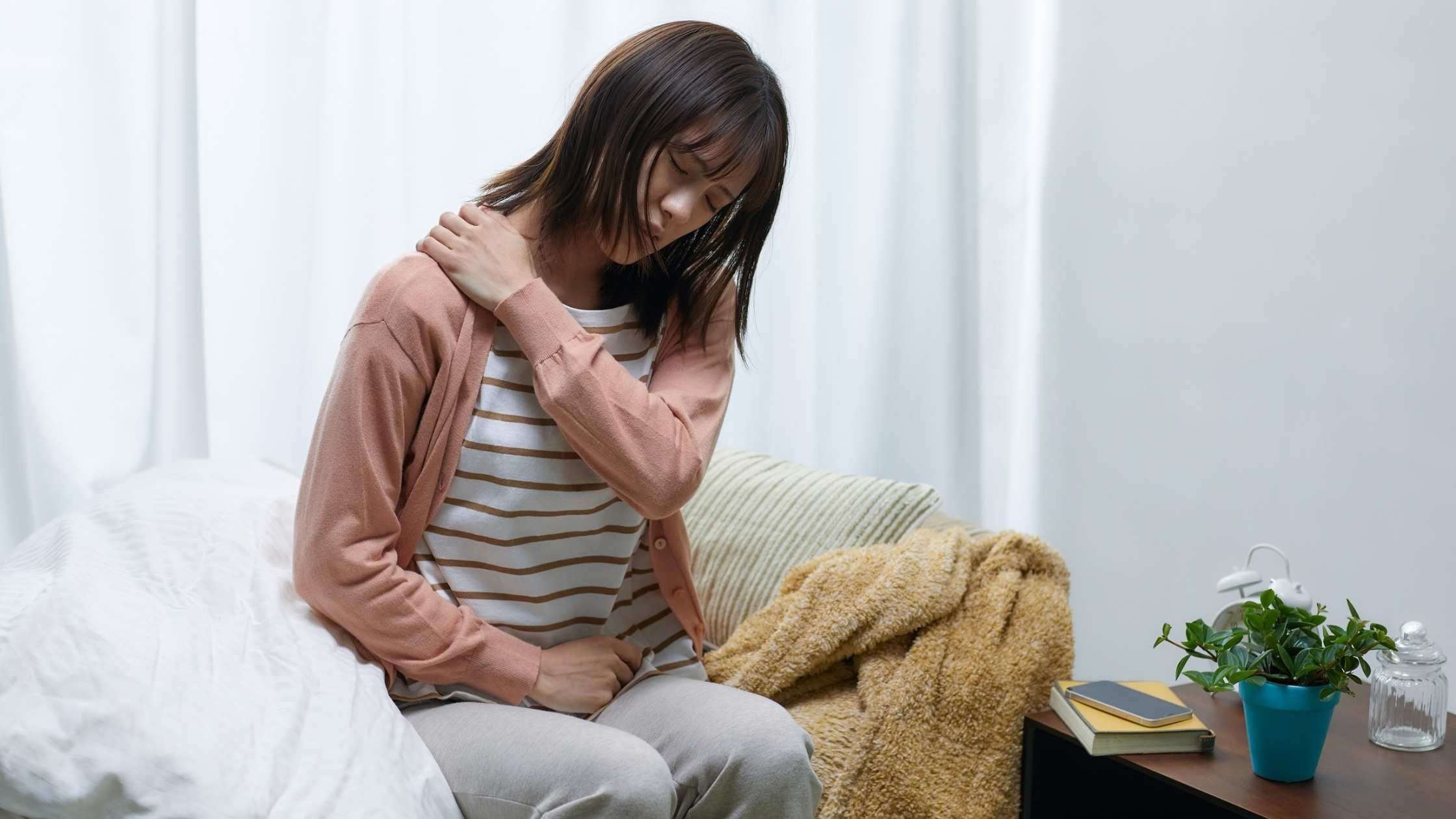
So what actually triggers that tight, achy feeling? A few common culprits show up again and again:
-
Poor posture: When you slouch or hunch forward, your neck and shoulder muscles work overtime to hold your head up. Over hours, this extra effort creates tension.
-
Stress and anxiety: Your body responds to mental pressure by tightening muscles, especially in the upper back, shoulders, and neck. You might not even notice it happening.
-
Muscle strain: Sleeping at an odd angle, making a sudden movement, or repeating the same motion all day can irritate muscle fibers.
-
Prolonged screen time: Looking down at your phone or forward at a computer pushes your head out of alignment. This forward head position—sometimes called "tech neck"—puts real strain on your cervical spine, with computer workers being two to three times more likely to develop chronic neck pain compared to the general population.
-
Sleep position: Stomach sleeping or using a pillow that doesn't match your neck's natural curve often leads to morning stiffness.
10 Natural Techniques to Fix a Stiff Neck and Ease Shoulder Tension

1. Neck Rotation Stretch
Sit or stand with your shoulders relaxed and your spine tall. Turn your head slowly to look over your right shoulder, pause for about 15 seconds, then turn to the left and hold again.
This rotation loosens the muscles along the sides of your neck. If you feel any sharp sensation, back off a bit—the stretch works best when it's gentle.
2. Lateral Neck Flexion
Tilt your right ear toward your right shoulder while keeping both shoulders level. Hold for 15 to 30 seconds, then switch sides.
Lateral flexion means bending your neck sideways, which targets the muscles running along the side of your neck. Breathing slowly as you hold the position helps those muscles release more fully.
3. Forward Chin Tuck
Sit upright and pull your chin straight back, like you're making a double chin. Hold for about 5 seconds, then let go.
This movement directly counteracts forward head posture. It strengthens the deep muscles at the front of your neck while stretching the ones at the base of your skull.
4. Shoulder Shrugs and Rolls
Raise your shoulders up toward your ears, hold briefly, then roll them back and down in a smooth circle. Repeat 5 to 10 times.
Shoulder rolls target the upper trapezius, a large muscle that spans your upper back, shoulders, and neck. This one works especially well during breaks from sitting.
5. Levator Scapulae Stretch
The levator scapulae connects your neck to your shoulder blade, and it tends to hold a lot of tension. To stretch it, turn your head about 45 degrees to one side, then look down toward your armpit. You can place your hand on the back of your head for a gentle assist.
Hold for 20 to 30 seconds on each side. The stretch often shows up along the back and side of your neck.
6. Heat Therapy for Tight Muscles
Warmth relaxes muscle fibers and brings more blood flow to stiff areas. A warm towel, heating pad, or even a warm shower applied for 15 to 20 minutes can ease tension fairly quickly.
Heat works best for chronic tightness or general muscle tension. For fresh strains with inflammation, cold therapy may be a better starting point.
7. Tai Chi Shoulder and Neck Sequence

Even 5 to 10 minutes of tai chi-style movement can create noticeable ease. The practice suits people looking for low-impact relief that addresses both physical tightness and mental stress.
8. Qigong Breathing for Tension Release
Qigong combines breath with gentle movement to cultivate what Traditional Chinese Medicine calls "qi," or vital energy. Deep diaphragmatic breathing—where your belly expands on the inhale rather than your chest—activates your body's relaxation response.
Here's a simple approach: Breathe in through your nose for 4 counts, letting your abdomen rise. Breathe out through your mouth for 6 counts, consciously relaxing your shoulders as you exhale. Two to three minutes of this can shift how your neck and shoulders feel.
9. Acupressure Points for Quick Neck Tension Relief
Acupressure uses finger pressure on specific points to release tension. The technique comes from Traditional Chinese Medicine and works well for self-care. Two points are particularly useful for neck and shoulder stiffness:
-
GB20 (Gallbladder 20): Located at the base of your skull, in the hollows on either side of your spine. Apply firm circular pressure with your thumbs for 30 to 60 seconds.
-
GB21 (Gallbladder 21): Found at the highest point of your shoulder muscle, midway between your neck and shoulder joint. Press and hold, or use small circular motions.
10. Mindfulness Meditation for Stress-Related Stiffness
Mental stress and physical tension feed each other. When you're anxious or overwhelmed, your body often responds by tightening the neck and shoulders—sometimes for hours without you noticing.
A body scan meditation can interrupt this pattern. Close your eyes, breathe slowly, and move your attention from the top of your head down through your neck and shoulders. Notice any tight spots, and with each exhale, imagine that tightness softening.
How Gentle Movement and Stretching Relieve Neck Tension
When you move gently, blood flow to your muscles increases. This delivers oxygen and nutrients while carrying away metabolic waste, helping tight muscle fibers lengthen and relax.
Gentle movement also calms the nervous system. Unlike high-intensity exercise, which can sometimes trigger muscle guarding, slow and controlled stretches signal safety to your body. Over time, this improves proprioception—your brain's sense of where your body is in space—which supports better posture and smoother movement patterns.
Science-Backed Benefits of Natural Neck and Shoulder Relief
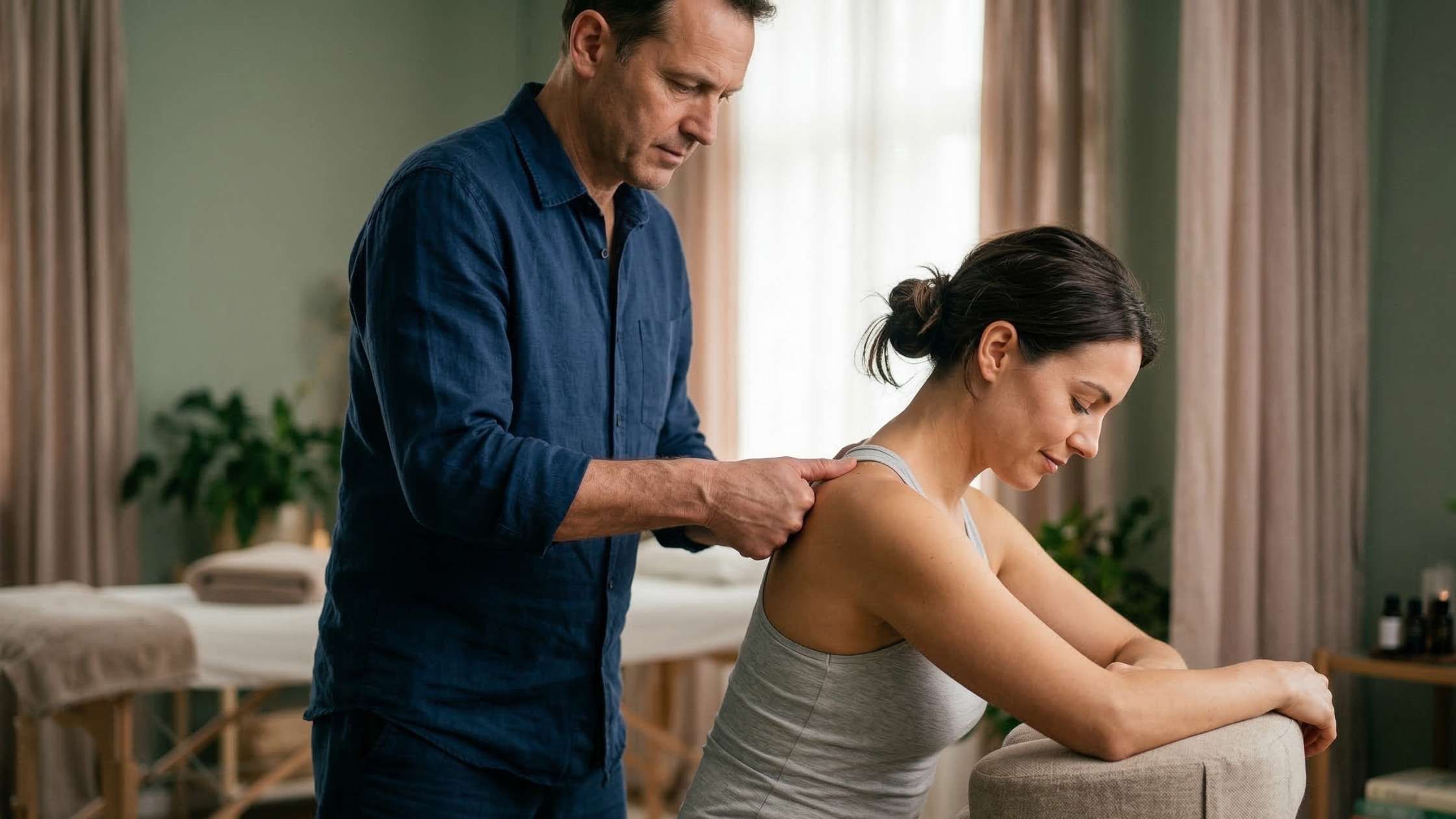
-
Reduced muscle tension and pain: Stretching exercises significantly decrease neck pain intensity in office workers with chronic discomfort 1
-
Improved range of motion: Regular neck stretching increases cervical mobility within 4 to 6 weeks of consistent practice 2
-
Lower stress hormone levels: Mind-body practices like tai chi and qigong reduce cortisol, which contributes to muscle relaxation 3
-
Better sleep quality: Participants practicing gentle movement and relaxation techniques report improved sleep, supporting muscle recovery 4
-
Less reliance on pain medication: Non-pharmacological approaches can reduce the need for over-the-counter pain relievers in managing chronic neck pain 5
How Often to Practice Neck Stretches and Exercises

Consistency matters more than duration. Brief daily practice tends to create better results than occasional longer sessions. Pairing neck stretches with an existing habit—morning coffee, an afternoon break—makes the routine easier to maintain.
How to Prevent Neck and Shoulder Stiffness
Prevention is often simpler than treatment. A few adjustments to daily habits can significantly reduce how often stiffness returns.
Improve Your Daily Posture
Keep your ears aligned over your shoulders and your shoulders over your hips. When sitting, notice if your head drifts forward toward your screen and gently bring it back.
Set Up an Ergonomic Workspace
Build a Consistent Movement Practice
Regular movement breaks—even standing and stretching for a minute every hour—prevent muscles from locking into tense positions. A daily gentle exercise routine maintains the flexibility you've gained.
Manage Stress Through Daily Mindfulness
Chronic stress often shows up as recurring neck tension. Even a few minutes of daily mindfulness practice can interrupt the stress-tension cycle before it takes hold.
When to See a Doctor for Neck Pain
Most neck stiffness responds well to home care, but certain symptoms call for medical attention:
-
Pain radiating into your arms or hands
-
Numbness or tingling in your extremities
-
Pain following an injury or accident
-
Fever accompanying neck pain
-
Persistent pain not improving after a week of home care
These signs may point to something beyond simple muscle tension. A healthcare provider can help rule out more serious causes.
Why Practice Neck and Shoulder Relief with ZenFit
ZenFit offers guided tai chi and qigong programs designed specifically for neck and shoulder tension. Sessions run 5 to 15 minutes, making daily practice realistic even with a full schedule.
The app draws from Traditional Chinese Medicine principles while incorporating modern exercise science. Personalized guidance helps you build a routine that fits your body, and progress tracking keeps you motivated over time.
Tip: ZenFit's gentle neck and shoulder release sequence is designed for complete beginners and available in sessions as short as 5 minutes.
Ready to Start Your Neck Pain Relief Journey
Gentle daily practice forms the foundation of lasting relief. Whether you start with simple stretches, explore tai chi movements, or try acupressure points, the key is beginning small and staying consistent.
Frequently Asked Questions About Neck and Shoulder Stiffness
How long does it take for a stiff neck to heal naturally?
Most stiff necks from muscle strain improve within a few days to a week with consistent gentle stretching, heat therapy, and rest. Chronic stiffness may take longer and often benefits from building a regular movement practice.
Can sleeping position cause neck and shoulder stiffness?
Yes. Sleeping on your stomach or with an unsupportive pillow can strain neck muscles and lead to morning stiffness. Side or back sleeping with proper pillow support typically works better.
Is it better to rest or move when you have a stiff neck?
Gentle movement is generally better than complete rest. Movement promotes blood flow and prevents muscles from tightening further, while prolonged rest can actually increase stiffness.
Can anxiety cause chronic neck and shoulder tension?
Yes. Anxiety triggers the body's stress response, which causes muscles in the neck and shoulders to contract and hold tension over time. Addressing the mental component through mindfulness or breathing practices often helps resolve the physical symptoms.
What is the best sleeping position to prevent a sore neck?
Sleeping on your back or side with a supportive pillow that keeps your spine aligned works best. Pillow height matters—it fills the space between your neck and the mattress without pushing your head up or letting it drop.