Non-Surgical Knee Pain Relief: Exercises That Strengthen and Heal
Published on May 21, 2026

Laura Mitchell
Laura is a wellness content creator specializing in holistic health and movement for healthy aging. As an expert in Tai Chi and Qigong, she passionately integrates Chinese wellness practices into her daily lifestyle.
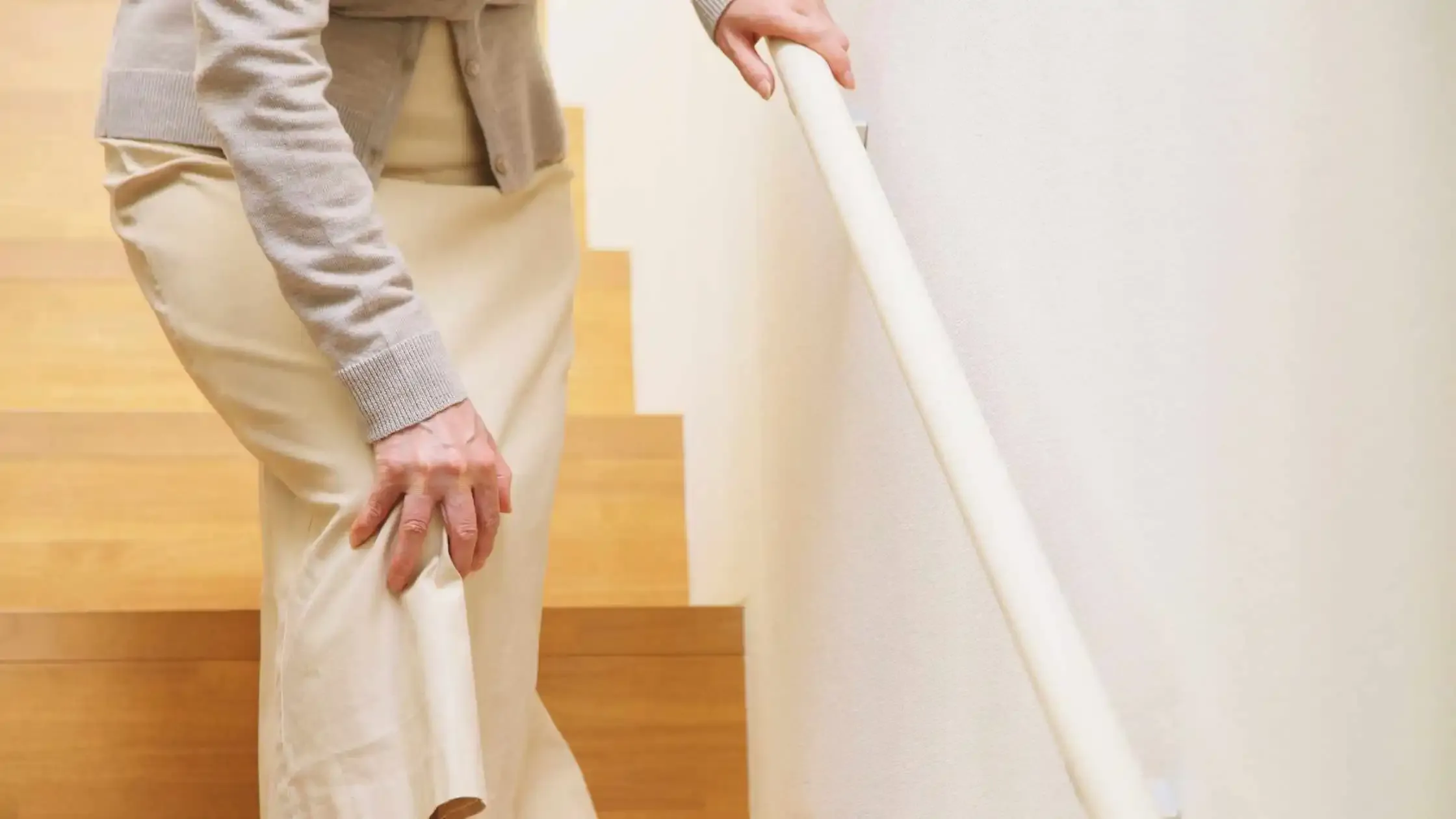
This guide covers the most effective exercises for knee pain relief, from targeted stretches that restore flexibility to strengthening movements that protect the joint long-term. You'll also learn how to practice safely, how often to exercise, and when it might be time to consult a professional.
Why Knee Exercises Are the Most Effective Non-Surgical Treatment
Relieving knee pain without surgery comes down to two things: strengthening the muscles around the joint and improving flexibility through targeted stretches. When the quadriceps, hamstrings, and calves are strong, they absorb impact that would otherwise travel directly into the knee. The result is less stress on the joint itself and more stability during everyday movements like walking, climbing stairs, or standing up from a chair.
What makes exercise so effective is that it addresses the underlying cause of most knee pain rather than simply masking symptoms. Strong muscles act as natural shock absorbers. They distribute weight more evenly across the joint, which reduces wear over time.
-
Muscle support: The quadriceps and hamstrings work together to stabilize the knee during movement.
-
Joint protection: Balanced strength prevents the knee from compensating for weakness elsewhere in the leg.
-
Long-term relief: Consistent practice builds resilience that lasts, unlike temporary fixes from medication alone.
Science-Backed Benefits of Exercise for Knee Pain
-
Reduced joint pain and inflammation: Movement promotes circulation, helping flush inflammatory markers from the joint while delivering nutrients that support healing. 1
-
Improved knee stability and function: Strengthening exercises enhance proprioception, which is your body's awareness of joint position, translating to better control during movement. 2
-
Slowed progression of osteoarthritis: Regular low-impact exercise can help delay cartilage degeneration associated with knee osteoarthritis. 3
-
Greater mobility and range of motion: Stretching prevents stiffness and maintains the flexibility needed for comfortable daily activities. 4
Best Knee Stretches for Flexibility and Mobility
Tight muscles in the hips and legs pull on the knee joint, contributing to pain and misalignment. Regular stretching helps maintain the flexibility that keeps knees moving freely. The stretches below target the most common problem areas.
| Stretch | Target Area | Best For |
|---|---|---|
| Standing Quadriceps Stretch | Front of thigh | Knee stiffness, tight quads |
| Supine Hamstring Stretch | Back of thigh | Lower back and knee pain |
| Half-Kneeling Hip Flexor Stretch | Hip flexors | Sedentary lifestyle |
| Figure 4 Stretch | Glutes and hips | Hip-related knee pain |
Standing Quadriceps Stretch
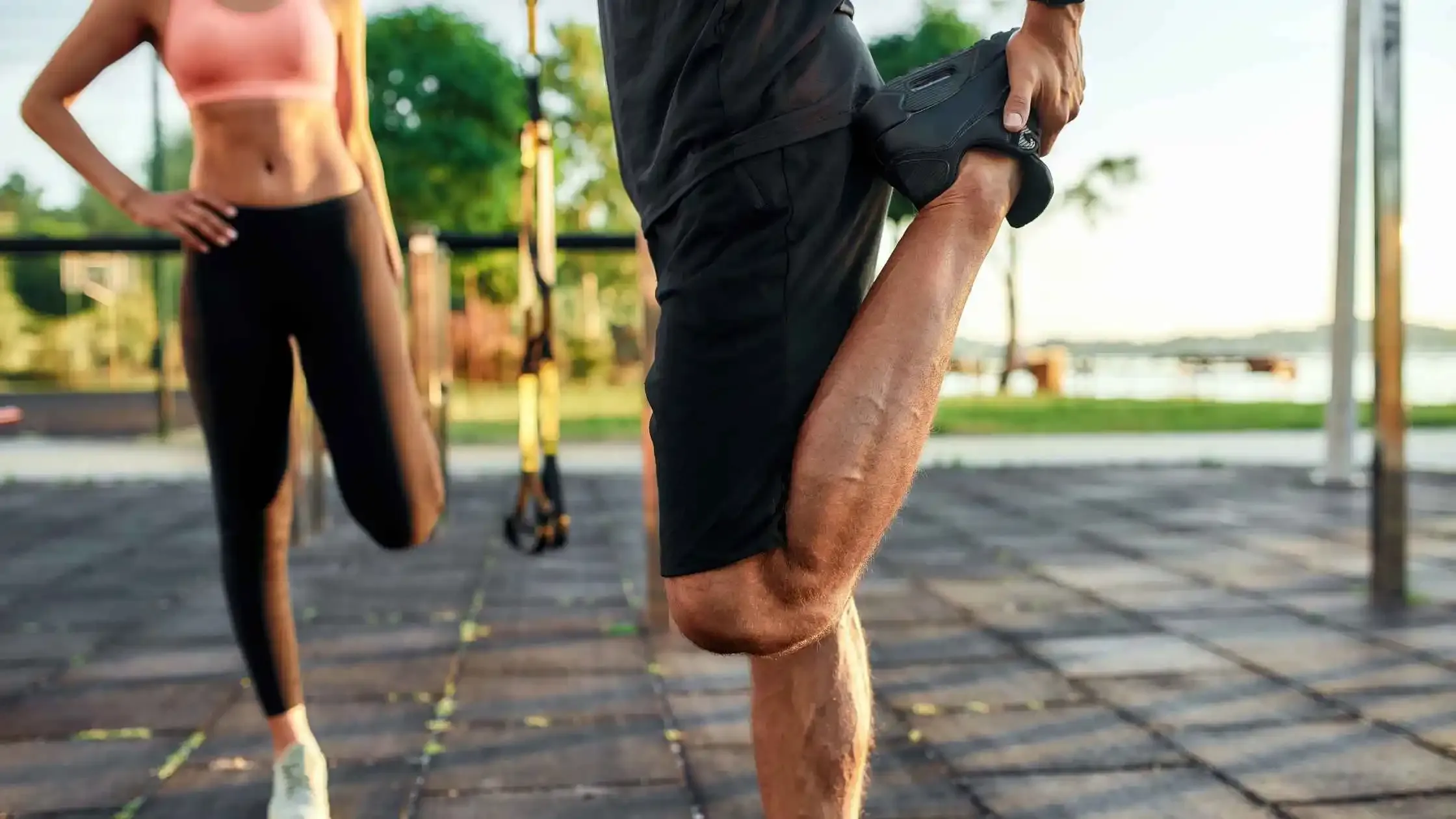
Stand on one leg while holding a wall or chair for balance. Grab your opposite foot and gently pull your heel toward your glute until you feel a stretch along the front of your thigh. Hold for 20-30 seconds, then switch sides.
Supine Hamstring Stretch
Lie on your back with both legs straight. Loop a towel around one foot and gently pull the leg toward the ceiling until you feel a stretch in the back of your thigh. This position protects the lower back while effectively lengthening the hamstrings.
Half-Kneeling Hip Flexor Stretch
Kneel on one knee with your other foot flat on the floor in front of you. Gently push your hips forward until you feel a stretch in the front of your hip on the kneeling side. Tight hip flexors are a surprisingly common contributor to knee discomfort, especially for people who sit for long periods.
Figure 4 Stretch
Lie on your back with knees bent. Cross one ankle over the opposite knee, then reach through to grab the back of the supporting thigh and gently pull toward your chest. This stretch targets the piriformis and glute muscles, which influence how the knee tracks during movement.
Knee Strengthening Exercises You Can Do at Home
The exercises below form the core of any knee rehabilitation routine. They include both isotonic movements, where the muscle contracts and moves, and isometric holds, where the muscle contracts without movement. No equipment is required.
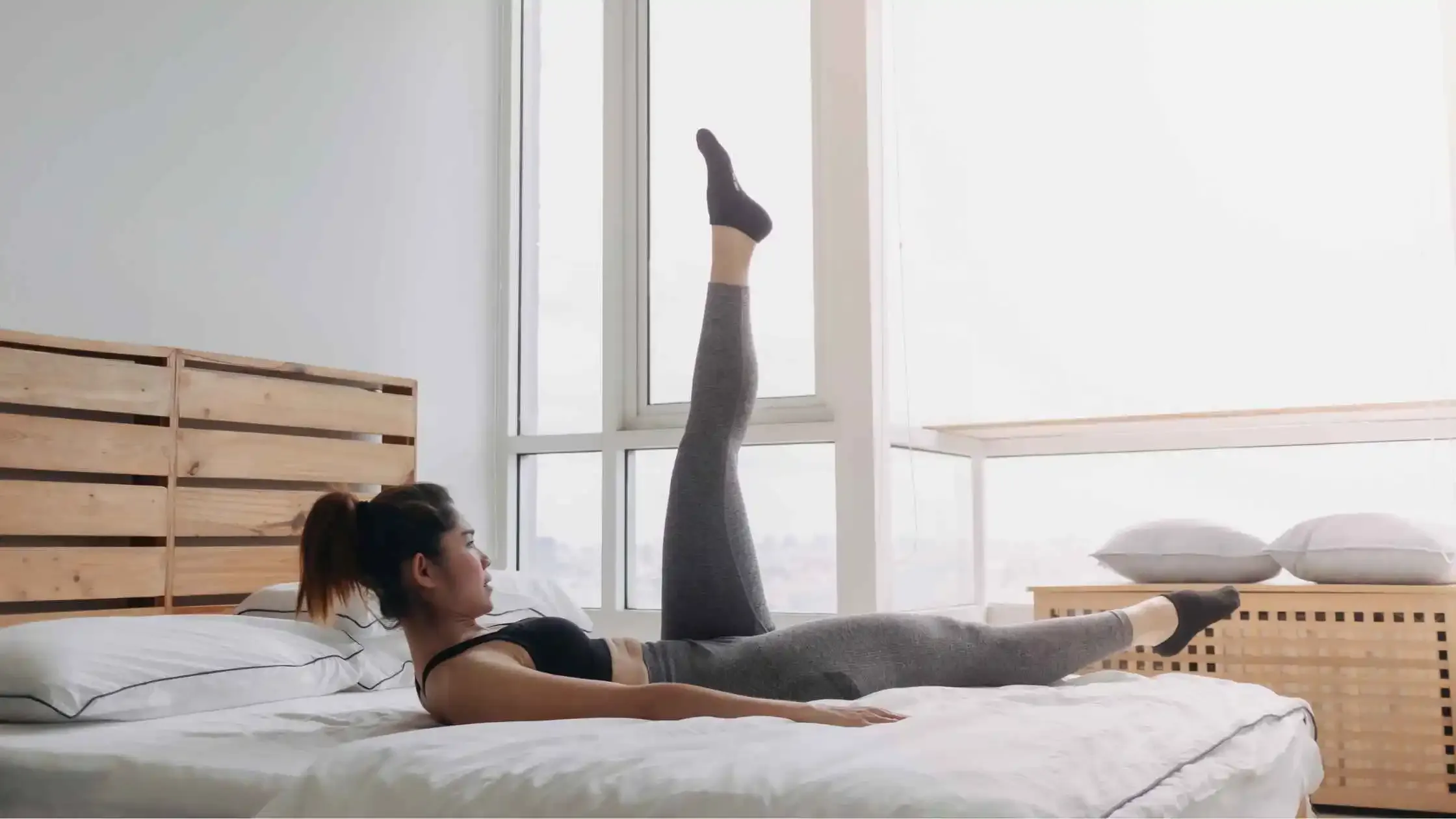
Straight-Leg Raises
Side-Lying Leg Lifts
Lie on your side with legs stacked. Keeping your top leg straight, lift it toward the ceiling without rocking your torso. This targets the hip abductor muscles, which play a crucial role in knee alignment during walking and standing.
Calf Raises
Stand holding a chair for support. Slowly raise your heels off the floor, pressing onto the balls of your feet, then lower with control. The calf muscles support the entire lower leg structure and contribute to knee stability.
Wall Sits
Lean your back against a wall and slide down until your thighs approach parallel to the floor, or as far as feels comfortable. Hold for 10-30 seconds. This isometric exercise builds endurance in the quadriceps, hamstrings, and glutes simultaneously.
Hamstring Curls
Stand holding a chair, then bend one knee and lift your heel toward your glute. Lower slowly and repeat. Balancing quadriceps strength with hamstring work is essential because many people focus only on the front of the thigh.
Tip: Start with 8-10 repetitions of each exercise. As strength improves over several weeks, gradually increase to 15 repetitions or add a second set.
Hip Strengthening Exercises That Support Knee Health
The body works as a kinetic chain, meaning weakness in one area often causes problems elsewhere. Hip weakness frequently forces the knee to compensate, leading to poor alignment and pain over time. The exercises below strengthen the knee indirectly by improving hip stability.
Clamshells
Lie on your side with hips and knees bent, feet together. Keeping your feet touching, lift your top knee like opening a clamshell, then lower with control. This specifically targets the gluteus medius, a key hip stabilizer that influences how the knee tracks during movement.
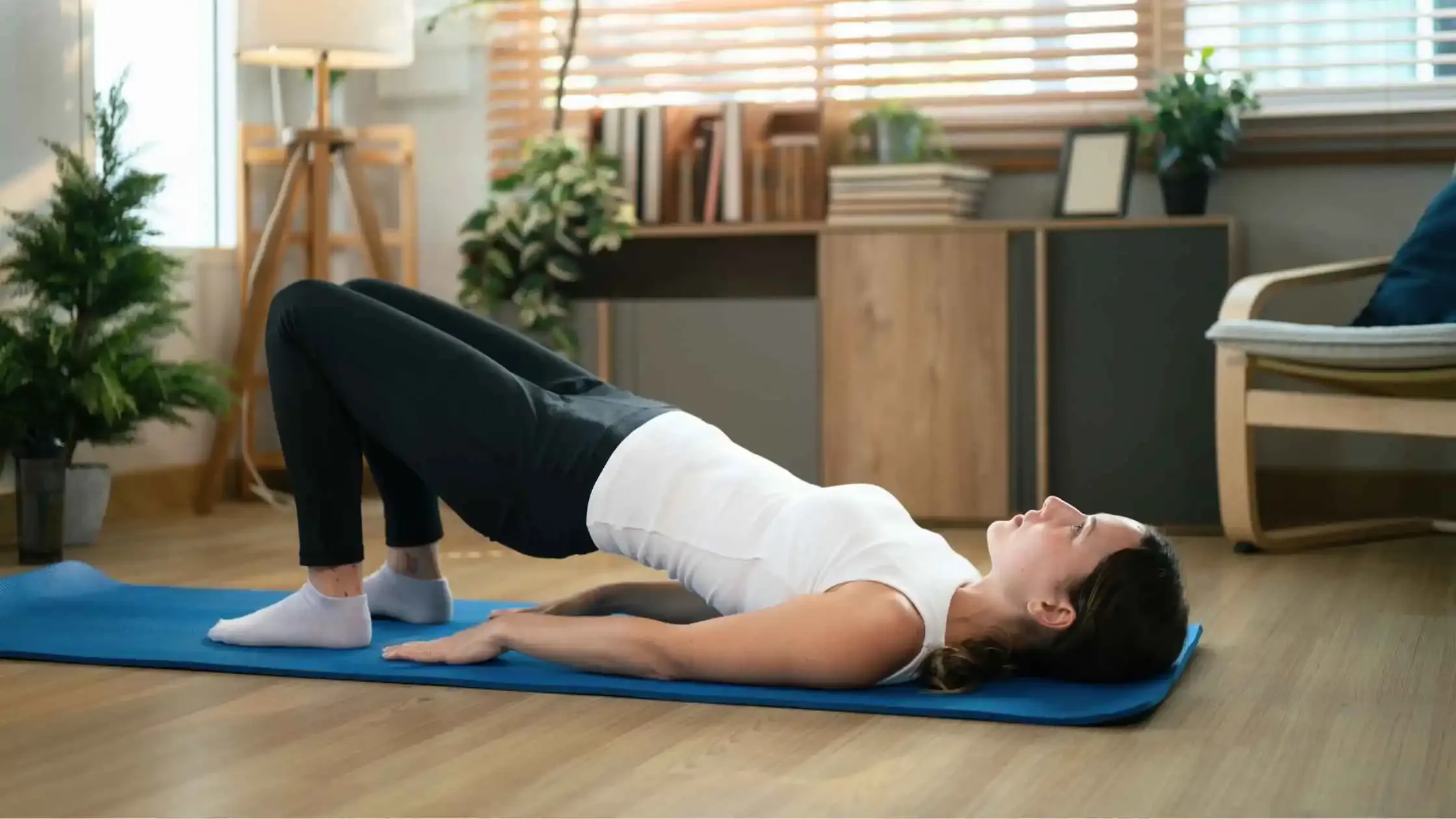
Glute Bridges
Lie on your back with knees bent and feet flat on the floor. Lift your hips until your body forms a straight line from shoulders to knees, hold briefly, then lower. This strengthens the glutes and hamstrings together, providing powerful support for the knee joint.
Exercises for Knee Rehabilitation at Home
The movements below bridge the gap between clinical physical therapy and home practice. Physical therapists commonly prescribe them for restoring function after injury or during recovery from chronic conditions.
Heel Slides
Lie on your back with knees bent. Slowly slide the heel of your affected leg away until the leg is straight, then slide it back toward your body. This gently improves range of motion without placing stress on the joint.
Quad Sets
Lie with your leg straight and tighten your thigh muscle as if pressing the back of your knee into the floor. Hold for 5 seconds, then release. This foundational exercise helps re-engage muscles that may have weakened from disuse or injury.
Step-Ups
Use a low, sturdy step or the bottom stair. Step up with one foot, bring the other to meet it, then step back down. This functional exercise helps progress strength once basic exercises feel comfortable and pain-free.
How to Practice Knee Exercises Safely
The golden rule is listening to your body. Mild muscle fatigue during exercise is normal and expected. Sharp or sudden pain, however, is a signal to stop immediately.
-
Acceptable sensations: Gentle muscle burn, mild stretching feeling, slight fatigue
-
Stop immediately if you experience: Sharp pain, clicking accompanied by pain, sudden swelling
Start with fewer repetitions and shorter holds. Only increase intensity when you can complete your current routine comfortably without increased pain afterward. Some muscle soreness within 24-48 hours is normal, but discomfort lasting beyond two days suggests overexertion.
If your knees feel particularly sore on a given day, reduce your range of motion. For example, don't squat as deep, or use a chair for extra support. Avoiding deep bending movements on sensitive days helps prevent setbacks.
How Often to Do Knee Pain Exercises
Consistency matters far more than intensity. Short, regular sessions prove more effective than occasional long workouts.
-
Strengthening exercises: Every other day allows muscles time to recover and rebuild stronger.
-
Stretching exercises: Daily practice maintains flexibility and prevents stiffness.
-
Session length: 10-15 minutes is often sufficient when practiced consistently.
The key distinction is between strengthening and stretching. Muscles need rest between strengthening sessions to repair and grow stronger. Stretching, on the other hand, benefits from daily repetition because it maintains range of motion without creating the same recovery demands.
Explore ZenFit's guided knee-friendly routines →
When to Seek Professional Help
While exercise helps most knee pain, certain symptoms warrant medical attention. Consider consulting a healthcare provider if you experience any of the following:
-
Knee giving way or feeling unstable during normal activity
-
Significant swelling that doesn't improve with rest
-
Inability to bear weight on the affected leg
-
Pain that worsens despite rest and gentle exercise
-
Visible deformity or signs of infection such as redness and heat
Why Gentle Movement Practices Build Long-Term Knee Health
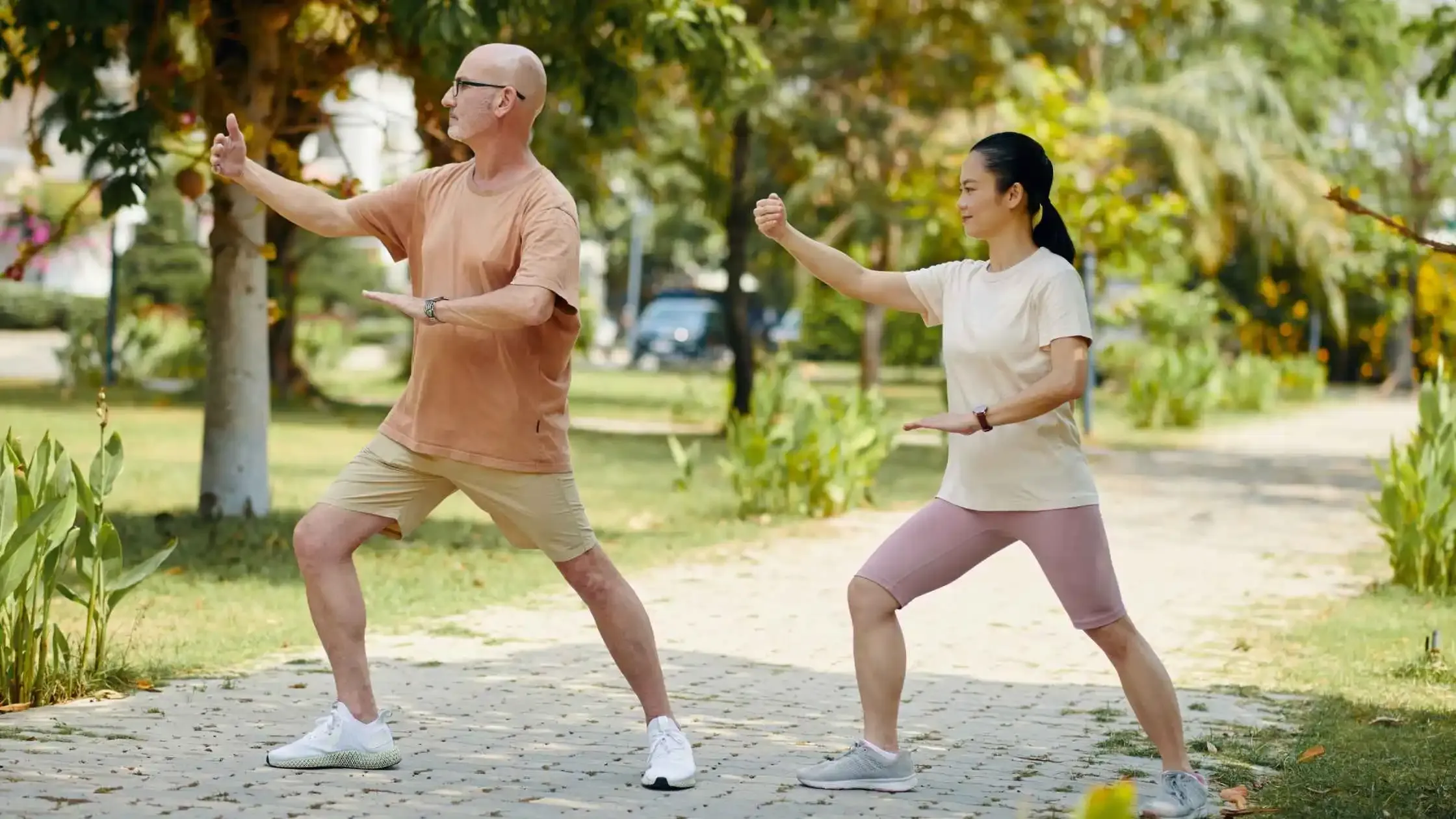
Sustainable wellness comes from gentle, consistent practice rather than intense, sporadic effort. In Traditional Chinese Medicine, joint health relates to the smooth flow of qi, the body's vital energy. Practices like Tai Chi and Qigong align with both Eastern philosophy and Western exercise science, promoting circulation and strengthening muscles without stressing joints.
ZenFit's approach integrates time-tested practices with modern fitness principles. The app offers 5-15 minute routines specifically designed for joint-friendly movement, making consistent practice accessible even on busy days. For anyone dealing with knee discomfort, low-impact movement provides a path forward that respects the body's limits while building strength over time.
Ready to Start Your Knee Pain Relief Journey?
Taking the first step toward healthier knees doesn't require hours at the gym or complicated equipment. ZenFit provides AI-personalized plans focused on the low-impact, gentle movements your joints benefit from, all in sessions short enough to fit into any schedule.
Frequently Asked Questions About Exercises for Knee Pain
How can I naturally lubricate my knee joints through exercise?
Gentle, regular movement promotes the production of synovial fluid, which is the body's natural joint lubricant. Consistent low-impact exercise keeps knee joints nourished and moving smoothly. Even simple walking helps maintain healthy fluid levels in the joint.
What types of exercises are best avoided with knee pain?
High-impact activities like running on hard surfaces, jumping, and deep squats place excessive force on the knee joint. Low-impact alternatives such as swimming, cycling, or the exercises described above offer similar benefits without the stress.
How long before knee strengthening exercises reduce pain?
While individual results vary, most people notice meaningful improvement in pain and function within 4-8 weeks of consistent practice. The key word is consistent. Sporadic effort rarely produces lasting results.
Can knee strengthening exercises be done every day?
Strengthening exercises work best every other day, giving muscles time to recover and rebuild. Gentle stretching and mobility work, however, can benefit from daily practice.