Age-Related Joint Pain: A Traditional Chinese Medicine Perspective
Published on March 31, 2026 | Updated on June 17, 2026

Laura Mitchell
Laura is a wellness content creator specializing in holistic health and movement for healthy aging. As an expert in Tai Chi and Qigong, she passionately integrates Chinese wellness practices into her daily lifestyle.
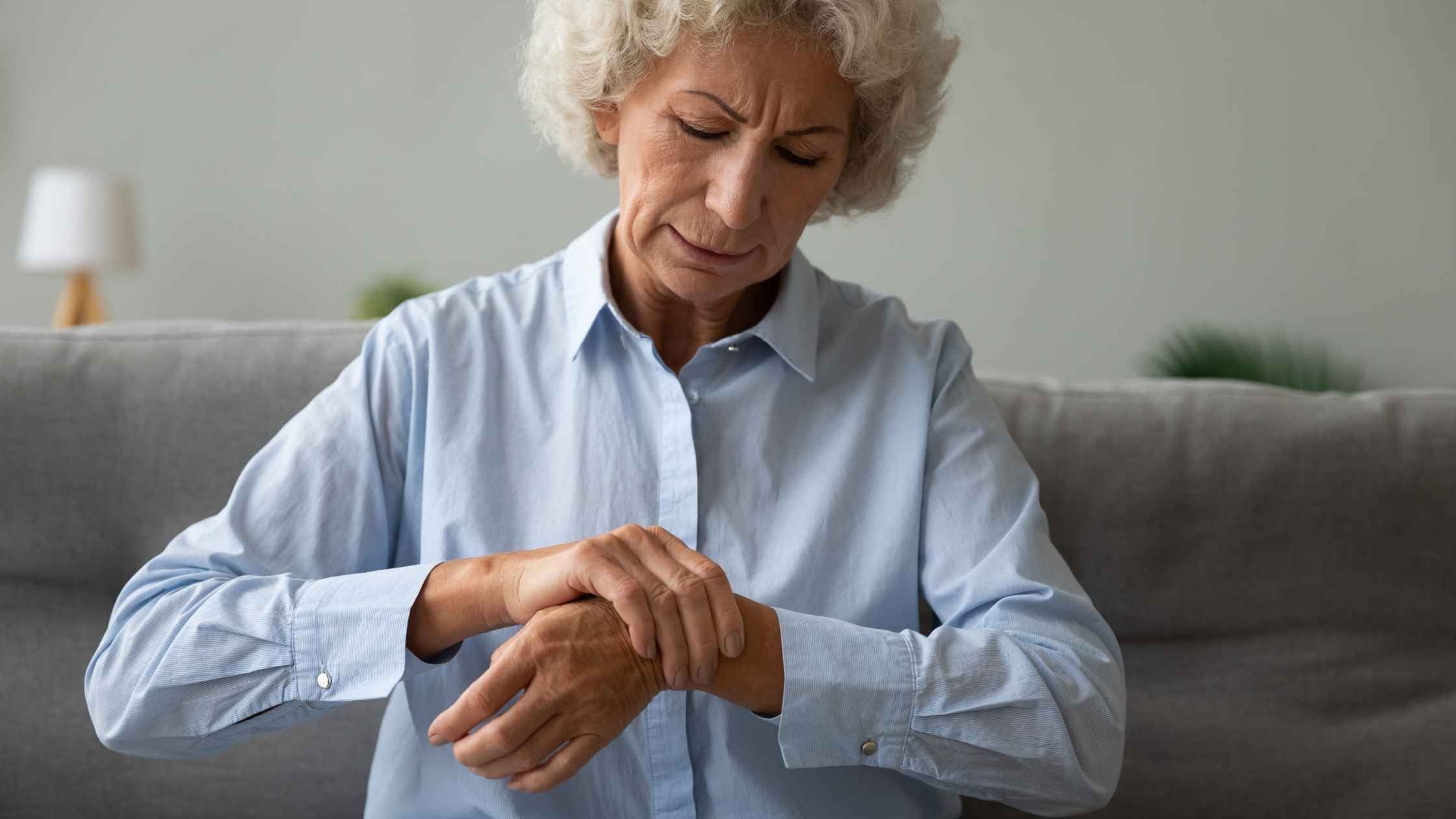
This framework shifts the focus from isolated symptoms to whole-body patterns, opening up approaches that address root causes rather than simply managing discomfort. Below, you'll find the key TCM concepts behind age-related joint pain, the organ systems involved, and gentle practices that support joint health at any stage of life.
Why joint pain worsens with age according to TCM
In Traditional Chinese Medicine, joint pain that intensifies with age traces back to the natural decline of Kidney energy combined with the gradual buildup of pathogenic factors like Wind, Cold, and Dampness. These factors obstruct the flow of Qi (vital energy) and Blood through the body's meridian pathways. Rather than viewing aging joints as simple mechanical wear, TCM sees the discomfort as a signal of deeper energetic shifts happening beneath the surface.
The body's energy system changes in several interconnected ways over time:
- Declining Kidney essence: Jing, the foundational substance stored in the Kidneys, depletes naturally throughout life and directly affects bone density and joint resilience.
- Weakened Qi circulation: Vital energy that keeps joints nourished tends to slow down with age, leading to stiffness and delayed healing.
- Accumulation of pathogenic factors: Defensive energy weakens over the years, making it easier for environmental influences to settle into joints and create blockages.
Recognizing these patterns offers a different lens for approaching joint health, one that looks at the whole person rather than isolated symptoms.
How Qi and Blood stagnation cause joint pain
Qi animates every function in your body. Blood nourishes your tissues and organs. When both flow smoothly through the meridian pathways, joints stay supple and comfortable. When circulation slows or becomes blocked, pain and stiffness follow.
What causes stagnation in the first place? Aging plays a role, certainly. But so do injury, emotional stress, prolonged sitting, and even cold exposure. The body's circulation simply becomes less efficient over time, and areas that were once well-nourished start to feel neglected.
The type of stagnation often determines how pain presents itself:
- Qi stagnation typically produces a dull, achy sensation that improves with gentle movement and worsens with rest.
- Blood stagnation tends to cause sharper, more fixed pain, sometimes accompanied by visible swelling or discoloration.
This distinction matters because it points toward different approaches. Qi stagnation often responds well to movement and breath work, while Blood stagnation may benefit from warming practices and circulation-promoting foods.
The role of Kidney essence in joint health as you age
The Kidneys in TCM hold a special position as the "root of vitality." They are said to "rule the bones," meaning Kidney energy directly influences bone strength, joint integrity, and the body's capacity for repair. The essence stored in the Kidneys, called Jing, functions like a constitutional inheritance that gradually depletes throughout life.
Think of Jing as a savings account you were born with. You can make withdrawals, but deposits are limited. After midlife, the balance tends to drop more noticeably. Injuries take longer to heal. Joints feel less stable. Morning stiffness becomes a familiar companion.
From a TCM perspective, these changes signal that Kidney energy could use support through appropriate movement, adequate rest, and nourishing foods. The goal isn't to reverse aging but to work with the body's natural rhythms.
Understanding Bi syndrome in Traditional Chinese Medicine
Bi syndrome, sometimes translated as "painful obstruction syndrome," is the classical TCM framework for understanding arthritis and chronic joint pain. The term "Bi" literally means blockage. It occurs when external pathogenic factors invade the body and lodge in the joints, blocking the normal flow of Qi and Blood through the meridians.
The specific type of Bi syndrome depends on which pathogen dominates. Identifying the pattern helps clarify which lifestyle adjustments and practices might offer the most relief.
Cold Bi
Cold Bi presents as severe, fixed pain that worsens dramatically in cold weather and feels better with warmth. The joints may feel contracted and stiff, with limited range of motion. People with Cold Bi often find themselves reaching for heating pads and warm compresses, which typically bring noticeable relief.
Damp Bi
Damp Bi creates a sensation of heaviness and swelling in the affected joints. The pain often feels worse on humid or rainy days, and there may be numbness or a "waterlogged" quality to the discomfort. Movement feels sluggish rather than sharp, and the joints may appear puffy.
Wind Bi
Wind Bi is characterized by wandering pain that moves from joint to joint unpredictably. One day your knee might ache, and the next day it's your shoulder. This migratory quality reflects Wind's nature of constant movement and change, making it harder to pin down.
Heat Bi
Heat Bi involves red, hot, swollen joints with acute inflammation. This pattern often appears during arthritis flares and may be accompanied by a burning sensation. Cooling measures and rest tend to help, while heat and spicy foods can aggravate symptoms.
| Bi Syndrome Type | Primary Symptoms | Aggravating Factors | Relieving Factors |
|---|---|---|---|
| Cold Bi | Severe fixed pain, stiffness | Cold weather, winter | Warmth, warm compresses |
| Damp Bi | Heavy, swollen, numb joints | Humidity, rainy weather | Dry warmth, gentle movement |
| Wind Bi | Wandering, migratory pain | Weather changes, wind | Rest, stable environment |
| Heat Bi | Red, hot, inflamed joints | Heat, spicy foods | Cooling, rest |
Organ systems that influence joint health in TCM
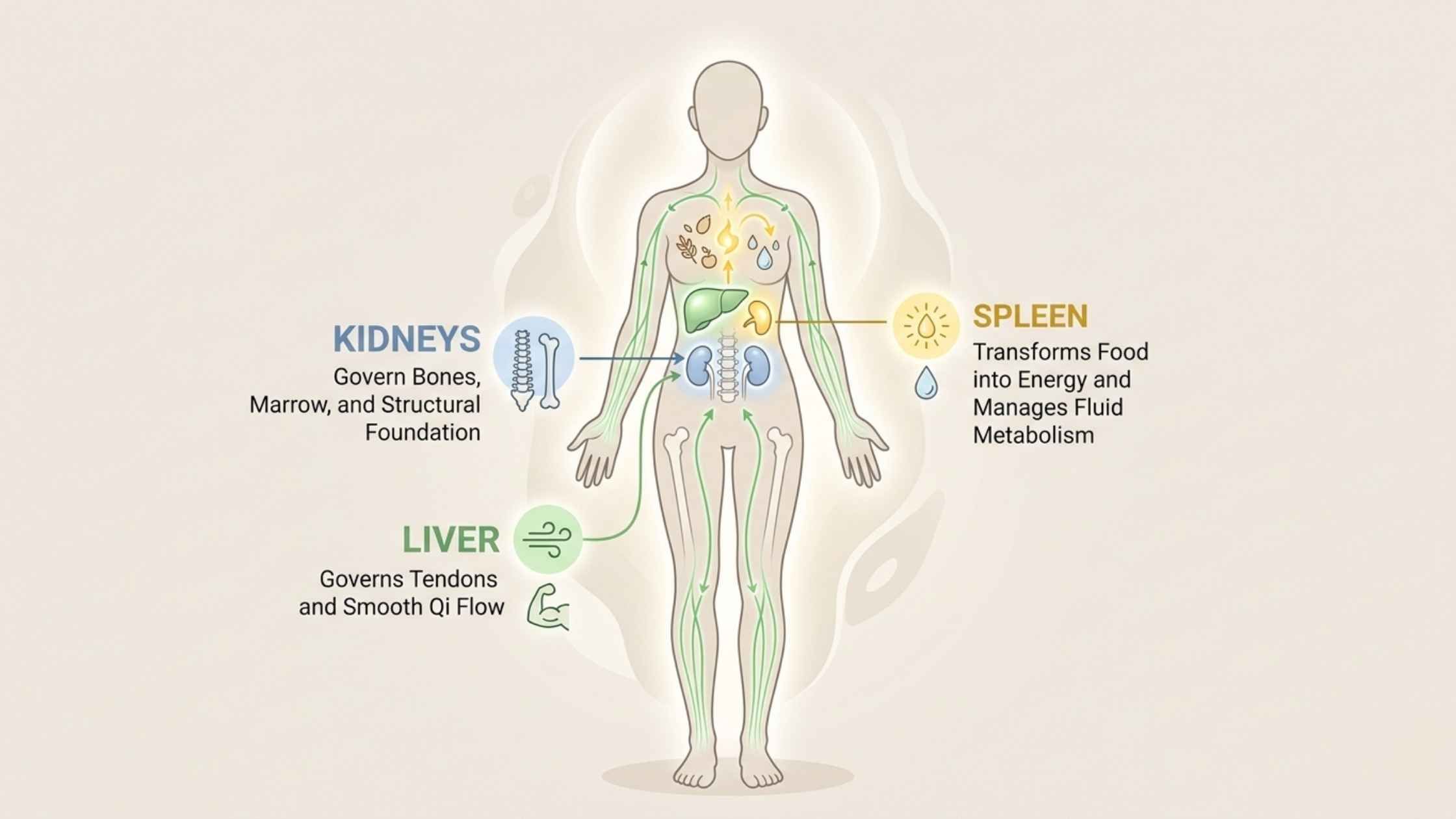
TCM organ systems function as energetic networks rather than simply anatomical structures. The TCM "Kidney" or "Liver" refers to a whole system of functions, not just the physical organ you'd see on a scan. Three organ systems play particularly important roles in joint health.
Kidney
The Kidneys govern bones, marrow, and the body's structural foundation. When Kidney energy runs low, you might experience weak knees, chronic lower back pain, or joints that feel fragile and unsupported. This connection explains why TCM often addresses joint problems by supporting Kidney function.
Liver
The Liver governs the tendons and ensures smooth Qi flow throughout the body. Liver imbalances often manifest as tendon tightness, muscle cramps, and restricted joint mobility. Interestingly, emotional stress and frustration can affect Liver energy, which may explain why some people notice their joints feel worse during stressful periods.
Spleen
The Spleen transforms food into usable energy and manages fluid metabolism. When Spleen function weakens, dampness accumulates in the body, leading to joint swelling, a feeling of heaviness in the limbs, and sluggish movement. Diet plays a significant role in Spleen health.
Science-backed benefits of TCM for joint pain
Modern research increasingly supports what TCM practitioners have observed for centuries. While the language differs, the outcomes often align.
- Reduced inflammation and pain: Studies demonstrate that acupuncture triggers anti-inflammatory responses and stimulates natural pain-relieving mechanisms (1)
- Improved mobility and flexibility: Research shows tai chi practice enhances range of motion in adults with various forms of arthritis (2)
- Enhanced balance and fall prevention: Evidence indicates regular qigong practice reduces fall risk in older adults by improving proprioception and stability (3)
- Decreased reliance on pain medication: Clinical findings suggest integrated TCM therapies may reduce the need for analgesics in some patients (4)
- Better quality of life: Studies report improved overall well-being and daily function with consistent TCM-based movement practices (5)
Gentle movement practices for aging joints
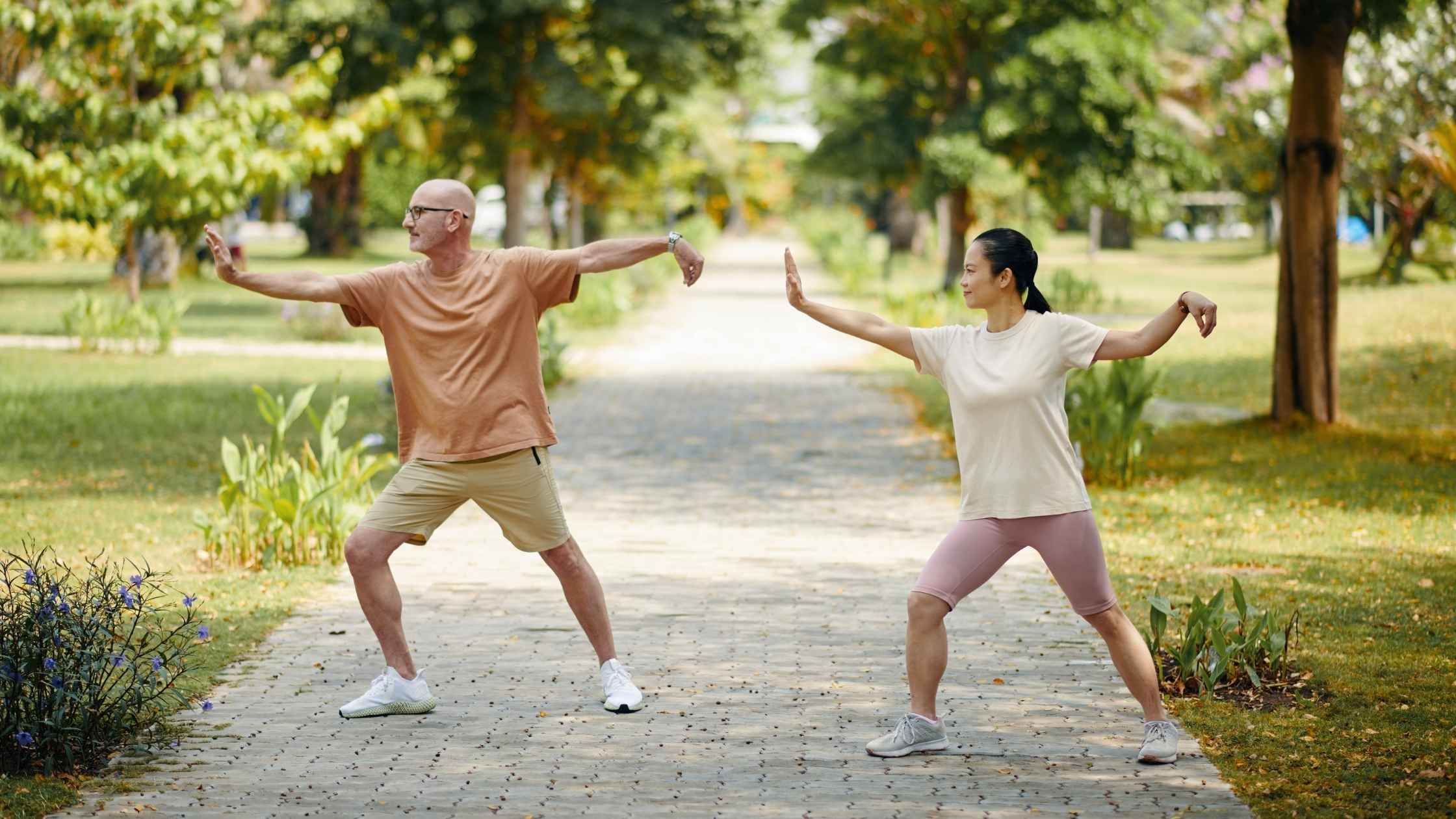
TCM emphasizes flowing, low-impact movement to promote Qi circulation without stressing the joints. The goal is working with the body rather than pushing against it, which makes these practices accessible regardless of current fitness level.
Tai Chi for joint mobility
Qigong for energy flow
Qigong combines breath-coordinated movements with focused intention to restore Qi circulation to blocked areas. The pace is gentler than Tai Chi, and many sequences can be performed seated. This accessibility makes Qigong a good starting point for those with limited mobility or significant joint discomfort.
Baduanjin for flexibility
Baduanjin, known as the Eight Brocades, is a classical qigong set featuring eight gentle stretching exercises. The movements target the spine, shoulders, and hips, which are common trouble spots for aging joints. The sequence takes about ten to fifteen minutes and can be modified for standing or seated practice.
Tip: Consistency matters more than duration. Even five to ten minutes of daily practice can make a meaningful difference over several weeks.
How TCM nutrition supports joint health
Food in TCM carries energetic properties: warming, cooling, drying, or moistening. Choosing foods that counteract your particular imbalance can support joint comfort over time.
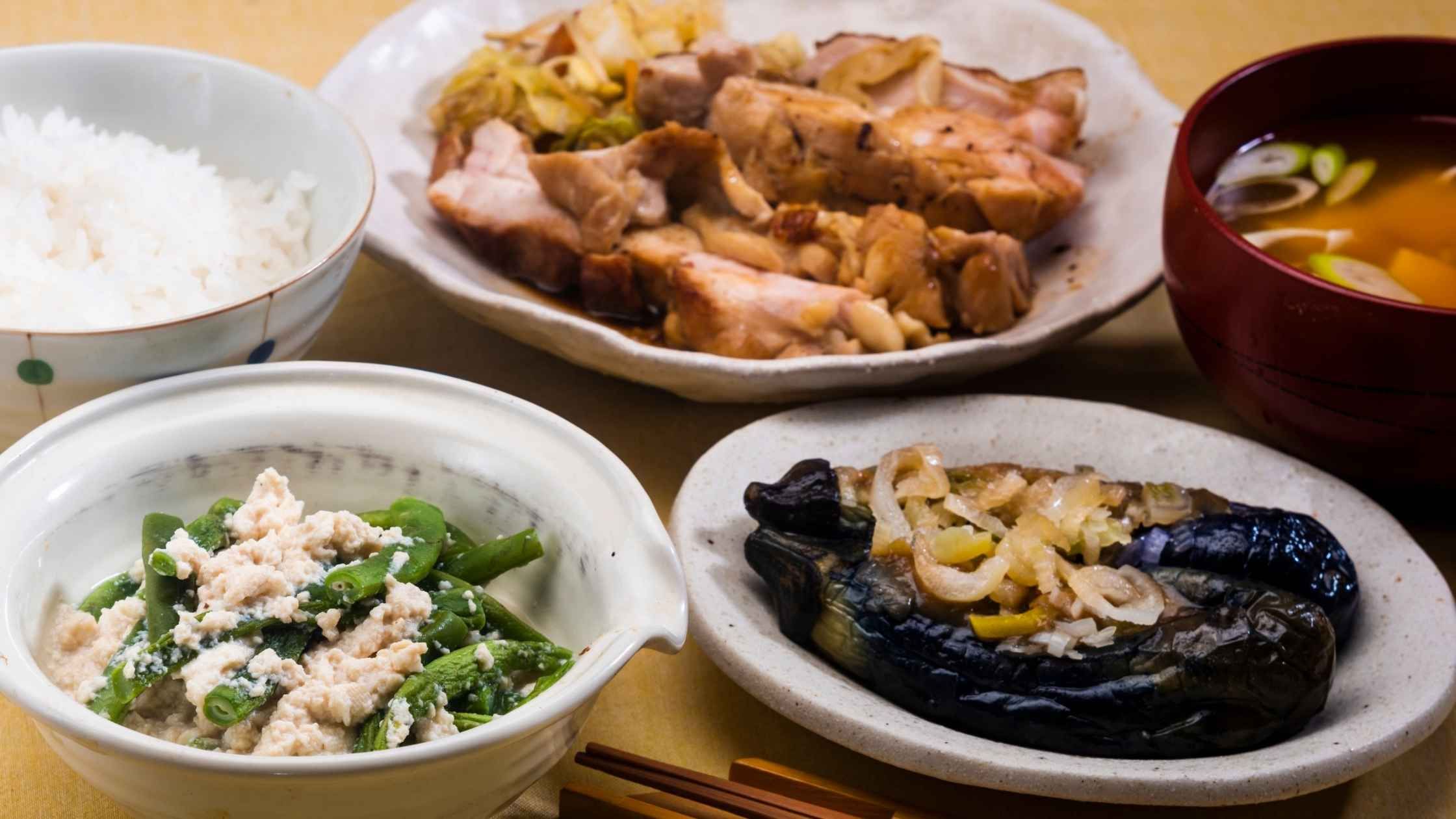
For cold-type pain, warming foods like ginger, cinnamon, lamb, and bone broth help dispel cold and improve circulation. If dampness is the issue, foods like barley, mung beans, and bitter greens can help reduce swelling and heaviness.
Kidney-nourishing foods support bone and joint integrity directly. Black beans, walnuts, sesame seeds, and seaweed all fall into this category. On the other hand, cold raw foods, excessive dairy, fried foods, and refined sugars can generate dampness and obstruct circulation, potentially aggravating joint discomfort.
The approach isn't about strict rules but about noticing how different foods affect your body and adjusting accordingly.
Why practice TCM for joint health with ZenFit
ZenFit translates ancient TCM principles into practical daily routines designed for real schedules. The app offers AI-personalized guidance that considers your individual constitution and health goals, creating a tailored plan you can follow day by day.
Short-format tai chi and qigong sessions focus specifically on joint mobility, while the Chinese nutrition guide supports dietary habits that align with TCM principles. Sessions run five to fifteen minutes, making consistent practice achievable even on busy days. The built-in health tracker helps you monitor energy levels and notice patterns over time.

Start your journey with ZenFit
Small, consistent efforts yield meaningful results for joint health over time. Begin your TCM wellness practice today and discover how ancient wisdom can support modern life.
FAQs
What vitamin deficiency causes joint pain?
Can TCM practices be safely combined with conventional arthritis treatments?
Yes, approaches like tai chi, qigong, and dietary therapy are generally considered complementary and can be used alongside Western medical treatments. Informing your healthcare provider about all practices you use helps ensure coordinated care.
How long does it take to notice improvement from TCM practices?
Many people report improved flexibility and reduced stiffness within a few weeks of consistent practice. Deeper constitutional changes may take several months of regular commitment.
Is tai chi safe for people with severe joint pain or arthritis?
Tai chi is widely recognized as safe for people with arthritis because movements can be modified for any mobility level. The slow, controlled practice helps protect joints rather than stress them.
What foods are best avoided for joint health according to TCM?
TCM recommends limiting cold raw foods, excessive dairy, fried and greasy foods, refined sugars, and alcohol. All of these can generate dampness and phlegm that obstruct joint circulation.