Beginner's Guide to Acupressure for Knee Pain Relief
Published on March 25, 2026

Laura Mitchell
Laura is a wellness content creator specializing in holistic health and movement for healthy aging. As an expert in Tai Chi and Qigong, she passionately integrates Chinese wellness practices into her daily lifestyle.
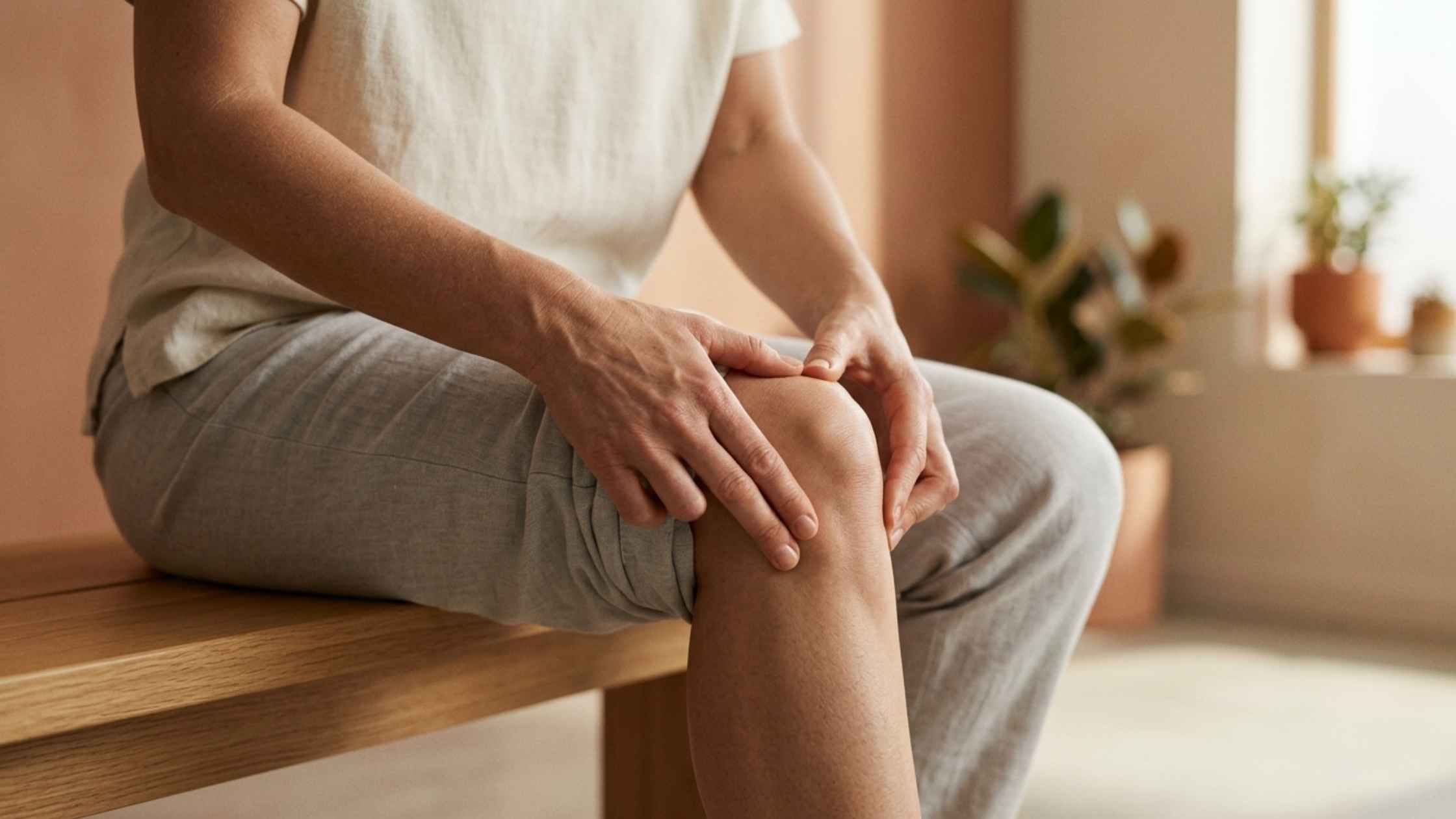
Knee pain has a way of showing up in the smallest moments—climbing stairs, standing from a chair, or simply walking across a room. For many adults, especially those over 40, these daily reminders can feel like an unwelcome constant.
What is acupressure for knee pain
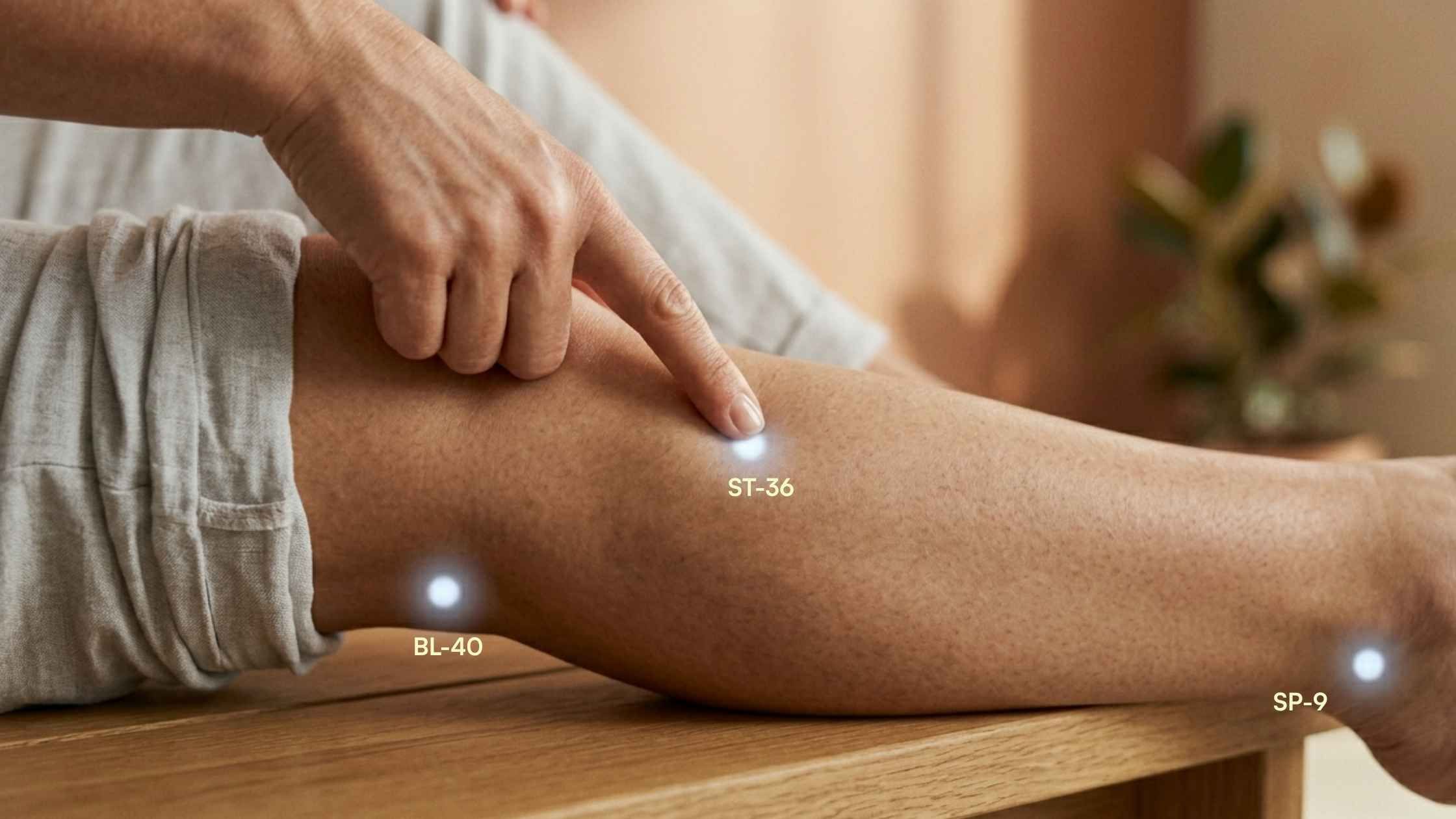
For beginner acupressure on knee pain, three points offer a solid starting place: ST-36 (Zusanli) sits below the outer knee, BL-40 (Weizhong) rests in the crease behind the knee, and SP-9 (Yinlingquan) lies below the inner knee. Applying firm thumb pressure to each point for several slow breaths can help ease discomfort, reduce stiffness, and release tension without any special equipment.
Acupressure is a Traditional Chinese Medicine practice that uses finger pressure on specific locations along the body's energy pathways. While acupuncture relies on thin needles inserted by a trained practitioner, acupressure works entirely through touch. This distinction makes acupressure something you can practice at home, on your own schedule, with nothing more than your hands.
- Acupressure: A hands-on healing method that applies sustained pressure to targeted body points
- Pressure points: Locations where energy pathways run close to the skin's surface
- Qi: The vital energy that flows through meridian channels throughout the body
A brief history of acupressure in Traditional Chinese Medicine
Acupressure emerged as part of Traditional Chinese Medicine's larger framework, which maps the body as an interconnected network of energy channels called meridians. Early practitioners noticed that pressing certain spots along these channels could influence health in distant parts of the body, including the joints.
The same meridian maps that guided healers thousands of years ago continue to inform acupressure practice today. This continuity speaks to the enduring nature of the approach, though modern research is still exploring exactly how and why pressure on specific points affects the body.
How acupressure relieves knee pain
Meridian theory and qi flow
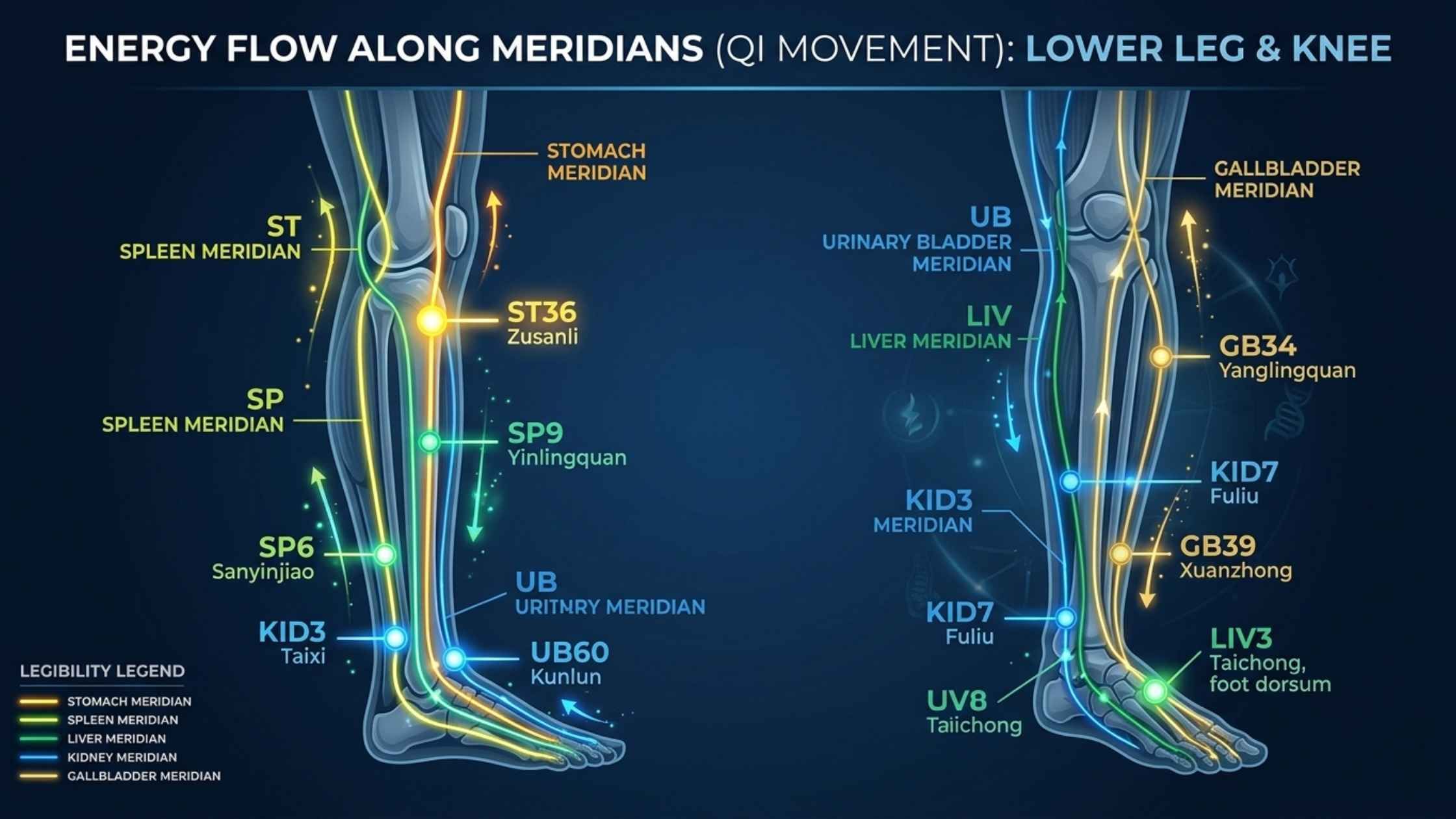
In TCM, meridians function as highways for qi, carrying vital energy to every part of the body. Several of these pathways pass directly through or alongside the knee joint. When qi moves freely, the body tends toward comfort and ease. When qi stagnates or becomes blocked, pain and stiffness often follow.
Acupressure aims to restore smooth qi flow by stimulating points along affected meridians. Think of it like clearing a traffic jam: once energy moves again, the downstream effects can include reduced discomfort and improved mobility.
The connection between pressure points and pain signals
Pressing on acupressure points may interrupt pain signals traveling to the brain while also encouraging blood flow to the surrounding area. Improved circulation brings fresh oxygen and nutrients to tissues, which can support the body's natural repair processes.
One interesting aspect of acupressure is that effective points for knee pain often sit on the lower leg rather than directly on the knee itself. Because meridians run in continuous lines, stimulating a point several inches away can still influence the knee through that shared energy pathway.
Core acupressure points for knee joint pain
Six acupressure points come up most frequently for knee discomfort. Each sits along a meridian that passes through or near the knee, and each addresses slightly different aspects of knee health.
| Point | Location | Primary Benefit |
|---|---|---|
| ST-36 | Below outer knee | General knee and leg vitality |
| SP-9 | Inner lower leg | Swelling and inner knee stiffness |
| SP-10 | Inner thigh above knee | Circulation and muscle tension |
| GB-34 | Outer lower leg | Tendon and ligament support |
| LV-8 | Inner knee crease | Inner knee discomfort |
| BL-40 | Center back of knee | Back-of-knee tension and stiffness |
ST-36 (Zusanli) on the lower leg
To find ST-36, start at the bottom of your kneecap and measure about four finger-widths down. Then move two finger-widths toward the outside of your leg, away from the shinbone. You'll land in a small depression between muscles.
ST-36 is one of the most widely used acupressure points in TCM, valued for its broad effects on leg vitality and overall energy. For knee concerns specifically, it supports general comfort and function throughout the lower leg.
SP-9 (Yinlingquan) on the inner knee
SP-9 sits on the inner side of your lower leg, in the depression just below where the shinbone curves inward beneath the knee. Run your finger along the inner edge of your shinbone moving upward, and you'll feel it dip into a hollow just below the knee joint.
This point is particularly associated with reducing swelling and easing stiffness along the inner knee. If your discomfort tends to concentrate on the medial side of the joint, SP-9 is worth attention.
SP-10 (Xuehai) above the kneecap
Find SP-10 on your inner thigh, roughly three finger-widths above the top edge of your kneecap. When you contract your thigh muscle, a small bulge appears, and SP-10 sits at the highest point of that bulge.
This point supports blood circulation around the knee and may help release tension in the muscles that attach above the joint. It pairs well with the lower-leg points for a more complete approach.
GB-34 (Yanglingquan) on the outer leg
GB-34 rests in a depression just below and slightly forward of the fibular head, the small bony bump on the outer side of your lower leg below the knee. Press gently around this area until you find a spot that feels slightly more tender than the surrounding tissue.
In TCM, GB-34 is considered the "meeting point of tendons," making it particularly relevant for issues involving the ligaments and connective tissues around the knee.
LV-8 (Ququan) in the inner knee crease
When you bend your knee, a crease forms behind the joint. LV-8 sits at the inner end of this crease, where the tendons of the inner thigh meet the back of the knee. You may need to flex and extend your knee a few times to locate the exact spot.
This point addresses discomfort along the inner aspect of the knee and can complement SP-9 when inner knee stiffness is the primary concern.
BL-40 (Weizhong) behind the knee
BL-40 lies at the very center of the crease behind your bent knee, directly between the two large tendons you can feel on either side. Placing a pillow under your knee while seated makes this point easier to access.
Beyond knee stiffness, BL-40 is traditionally used for lower back discomfort as well, since the Bladder meridian runs along the entire posterior chain of the body.
How to practice acupressure for knee pain at home
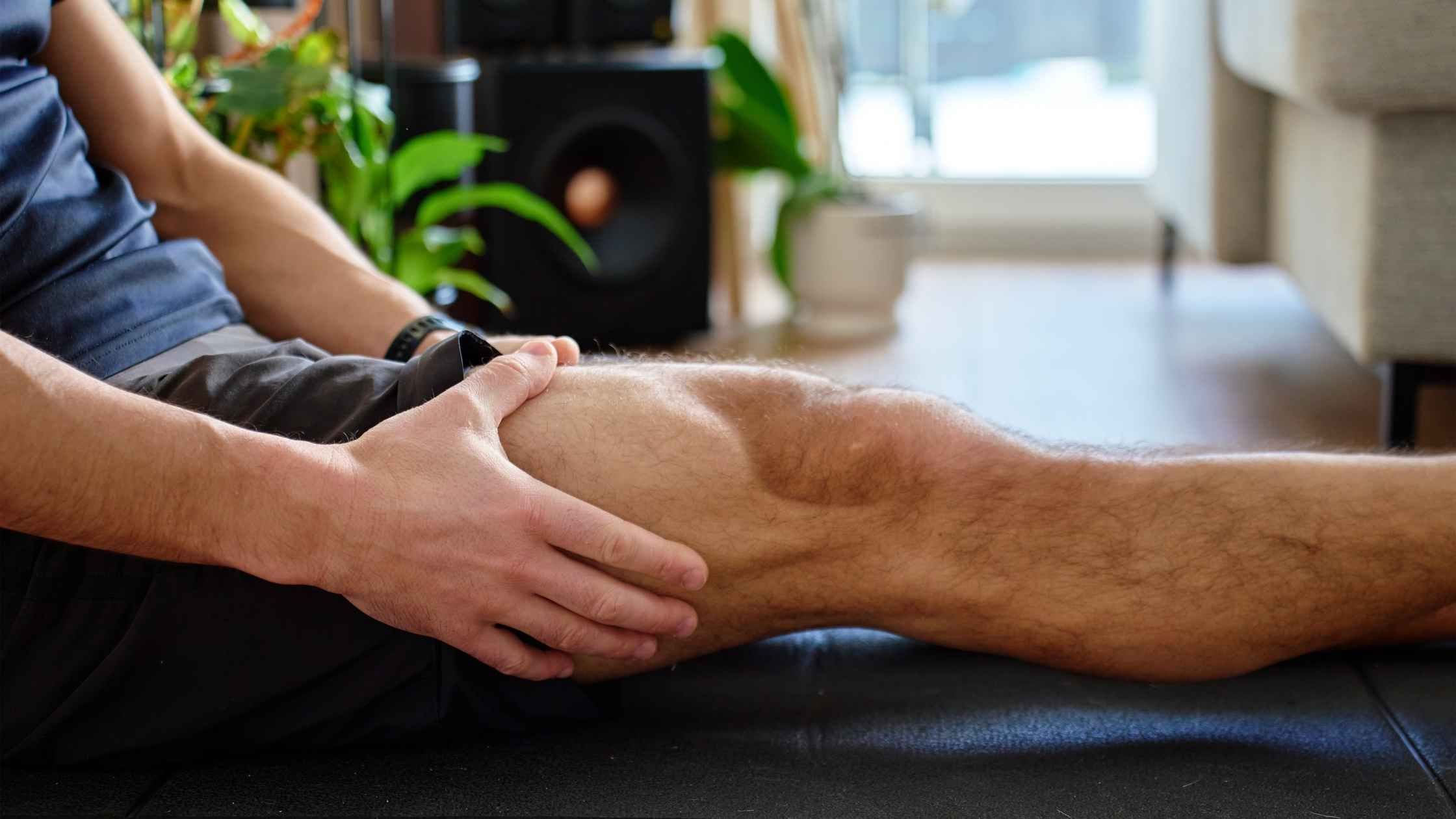
Self-acupressure works best with a gentle, consistent approach. Intensity matters less than regularity, and a few minutes of daily practice often produces better results than occasional longer sessions.
Step 1. Find a comfortable position
Sit on a chair, couch, or floor with your affected leg relaxed and accessible. If you plan to work on BL-40 behind the knee, lying on your stomach or propping your leg on a pillow can make the point easier to reach.
Step 2. Locate the pressure point
Use the finger-width measurements described above to find the general area. Then press gently around that zone until you notice a spot that feels slightly more tender or sensitive than the surrounding tissue. This tenderness often indicates you've found the active point.
Step 3. Apply firm and steady pressure
Press into the point with your thumb or fingertip. The sensation can feel strong and noticeable, but it shouldn't cause sharp pain. If the tenderness feels too intense, back off slightly until the pressure becomes tolerable.
Step 4. Breathe deeply and hold
Maintain your pressure while taking several slow, full breaths. Deep breathing helps the body relax and may enhance the effects of the pressure. Hold for the duration of five to ten breaths before releasing.
Step 5. Release and move to the next point
Lift your thumb gradually rather than pulling away suddenly. Pause for a moment, then move to your next point. If both knees experience discomfort, repeat the sequence on the other leg.
Tip: Pairing acupressure with your morning or evening routine helps build the consistency that makes the practice most effective over time.
Science-backed benefits of acupressure for knee pain
Research into acupressure for knee discomfort continues to grow. While more studies are needed, early findings suggest several potential benefits:
- Pain relief: Studies indicate acupressure may help reduce knee discomfort in adults with joint issues [[1]](https://www.ncbi.nlm.nih.gov/pmc/articles/PMC6469570/)
- Improved mobility: Research suggests regular acupressure practice may support better range of motion in affected joint [[2]](https://www.ncbi.nlm.nih.gov/pmc/articles/PMC4346387/)
- Reduced stiffness: Some studies have associated acupressure with decreased morning stiffness [[3]](https://pubmed.ncbi.nlm.nih.gov/31145878/)
- Complementary effects: Acupressure may enhance outcomes when combined with gentle movement practices like tai chi [[4]](https://www.ncbi.nlm.nih.gov/pmc/articles/PMC5755847/)
Who is acupressure for
Acupressure suits a broad range of people, particularly those drawn to gentle, self-directed approaches to wellness.
- Beginners to TCM: No prior experience is necessary to start practicing basic acupressure at home
- Adults managing ongoing knee discomfort: Those dealing with chronic stiffness or mild pain—affecting 32.5 million US adults—often find acupressure a helpful daily habit
- People preferring non-invasive options: Acupressure requires no equipment, appointments, or needles
- Those already practicing tai chi or qigong: Acupressure pairs naturally with other TCM-based movement practices
Safety guidelines and contraindications
When to avoid acupressure
Certain situations call for caution or avoidance. Do not press on areas with open wounds, fractures, severe swelling, or active skin infections. People with blood clotting disorders or those who are pregnant may want to consult a healthcare provider first, as some acupressure points are traditionally avoided during pregnancy.
Tips for safe practice at home
- Start with lighter pressure and increase gradually as you become familiar with each point
- Avoid pressing directly on broken skin, bruises, or acutely inflamed areas
- Stop immediately if you experience increased pain or unusual discomfort
- Keep your hands clean and nails trimmed to prevent irritation
Acupressure vs acupuncture for knee pain
Both acupressure and acupuncture target the same meridian points, yet they differ in method and accessibility.
| Feature | Acupressure | Acupuncture |
|---|---|---|
| Method | Finger pressure | Thin needles |
| Practitioner needed | Self-administered | Licensed practitioner required |
| Accessibility | Practice anywhere | Clinic visits necessary |
| Sensation | Pressure and mild tenderness | Minimal to no pain |
For persistent or complex knee issues, acupuncture with a qualified practitioner may offer additional benefits. However, acupressure provides an accessible entry point that you can practice independently, building familiarity with the points and meridians before exploring other options.
Why practice acupressure with ZenFit
Acupressure fits naturally within a holistic approach to knee health, one that combines gentle movement, mindfulness, and Traditional Chinese Medicine principles. The ZenFit app offers guided tai chi and qigong routines designed to complement practices like acupressure, with sessions short enough to fit into a busy day.
Building consistency matters more than session length, and the app's tracking features help you observe how your comfort and mobility shift over time. Many people find that pairing acupressure with gentle movement creates a more complete daily practice than either approach alone.
Start your acupressure journey today
Starting with just one or two points, perhaps ST-36 and SP-9, allows you to build familiarity before expanding your practice. Regular, gentle attention to a few key points often proves more valuable than occasional intensive sessions covering every location.
As comfort with the technique grows, you might add more points or combine acupressure with complementary practices like tai chi. The path to better knee health unfolds gradually, one mindful moment at a time.
FAQs about acupressure points for knee pain
What is the Chinese technique for knee pain?
Acupressure is a Traditional Chinese Medicine technique that applies finger pressure to specific points along the body's meridians. For knee pain, practitioners typically focus on points like ST-36, SP-9, and BL-40, which sit along meridians that pass through or near the knee joint.
Can acupressure help with runner's knee?
Acupressure may complement recovery for runner's knee by targeting points that support circulation and muscle relaxation around the joint. It works best alongside appropriate rest, and those with acute injuries may benefit from consulting a healthcare provider before beginning.
What is the difference between reflexology and acupressure for knee pain?
Reflexology focuses primarily on pressure points in the feet and hands that correspond to other body areas through a zone-based mapping system. Acupressure, by contrast, targets points throughout the body along meridian pathways, including locations directly around and near the knee itself.