Qigong for Meditation: How Moving Meditation Works and How to Start
Published on May 18, 2026 | Updated on May 19, 2026
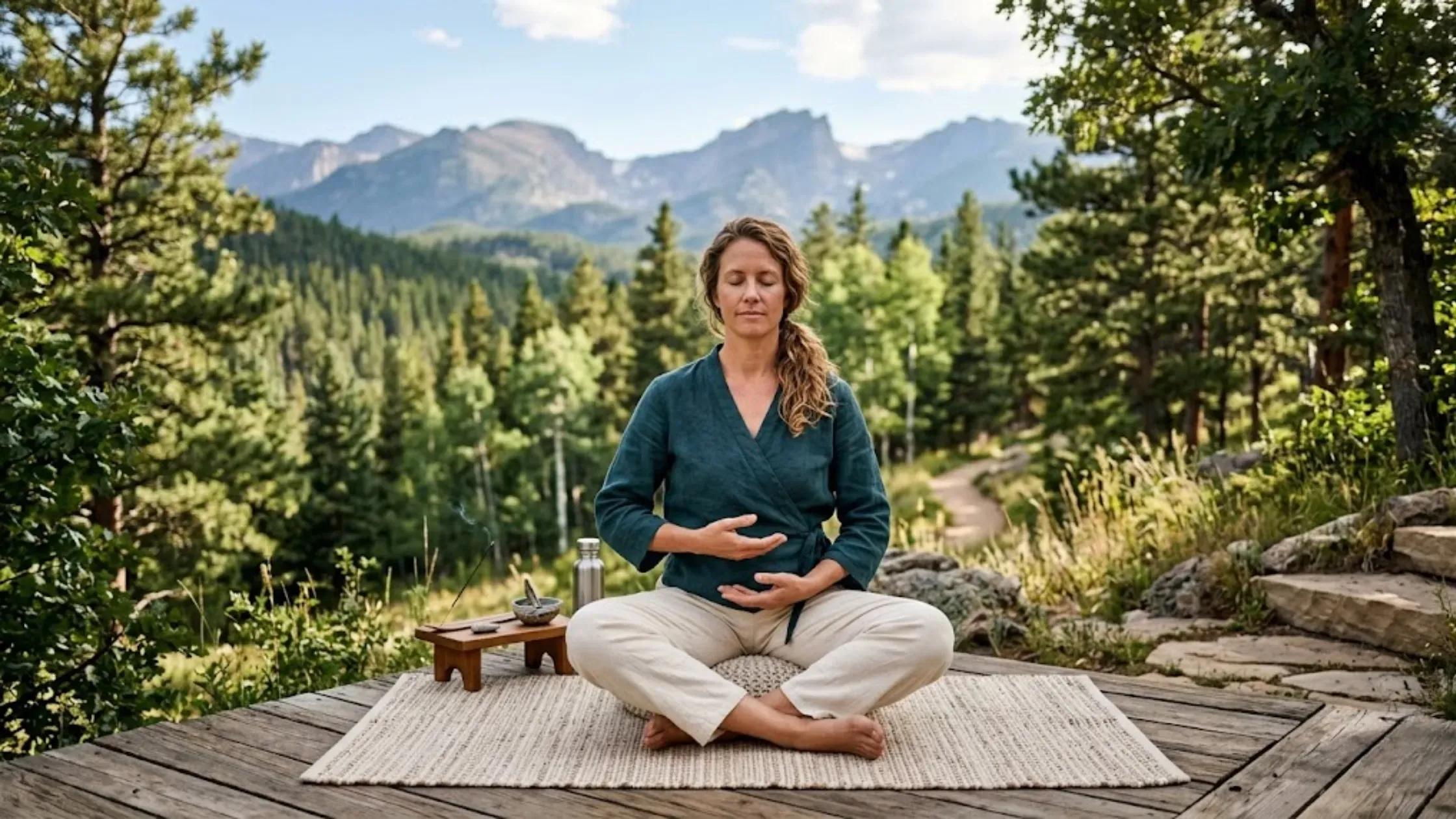
Table of Contents
- Qigong as Moving Meditation
- Qigong Meditation vs Mindfulness Meditation
- What the Research Shows
- Qigong Meditation Techniques for Beginners
- How to Build a Qigong Meditation Practice
- FAQ
- Begin Your Practice Today
Most people picture meditation as sitting still with eyes closed. Qigong offers a different model: meditation in motion. For those who find seated stillness difficult — whether due to restlessness, chronic pain, or simply an active mind that resists enforced quiet — Qigong provides a genuine meditative experience through slow, rhythmic movement and intentional breath. This article explains how Qigong functions as a meditation practice, how it compares to mindfulness, and three techniques you can begin using today.
Qigong as Moving Meditation
In traditional Chinese practice, Qigong has always been understood as a meditative discipline. The three pillars of Qigong practice — regulated breath (tiao xi), regulated body (tiao shen), and regulated mind (tiao xin) — are identical to the core elements of meditation in most traditions: attention to breath, physical stillness or ease, and focused mental awareness.
What distinguishes Qigong from seated meditation is not the quality of attention it cultivates but the vehicle through which that attention is developed. Instead of sitting with the breath as the sole object of focus, Qigong practitioners direct awareness simultaneously to breath, movement, and internal sensation — particularly to the flow of physical sensation through the body as each movement unfolds. This multi-layered focus makes the practice easier to sustain for people who struggle to maintain attention on a single still object, while producing many of the same neurological and psychological outcomes associated with conventional meditation.
Qigong is particularly well-suited as an introduction to meditative practice for people who are new to both Qigong and meditation. The physical structure of the movements provides an external anchor for attention, reducing the sense of mental free-fall that many beginners experience when attempting to meditate in stillness for the first time.
Qigong Meditation vs Mindfulness Meditation
Mindfulness meditation — particularly in its secular, clinical forms such as Mindfulness-Based Stress Reduction (MBSR) — and Qigong share a common goal: developing sustained, non-judgmental awareness of present-moment experience. The differences are primarily in method and accessibility.
| Qigong Meditation | Mindfulness Meditation | |
|---|---|---|
| Posture | Standing, moving, or still | Seated or lying still |
| Focus object | Breath + movement + body sensation | Typically breath or body scan |
| Entry point | Easier for active minds and bodies | Can be challenging for beginners to sustain |
| Physical benefit | Yes — joint mobility, strength, circulation | Minimal |
| Evidence base | Strong for stress, anxiety, cognition | Strong for stress, anxiety, chronic pain |
| Session length | 10–30 minutes | Typically 20–45 minutes |
Neither practice is superior to the other. They are complementary, and many practitioners engage in both. For complete beginners, Qigong often provides the more accessible starting point — the physical structure reduces the sense of uncertainty that can make sitting meditation feel unproductive in the early weeks.
What the Research Shows
The meditative effects of Qigong are supported by clinical research across several domains.
Qigong Meditation Techniques for Beginners
The following three techniques represent the core of Qigong as a meditative practice. Each can be practised independently or in sequence as a single 15-minute session.
1. Yi Shou Dan Tian — Focused Awareness at the Lower Dan Tian
Stand in a relaxed posture with feet shoulder-width apart, or sit upright in a chair with feet flat on the floor. Place both hands lightly over the lower abdomen, just below the navel — the location of the lower dan tian, understood in Traditional Chinese Medicine as the body's primary energy centre. Close or soften the eyes.
Breathe slowly and abdominally. With each inhale, gently bring your awareness to the sensation beneath your hands — the subtle rise and fall of the abdomen, the warmth of the palms, the quality of the breath entering the body. With each exhale, release any mental commentary about the experience and simply rest in the sensation. Continue for five to eight minutes.
This practice is the Qigong equivalent of breath-focused mindfulness meditation. The physical anchor of the hands and the specific location of awareness distinguish it from generic breathing exercises and give the practitioner a concrete point of focus to return to whenever the mind wanders.
2. Zhan Zhuang with Internal Scanning
Starting from the crown of the head, move awareness gradually downward through the face, jaw, throat, shoulders, chest, abdomen, hips, legs, and feet — noticing without trying to change any sensation that arises: warmth, tingling, tension, heaviness, or ease. When you reach the feet, begin again from the crown. Continue for three to five minutes.
This technique develops nei guan — internal observation — which is the meditative core of Qigong practice and the quality that distinguishes experienced practitioners from beginners. The physical stillness of the posture makes it easier to detect subtle internal sensations than during moving exercises.
3. Breath-Led Movement Meditation
From a standing position, allow the arms to rise slowly forward to shoulder height as you inhale — as though lifted by the breath itself rather than by muscular effort. As you exhale, lower the arms slowly back to the sides, feeling the breath guide the descent. The movement and breath should be so closely coordinated that neither leads the other.
After four to six repetitions of this simple movement, shift into a continuous slow sway — arms and upper body moving gently from side to side with the breath, like seaweed in a current. Allow the pace and range to be determined entirely by the natural rhythm of the breath. Continue for three to five minutes.
This technique directly embodies the Qigong principle of yi (intention) leading qi (energy) leading the physical body — the movement follows the breath, not the other way around. It is the simplest experiential demonstration of what differentiates Qigong from ordinary exercise.
How to Build a Qigong Meditation Practice
FAQ
Yes. Qigong is understood within its own tradition as a meditative practice — one that develops the same qualities of sustained attention, present-moment awareness, and mental calm as seated meditation, through the vehicle of slow, intentional movement and breath. Modern research has confirmed overlap in the psychological and neurological outcomes of the two practices.
For many people, Qigong serves as a complete meditative practice in its own right. For those whose primary goal is developing sustained stillness of mind — particularly in preparation for more advanced meditation practice — seated meditation develops qualities that Qigong alone does not fully address. The two practices are best understood as complementary rather than interchangeable.
A noticeable reduction in mental tension and a shift toward calm is often experienced within a single session of Yi Shou Dan Tian or Zhan Zhuang practice. Sustained improvements in attention, stress resilience, and emotional regulation typically develop over four to eight weeks of consistent daily practice.
Begin Your Practice Today
Qigong meditation asks nothing beyond a quiet space and ten minutes of unhurried attention. The techniques in this guide are complete in themselves — each one is a genuine meditative practice that can be developed over months and years, not merely a stepping stone to something more advanced.