Tai Chi 101: A Gentle Path to Balance and Wellness
What is Tai Chi?
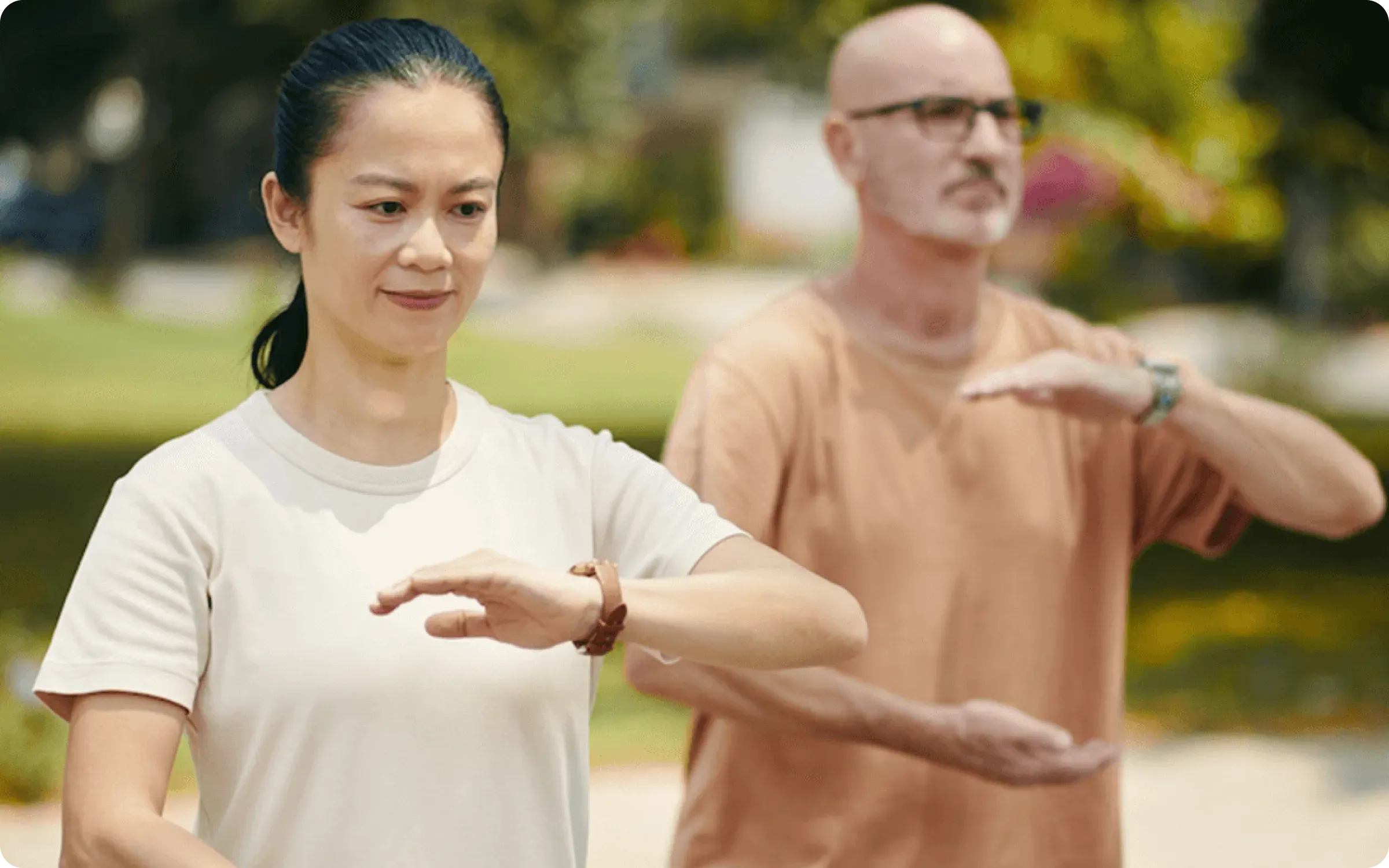
Tai Chi (Taijiquan) is a centuries-old Chinese practice combining slow, flowing movements with mindful breathing. Originally a martial art, it has evolved into a gentle form of exercise valued for promoting balance, calm, and overall wellness. It emphasizes control over speed, softness over force—making it accessible to people of all ages and fitness levels.
A Brief History
Tai Chi grew out of Taoist philosophy and traditional Chinese thought. The name "Tai Chi" refers to the "Supreme Ultimate," symbolizing the harmony of yin and yang—opposing but complementary forces. Over time, different styles developed, but they all share roots in health cultivation, meditation, and martial awareness.
Core Principles
Here are four foundational principles that guide every movement:
- Relaxation (松, Song): Releasing tension throughout the body while maintaining structural integrity.
- Rooting (根, Gen): Establishing a stable connection with the ground through proper footwork.
- Center (中, Zhong): Maintaining an upright, aligned posture with the center of gravity balanced.
- Continuity (连, Lian): Moving with fluid, connected motions without abrupt stops or starts.
Science-Backed Benefits
Even for those new to Tai Chi, scientific studies offer strong evidence of its health benefits:
- A systematic review of 40 studies with ~3,800 participants found that regular Tai Chi practice significantly reduces stress, anxiety, and depression, while improving mood and psychological well-being. [1]
- In patients with coronary heart disease, a combined group-plus-home Tai Chi program improved aerobic endurance, lower-body strength, dynamic balance, and reduced diastolic blood pressure. [2]
- Another study in middle-aged sedentary men found that 24 weeks of Tai Chi reduced resting heart rate, lowered blood pressure and improved lipid profiles—all signaling better cardiovascular health. [3]
- A recent network meta-analysis of 49 RCTs in middle-aged and older adults with hypertension found that traditional mind-body practices (including Tai Chi and Baduanjin) significantly lowered both systolic and diastolic blood pressure, and Tai Chi was particularly effective in reducing abdominal obesity (waist circumference). [4]
How Tai Chi Is Practiced
You don't need special equipment—just space, patience, and willingness to move slowly. Key guidelines:
- Move with awareness: one movement flows into the next without hurrying.
- Keep upright posture: head, spine, hips aligned.
- Shift weight deliberately and smoothly.
- Breathe naturally: coordinate breath with movement (inhale opening, exhale closing).
- Stay present: let your attention follow each motion, and release outside distractions.
Who Is Tai Chi For?
One of Tai Chi's greatest strengths is its inclusivity. Older adults, busy professionals, and people managing chronic conditions can all benefit from its gentle yet effective approach. Beginners with no prior fitness background can start easily, while those interested in Traditional Chinese Medicine and Eastern wellness philosophies will find deeper meaning in its practice.
Tai Chi is especially helpful for:
- Older adults wishing for gentle movement to support balance and joint mobility. Guide: Tai Chi for Seniors
- People with chronic conditions or mobility limitations who want a safe, low-impact exercise.
- Busy professionals hoping to reduce stress, improve posture, or find calm during hectic days.
- Beginners who are curious about Eastern wellness, mindful movement, or Traditional Chinese Medicine. Guide: Tai Chi for Beginners
Tai Chi Forms
Forms by Style
- 24-Form (Simplified Tai Chi): Created in 1956 by China's National Sports Commission, this is the most widely taught form globally. Its 24 movements make it accessible for beginners, and it is the form most commonly used in clinical health research.
- 108-Form (Traditional Yang): The classical long form passed down through the Yang family lineage, typically taking 20–40 minutes to complete.
- Laojia Yi Lu (Old Frame, First Routine): The foundational Chen form, alternating slow, spiraling movements with sudden explosive releases (fajin). The standard entry point for Chen practitioners.
- Laojia Er Lu (Cannon Fist): A faster, more overtly martial second routine featuring jumping, stomping, and rapid strikes.
- Xinjia (New Frame): A variation developed by Chen Fake in the 20th century, emphasizing deeper silk-reeling spirals (chán sī jìng).
- 108-Form: The main Wu style form. Characterized by a compact frame, subtle forward-leaning postures, and smaller movements than Yang style.
- 73-Form: A standardized competition form used in national and international wushu events.
Competition Forms
- 42-Form (Competition Tai Chi): Combines elements of Yang, Chen, Wu, and Sun styles. Widely used in international competition and structured programs.
- 32-Sword Form: A standardized tai chi sword form based primarily on Yang style.
Short Forms vs. Long Forms
| Short Forms | Long Forms | |
|---|---|---|
| Examples | 24-Form, 42-Form | 108-Form (Yang or Wu) |
| Practice duration | ~5–10 minutes | 20–45 minutes |
| Best for | Beginners, health programs | Deeper traditional study |
A Note on Health Research
Why Practice Tai Chi with ZenFit?
Ready to Start Your Journey?
Our ZenFit app offers guided Tai Chi programs for all levels, from complete beginners to advanced practitioners. Download today and begin your journey toward better health and wellbeing.