Tai Chi for Balance: Benefits, Best Exercises and How to Start
Published on May 12, 2026 | Updated on May 28, 2026
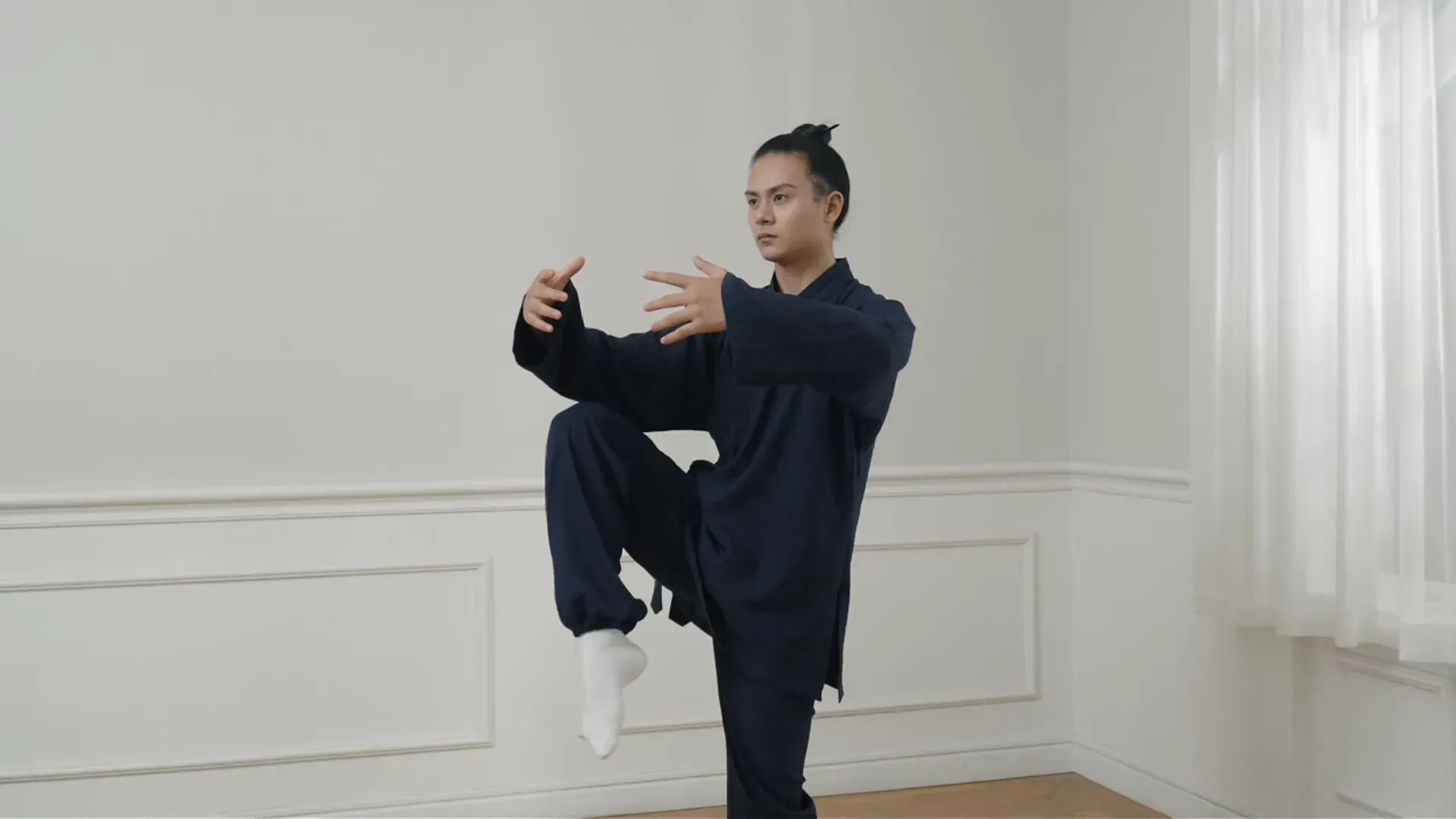
Table of Contents
- Why Balance Declines With Age
- Tai Chi Benefits for Balance and Fall Prevention
- Best Tai Chi Exercises for Balance
- How to Build a Balance-Focused Tai Chi Practice
- FAQ
- Start Improving Your Balance Today
Balance is one of the most taken-for-granted physical abilities — until it starts to change. For many adults, a gradual decline in stability begins in the 40s and accelerates through the 50s and 60s, often going unnoticed until a stumble, a near-fall, or a growing sense of unsteadiness in everyday movement brings it into focus. Tai Chi is one of the most well-studied, accessible, and effective tools for addressing this decline. This article covers why balance changes with age, what the research shows about Tai Chi's impact, and which exercises and practices deliver the most meaningful results.
Why Balance Declines With Age
Balance is not a single physical quality — it is the product of several systems working in coordination: proprioception (the body's sense of its own position in space), vestibular function (the inner ear's role in detecting movement and orientation), visual processing, muscular strength, and reaction time. Each of these systems is affected by ageing.
From around the age of 40, proprioceptive sensitivity begins to decline. Muscle strength — particularly in the lower body — reduces progressively. Reaction time slows. The result is a reduced ability to detect postural instability and respond to it quickly enough to prevent a fall. By the age of 65, falls become the leading cause of accidental injury in older adults worldwide, according to the World Health Organization.
The good news is that balance is trainable. Unlike some aspects of physical decline that are difficult to reverse, the neuromuscular systems that govern balance respond directly to targeted practice — and Tai Chi is one of the most effective forms of that practice identified in clinical research.
Tai Chi Benefits for Balance and Fall Prevention
The evidence base for Tai Chi's effect on balance is substantial and consistent across multiple systematic reviews and meta-analyses.
How does Tai Chi produce these results? The mechanism is direct. Every Tai Chi movement requires complete weight transfer from one leg to the other — standing fully on a single leg while the other foot moves through space. This trains single-leg stability, which is the most critical factor in preventing falls in daily life. The slow pace removes the momentum that ordinarily masks poor balance in walking, forcing the neuromuscular system to actively stabilise the body on each step. Over weeks and months of practice, this builds the proprioceptive sensitivity, lower-body strength, and postural control that make unexpected loss of balance both less likely and more recoverable.
Best Tai Chi Exercises for Balance
Not all Tai Chi movements provide equal balance training. The following exercises are the most directly relevant to improving stability and are appropriate for practitioners at all levels.
Weight Shifting
The most foundational balance exercise in Tai Chi requires no steps at all. From a shoulder-width stance, slowly transfer your entire body weight onto one foot until the other is fully "empty." Hold for two to three seconds, then shift back to centre and across to the other side. This directly trains single-leg stability — the physical quality most predictive of fall risk — without the coordination demands of full movement sequences. Practise this alone for several minutes before moving on to stepping.
Tai Chi Walking
Tai Chi walking isolates the weight-shifting and controlled stepping components of Tai Chi into their simplest form. Each step begins with a full weight transfer onto the standing leg, followed by slow heel-to-toe placement of the stepping foot, before weight is gradually transferred forward. The pace is deliberately slow enough that momentum cannot compensate for poor balance — every transition relies entirely on muscular control and postural stability.
Single Whip and Repulse Monkey
These two postures from the Yang-style 24-form involve extended single-leg standing phases and stepping patterns that challenge balance in multiple directions. Single Whip requires holding a wide, low stance with arms extended in opposite directions — engaging the hip stabilisers and core simultaneously. Repulse Monkey involves stepping backward with full weight transfer on each step, training the less commonly practised but equally important skill of backward stability. Both are best introduced under guided instruction before attempting solo practice.
Standing Meditation (Zhan Zhuang)
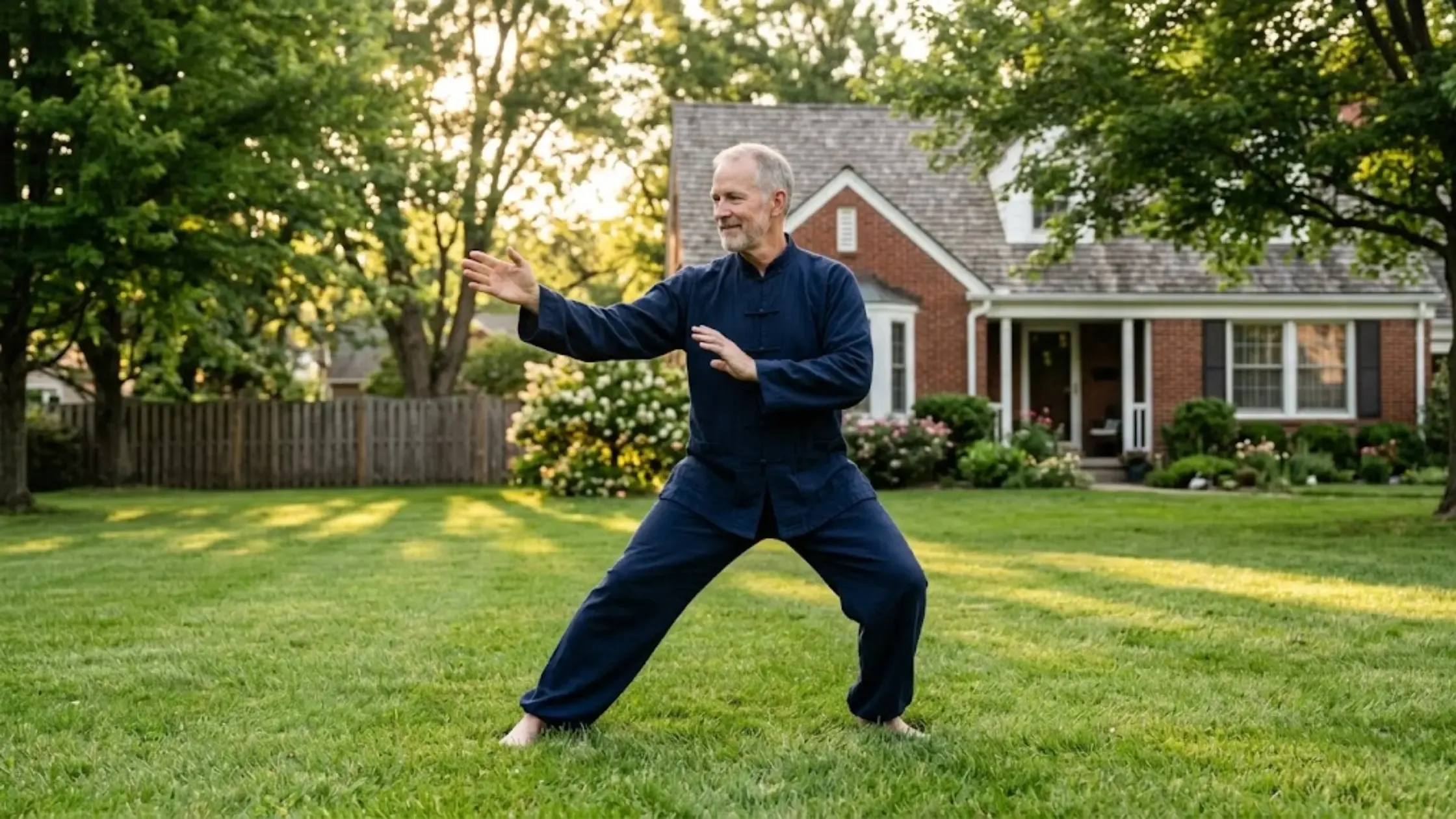
Standing meditation — holding a simple upright or slightly lowered stance with arms rounded at chest height — develops the deep postural muscles of the trunk and legs through sustained, low-intensity loading. Even five minutes of daily standing practice builds the core and lower-body stability that underpins all other balance work in Tai Chi.
How to Build a Balance-Focused Tai Chi Practice
For those whose primary goal is improving balance, the following approach provides a practical and evidence-aligned framework.
FAQ
Most practitioners notice improvements in confidence and stability within four to six weeks of consistent daily practice. Measurable changes in clinical balance assessments — such as single-leg standing time and Timed Up and Go performance — are typically observed over 12 to 16 weeks in research studies.
Tai Chi is one of the most extensively evidenced exercises for balance improvement, particularly in older adults. Research comparing it to other balance interventions — including conventional physiotherapy exercises — has generally found it equally effective, with the added advantage of being more sustainable as a long-term daily practice due to its low intensity and meditative quality.
Yes. The 2023 Chen et al. meta-analysis specifically included older adults at high fall risk — including those who had experienced previous falls — and found Tai Chi effective for this group as well as for healthy older adults. Those who have experienced a fall recently should consult their healthcare provider before beginning, and may wish to start with chair-supported exercises before progressing to standing practice.
No. Weight shifting, Tai Chi walking, and standing meditation each provide meaningful balance training without requiring knowledge of a complete form. Learning a full sequence such as the 24-form deepens the practice but is not a prerequisite for balance benefit.
Start Improving Your Balance Today
Balance responds directly to practice — and Tai Chi provides one of the most accessible, evidence-supported ways to train it. A daily commitment of 10 to 15 minutes, focused on the exercises outlined above, is enough to begin building the stability that reduces fall risk and supports confident, independent movement.