Table of Contents
- What Is Low Impact Exercise?
- Low Impact vs High Impact Exercises: Key Differences
- Benefits of Low Impact Exercises
- Best Low Impact Exercises
- Low Impact Cardio Workouts
- Low Impact Workout for Seniors
- How to Build a Low Impact Routine
- FAQ
Whether you're new to exercise, recovering from an injury, managing arthritis, or simply looking for a joint-friendly way to stay active, low impact exercises can help you improve your fitness without placing excessive stress on your body.
Contrary to popular belief, low impact does not mean low intensity. Activities like brisk walking, swimming, cycling, and Tai Chi can raise your heart rate, strengthen your muscles, and improve cardiovascular health while protecting your joints.
In this guide, you'll learn what low impact exercise is, its proven health benefits, the best low impact workouts for different needs, and how to build a sustainable routine.
What Is Low Impact Exercise?
Low impact exercises refer to physical activities that minimize mechanical stress on the joints, especially the knees, hips, ankles, and spine. The defining feature is that there is little to no jumping or hard landing, and at least one foot (or body support such as water, a chair, or a machine) remains stable throughout movement.
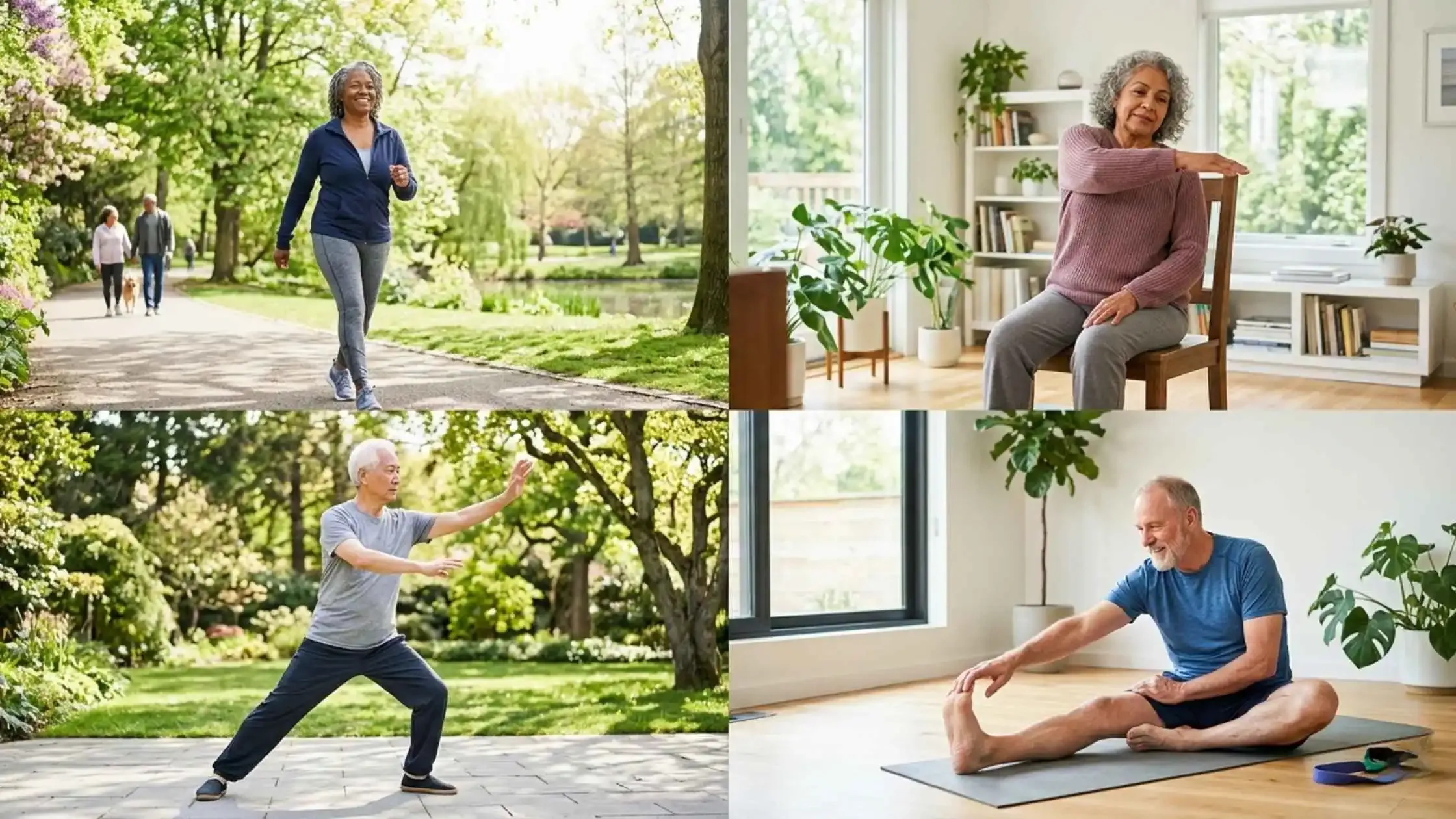
Common examples include walking, swimming, cycling, yoga, Tai Chi, and Qigong. What they share is not a low level of effort but a low level of mechanical stress on the musculoskeletal system.
Importantly, low impact exercises are not low intensity by default.
The World Health Organization (WHO) recommends 150 to 300 minutes of moderate to vigorous aerobic activity per week for healthy adults, and this recommendation can be fully achieved through low impact exercises. Walking at a brisk pace, swimming laps, or practising Tai Chi for 30 minutes can elevate the heart rate, build functional strength, and support cardiovascular health as effectively as higher-impact alternatives, without the injury risk.
Low Impact vs High Impact Exercises: Key Differences
The key difference between low and high impact exercises is force absorption, not effort.
High impact exercise — running, jumping, plyometrics, certain team sports — involves repetitive moments where both feet leave the ground and the body lands with significant force. This repeated impact stimulates bone density and can develop power and speed, but it also increases the cumulative stress on joints and connective tissue. High-impact training carries a higher risk of overuse injuries, particularly in the knees, hips, shins, and feet.
Low impact exercise eliminates or dramatically reduces this landing force. The cardiovascular and muscular demands can be identical — the difference is in how the body absorbs the load. For people with joint conditions, limited mobility, recovering from injury, or simply wanting to sustain a long-term exercise habit without wear and tear, low impact exercise is often the smarter choice.
Research has shown that when energy expenditure is matched, moderate-intensity low impact activities such as brisk walking provide comparable cardiovascular benefits to running — including similar reductions in blood pressure, cholesterol, and diabetes risk.
Benefits of Low Impact Exercises
Joint health and pain management. Low impact exercises support joint lubrication, strengthens surrounding muscles, and reduces pain over time. The CDC highlights that
joint-friendly physical activity such as walking, cycling, and Tai Chi is safe and beneficial for people with arthritis. This makes it especially important for low impact exercises for arthritis and chronic joint pain management.
Cardiovascular fitness. The heart responds to intensity and sustained effort, not to impact. Low impact cardio workouts, such as brisk walking, cycling, or Tai Chi, strengthen the cardiovascular system and improve aerobic capacity when performed at sufficient duration and frequency.
Sustainable long-term habit. One of the most significant barriers to lasting exercise is injury and burnout. Low impact activity can be performed daily without the recovery demands that high-intensity training requires, making it much easier to sustain as a permanent habit. Consistency over months and years produces greater health outcomes than sporadic high-intensity effort.
Mental health benefits. Regular low impact exercise has been associated with reduced symptoms of anxiety and depression and improved sleep quality, according to
global health evidence reviews.
Accessibility. Low impact exercises are appropriate across virtually all ages, fitness levels, and physical conditions. It is one of the few categories of physical activity that is equally relevant to a 35-year-old recovering from a knee injury and a 75-year-old managing osteoarthritis. In particular, low impact workout for seniors is widely recommended in clinical and public health settings.
Best Low Impact Exercises
| Exercise | Best For | Cardio Level | Joint Impact | Equipment Needed |
|---|
| Tai Chi | Balance, healthy aging, stress relief, arthritis | Moderate | Very Low | None |
| Qigong | Relaxation, mobility, stress management | Light–Moderate | Very Low | None |
| Baduanjin (Eight Brocades) | Full-body conditioning, flexibility, posture | Moderate | Very Low | None |
| Walking | Everyday fitness, weight management, heart health | Moderate–Vigorous (depending on pace) | Low | Comfortable walking shoes |
| Swimming & Water Exercise | Joint pain, arthritis, rehabilitation | Moderate–Vigorous | Near Zero | Pool |
| Yoga (Gentle Styles) | Flexibility, posture, stress relief | Light–Moderate | Very Low | Yoga mat (optional) |
Tai Chi
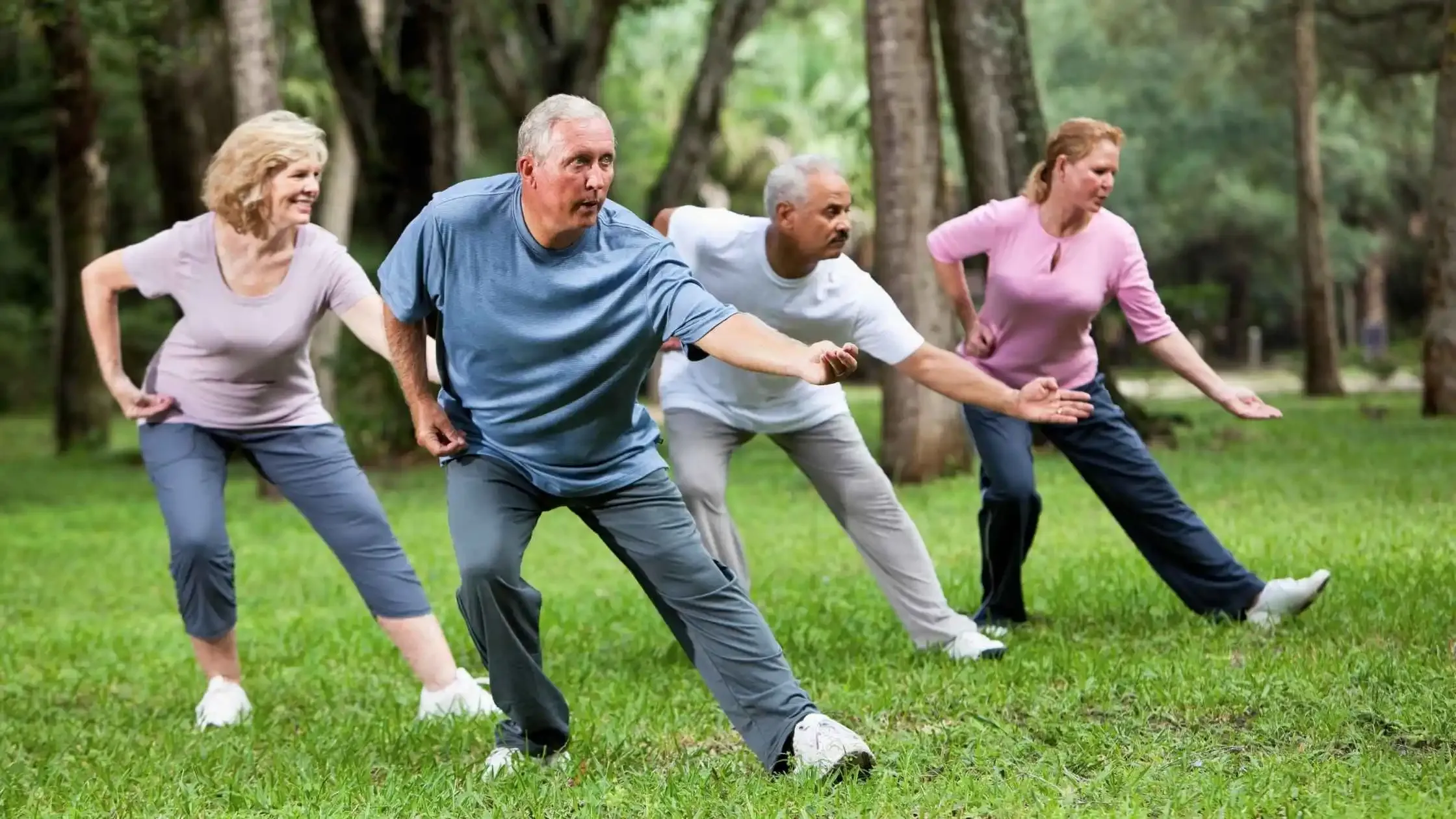
Tai Chi is one of the most comprehensively beneficial low impact exercises available. Its slow, flowing movements — performed with complete weight transfer, postural alignment, and coordinated breathing — train balance, muscle strength, and cardiovascular health simultaneously without placing any high-force load on the joints. A 2023 meta-analysis of 24 randomised controlled trials found that Tai Chi significantly reduced fall risk by 24% in older adults and produced meaningful improvements across multiple balance assessments
(Chen et al., 2023). It is one of the few low impact exercises that also delivers documented benefits for anxiety, sleep quality, and cognitive function.
Full guide: Tai Chi for BeginnersQigong
Qigong encompasses a range of slow, meditative movement practices that combine breath regulation with gentle physical movement. It is even more adaptable than Tai Chi — Qigong exercises can be performed standing, seated, or lying down, making it accessible to people across a very wide range of physical conditions. Research has documented significant reductions in anxiety, depression, and stress from regular Qigong practice, alongside improvements in blood pressure and immune function. Its near-zero joint impact and equipment-free format make it one of the most practical daily low impact exercises available.
Full guide: Qigong for BeginnersBaduanjin (Eight Brocades)
Baduanjin is a structured sequence of eight Qigong movements practiced in the same order each session, taking 15 to 20 minutes to complete. Its combination of weight-bearing postures, spinal stretching, and coordinated breathing makes it a complete low impact workout that addresses strength, flexibility, and cardiovascular conditioning simultaneously. A 2022 meta-analysis published in Frontiers in Medicine found it significantly improved balance in older adults
(Guo et al., 2022). For people who prefer a structured, repeatable daily routine over freestyle exercise, Baduanjin is an excellent choice.
Full guide: Baduanjin: Eight Brocades BasicsWalking
Walking is one of the most accessible and evidence-supported forms of low impact exercise. At a brisk pace — typically 100 steps per minute or above — it meets the American Heart Association's recommendation for moderate-intensity cardiovascular activity. It requires no equipment beyond appropriate footwear and can be adapted in intensity through pace, incline, and duration. For joint health specifically,
regular walking has been shown to help maintain bone density and reduce recurrence of low back pain.
Swimming and Water Exercise
Water supports body weight through buoyancy, reducing joint load to near zero while allowing the full musculature to work against resistance. Swimming engages the cardiovascular system, builds functional upper and lower body strength, and is one of the most effective low impact options for people with significant joint pain or limited weight-bearing capacity. Water walking and aqua aerobics offer the same joint protection for those who prefer not to swim laps.
Yoga (gentle styles)
Yoga combines flexibility, strength, balance, and breath awareness in a low impact format. Like Tai Chi and Qigong, it has documented benefits for mental health alongside its physical effects. The intensity and accessibility of yoga varies significantly by style — restorative and hatha yoga are the most appropriate low impact options for beginners or those with joint limitations, while more dynamic styles such as vinyasa involve greater physical demand.
Low Impact Cardio Workouts
Low impact cardio refers specifically to cardiovascular exercise that elevates the heart rate into the moderate or vigorous intensity zone without high-force joint impact. The most effective low impact cardio options are:
Tai Chi walking — continuous, rhythmic heel-to-toe stepping with full weight transfer. Sustained Tai Chi walking for 20 to 40 minutes at a consistent pace elevates the heart rate meaningfully while engaging the lower body muscles throughout. It combines the joint protection of Tai Chi with the sustained cardiovascular effort of a brisk walk.
Full guide: Tai Chi Walking
Brisk walking with intervals — alternating two minutes of fast walking with one minute of moderate pace for 20 to 30 minutes. This interval approach increases cardiovascular demand without increasing impact.
Cycling — whether outdoors or on a stationary bike, cycling provides excellent cardiovascular conditioning with minimal knee and hip load. A 2019 study found indoor cycling improved aerobic capacity, blood pressure, and lipid profiles without dietary changes.
Swimming laps or water aerobics — sustained cardiovascular effort with zero joint impact, making it the highest-intensity truly zero-impact cardio available.
For low impact cardio to be effective, it must be sustained long enough to challenge the cardiovascular system — generally 20 minutes or more at a pace where conversation is possible but requires some effort.
Low Impact Workout for Seniors
Low impact exercise is particularly important for older adults, for whom the risks of high-impact activity — joint damage, fracture, prolonged recovery — are more significant, and for whom consistent daily movement has the most directly measurable health outcomes.
The most effective low impact exercises for seniors share several characteristics: they train balance as well as cardiovascular fitness, they can be adapted for varying mobility levels, they carry minimal injury risk, and they can be sustained as a daily habit without excessive physical demand.
Tai Chi and Baduanjin are among the most evidence-supported low impact options specifically for older adults. In addition to the balance and fall prevention benefits documented above, research has confirmed their benefits for musculoskeletal pain, blood pressure, sleep quality, and anxiety — a combination of outcomes that is difficult to match with any other single low impact activity.
Walking remains the simplest and most widely feasible daily exercise for seniors. Even 30 minutes of brisk walking five days per week meets WHO physical activity guidelines and provides meaningful cardiovascular and musculoskeletal benefit.
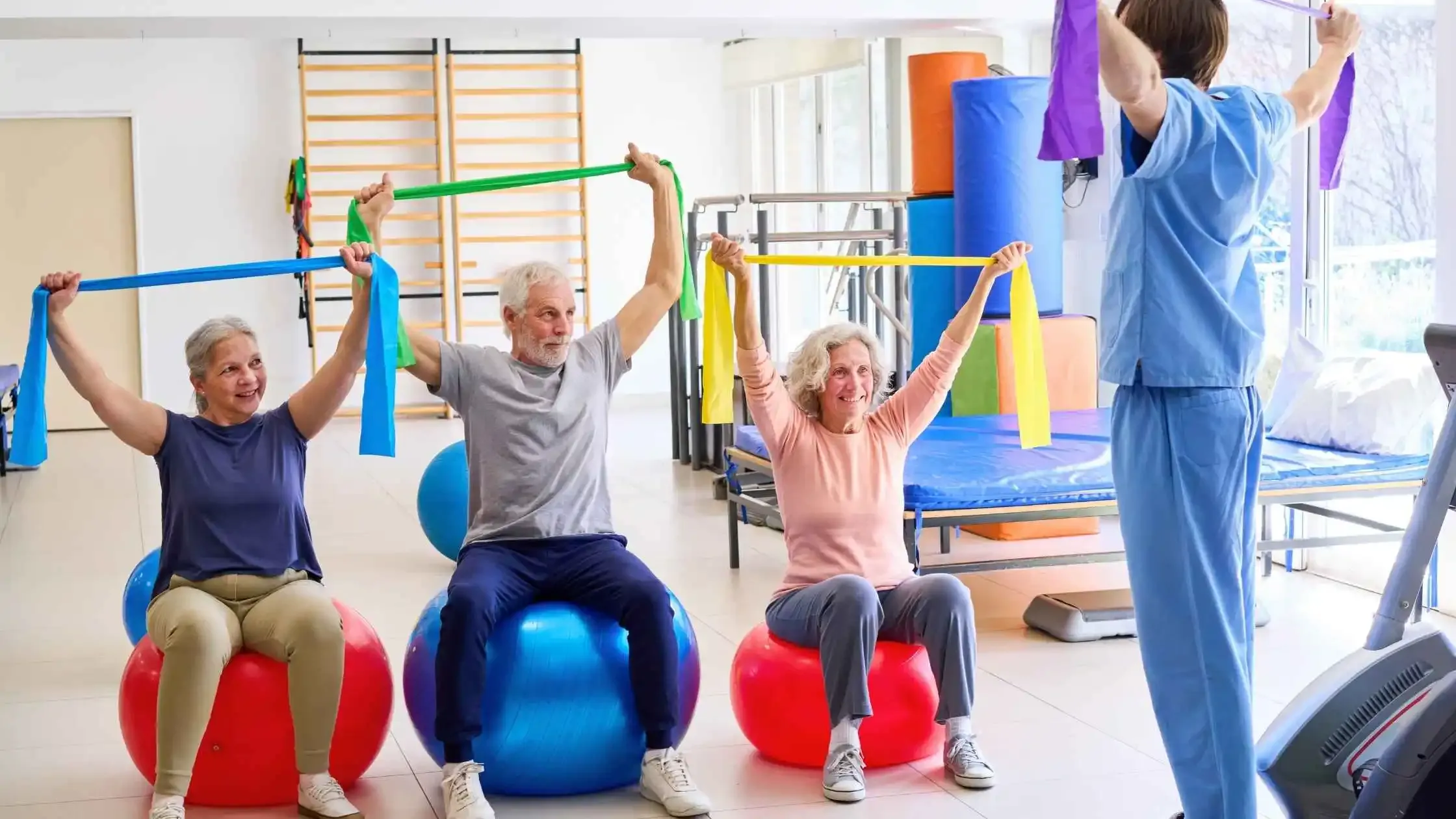
Chair-based exercises — including chair Tai Chi and chair yoga — provide access to low impact movement for seniors with significant balance limitations or mobility restrictions.
Full guide: Chair Tai Chi
For seniors with cardiovascular conditions, recent joint surgery, or osteoporosis, it is advisable to consult a healthcare provider before beginning a new exercise programme.
How to Build a Low Impact Routine
Start with 20 to 30 minutes per session. This is sufficient to produce cardiovascular benefit and begin building the consistency that delivers long-term results. Increase duration gradually as the body adapts.
Aim for five sessions per week. The WHO recommends 150 minutes of moderate-intensity activity weekly. Five 30-minute low impact sessions meet this target. Daily practice — as is traditional in Tai Chi and Qigong — produces stronger cumulative results than fewer longer sessions.
Combine movement types. A balanced weekly routine might include three sessions of Tai Chi or Qigong (balance, flexibility, mental health), two sessions of brisk walking or cycling (sustained cardio), and one session of swimming or yoga (full-body recovery and mobility). This variety addresses multiple fitness components without increasing joint stress.
Prioritise consistency over intensity. The primary advantage of low impact exercise is its sustainability. A routine that can be maintained daily for months and years produces greater health outcomes than an intense programme sustained for weeks before injury or burnout forces a break.
The ZenFit app offers beginner-friendly programs in Tai Chi, Qigong, and Baduanjin designed for adults 40+, focused on improving mobility, reducing stiffness, and supporting long-term joint health. Sessions are 5 to 15 minutes, require no equipment, and are available offline.
FAQ
Can low impact exercise help with weight loss?
Yes, when practised consistently and at sufficient duration. Low impact cardio burns calories effectively — the key variable is duration and frequency rather than intensity. A daily 30-minute brisk walk or Tai Chi session, combined with dietary awareness, supports meaningful weight management over time. For a detailed look at how Tai Chi specifically supports weight management, see our guide:
Tai Chi for Weight Loss.
What is the best low impact exercise for bad back?
Low impact exercises such as walking, swimming, Tai Chi, and Qigong can help improve mobility, strengthen supporting muscles, and reduce stiffness without placing excessive stress on the spine. Start with short sessions and avoid movements that significantly increase your pain.
What is the safest low impact exercise for arthritis?
Walking, swimming, and Tai Chi are among the safest and most widely recommended options for arthritis due to their joint-friendly nature.
How long before I see results from low impact exercise?
Cardiovascular improvements typically begin within two to four weeks of consistent practice. Balance improvements from Tai Chi are generally noticeable within four to six weeks. Meaningful body composition changes occur over 12 weeks or more of consistent practice. Mental health benefits — reduced anxiety, improved sleep — are often reported within the first two to four weeks.