6 Holistic Practices from Traditional Chinese Medicine (TCM)
Published on June 1, 2026

Laura Mitchell
Laura is a wellness content creator specializing in holistic health and movement for healthy aging. As an expert in Tai Chi and Qigong, she passionately integrates Chinese wellness practices into her daily lifestyle.
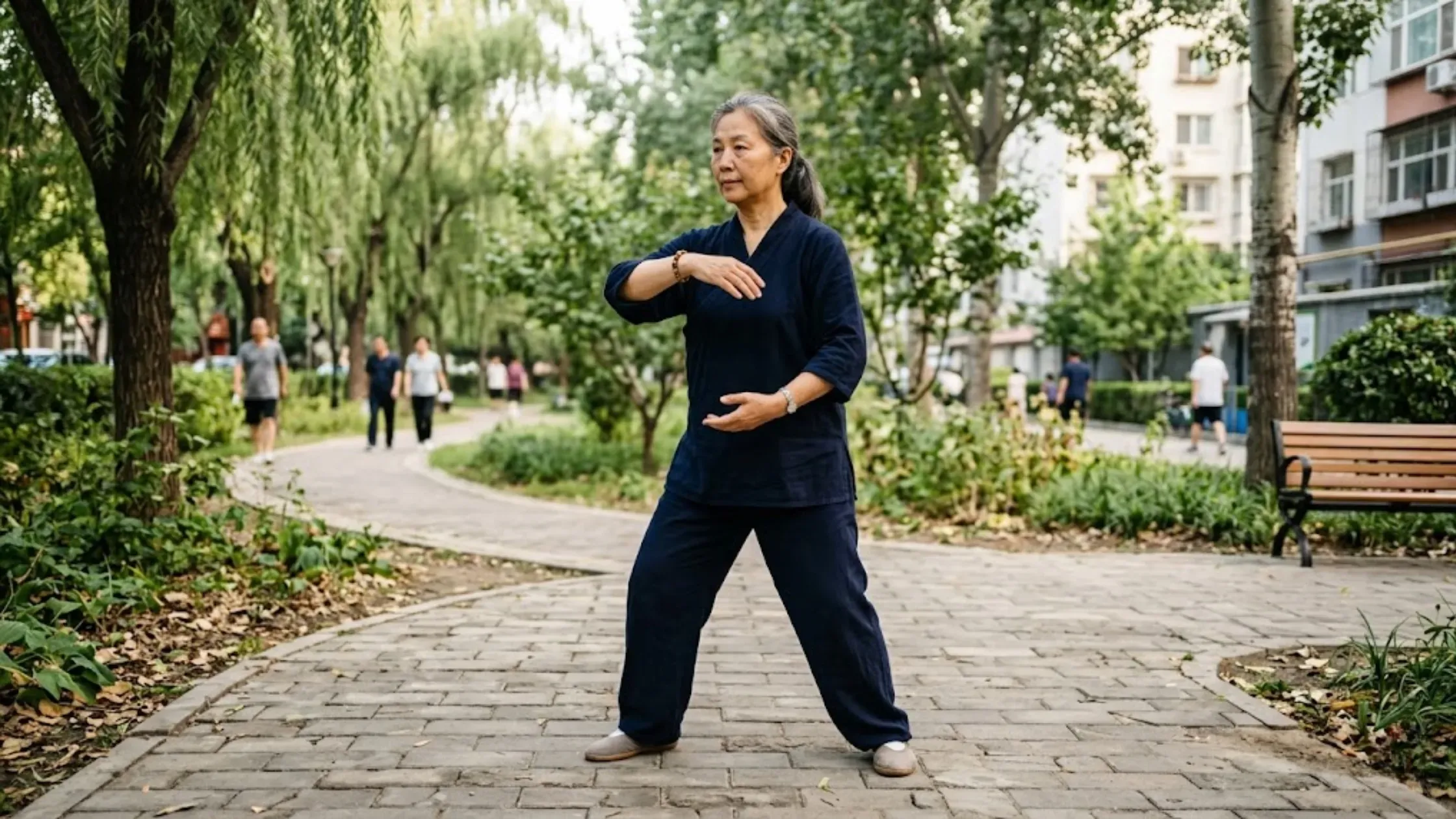
Table of Contents
- Tai Chi
- Qigong
- Baduanjin — Eight Brocades
- Acupuncture
- Cupping Therapy
- Tui Na — Chinese Therapeutic Massage
TCM encompasses a wide range of practices, from movement and breathwork to hands-on therapy and needle-based treatment. The six practices below represent some of the most well-known and widely practised within both traditional and contemporary contexts.
Note: Several of the practices below (acupuncture, cupping, and Tui Na) should be administered by qualified, licensed practitioners. They are complementary wellness approaches and are not substitutes for professional medical diagnosis or treatment.
Tai Chi
Tai Chi (太极拳, Taijiquan) is a Chinese internal martial art practised today as a mind-body wellness exercise worldwide. Its slow, flowing movements — performed with complete postural alignment, deliberate weight transfer, and coordinated breathing — train balance, coordination, and physical ease in a way that is accessible to people of all ages and fitness levels.
Originating in the 17th century and refined across subsequent generations, the most widely practised form today is Yang-style Tai Chi. A simplified 24-movement form was standardised in 1956 to make the practice more teachable globally. In TCM, Tai Chi is understood to regulate and strengthen the flow of qi through the body's meridian system while building physical resilience and mental calm.
Clinical research has documented Tai Chi's benefits for balance and fall prevention, cardiovascular health, blood pressure, sleep quality, and anxiety reduction — making it one of the most comprehensively studied traditional wellness practices in the world.
Qigong
Qigong (气功, pronounced "chee-gong") is the broadest category of Chinese internal practice, encompassing all exercises that cultivate qi — vital energy — through the regulated coordination of movement, breath, and mental attention. The word itself combines qi (energy) and gong (cultivation or skill).
Qigong has roots in TCM, Taoist philosophy, and Chinese martial arts. It ranges from dynamic standing movement sequences to completely still meditative breathing practices, making it uniquely adaptable — Qigong can be practised seated, standing, or even lying down, and requires no equipment or special space.
In TCM, Qigong is understood to tonify organ systems, clear stagnation from the meridians, and harmonise the relationship between mind and body. In Western clinical research, regular Qigong practice has been associated with significant reductions in anxiety and depression, improved sleep quality, lower blood pressure, and enhanced immune function.
Baduanjin — Eight Brocades
Baduanjin (八段锦), known in English as the Eight Pieces of Brocade or Eight Brocades, is a structured Qigong form consisting of eight specific movements practised in sequence. With historical documentation tracing to the Song Dynasty (960–1279 AD), it is one of the oldest and most widely practised structured Qigong forms in the world.
Each of the eight movements is traditionally associated with the health of a specific organ system within TCM theory, combining gentle stretching, weight-bearing postures, and controlled breathing into a complete practice that takes 15 to 20 minutes. A standardised modern form was developed by the Chinese Health Qigong Association in 2003.
Clinical research has documented Baduanjin's benefits for balance, physical function in older adults, blood pressure regulation, and cardiovascular health. Its structured, teachable format makes it one of the most accessible entry points into TCM movement practice for beginners.
Acupuncture
Acupuncture is one of the most recognised and globally practised TCM therapies. It involves the insertion of very fine, sterile needles into specific acupoints along the body's meridian pathways to regulate the flow of qi and restore physiological balance.
In TCM theory, illness and pain arise from stagnation or imbalance of qi within the meridian system. Stimulating acupoints is understood to clear these blockages and support the body's self-regulatory processes. In Western biomedical terms, research has proposed that acupuncture stimulates the nervous system, triggers the release of endorphins and other neurochemicals, and influences physiological processes including blood flow and inflammation.
The World Health Organization (WHO) has identified acupuncture as a potentially effective treatment for a range of conditions including chronic pain, headaches and migraines, nausea, and lower back pain. As with all TCM therapies, the quality of evidence varies by condition, and acupuncture should be sought from a licensed, qualified practitioner. It is generally considered safe when administered by a trained professional using sterile needles.
Cupping Therapy
Cupping therapy (Ba Guan, 拔罐) is a TCM practice in which heated or vacuum-sealed cups are placed on the skin to create suction. This negative pressure draws the superficial layers of skin, fascia, and muscle upward into the cup, promoting local blood circulation and, in TCM terms, drawing out stagnation and clearing the meridian pathways beneath.
The characteristic circular marks left after cupping — which typically fade within a few days — are caused by blood being drawn to the surface of the skin and are not considered harmful. Dry cupping (suction only) is the most common form in modern clinical practice. Wet cupping (which involves small superficial incisions) is less commonly practised and should only be performed by a licensed practitioner.
Tui Na — Chinese Therapeutic Massage
Tui Na (推拿) is the manual therapy component of Traditional Chinese Medicine. Its name translates as "push-grasp," describing two of its primary techniques — though a complete Tui Na practice encompasses pushing, pressing, rolling, kneading, and percussion applied to the soft tissues and joints of the body. It is guided by the same meridian theory that underpins acupuncture and acupressure, with the practitioner working along specific pathways and acupoints using the hands rather than needles.
Unlike Western massage, which primarily aims to relax muscles and reduce physical tension, Tui Na is a structured clinical therapy used within TCM to address specific conditions including musculoskeletal pain, joint dysfunction, headaches, digestive disorders, and insomnia. It is often combined with acupuncture, cupping, or herbal therapy as part of a complete TCM treatment plan.
These six practices represent only a portion of TCM's broader system, which also includes herbal medicine, moxibustion, dietary therapy, and a range of other specialised approaches. Whether you begin with a self-directed practice like Tai Chi or Qigong, or seek out a qualified practitioner for acupuncture or Tui Na, each of these traditions offers a well-developed, time-tested framework for supporting health and wellbeing.